.svg&w=384&q=75 "logo")
Stan Wawrinka's Last Dance at the 2026 US Open
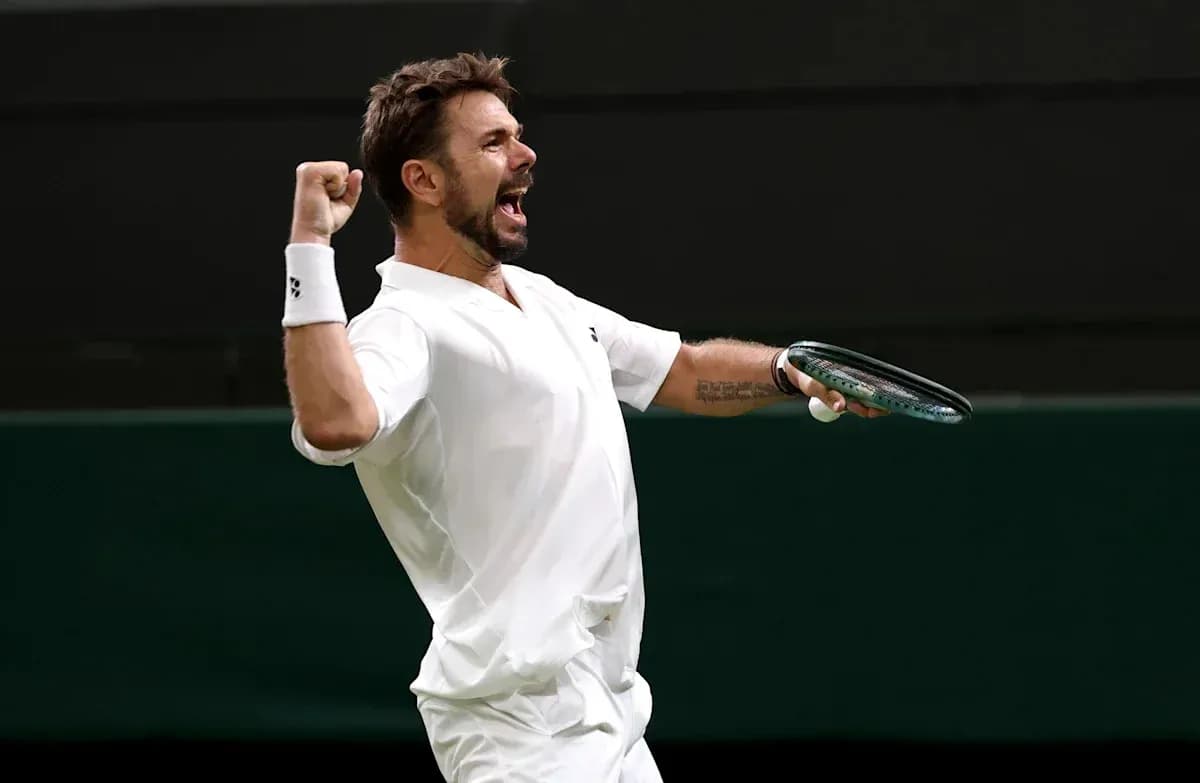
Stan Wawrinka will walk into the 2026 US Open knowing exactly what it is: a farewell worthy of a champion, staged on the court where he carved his name into New York’s hard concrete a decade ago.
Ten years after that thunderous run to the 2016 title, the one-handed Swiss shot-maker, the man who refused to bow to the Big Four, will finally get his goodbye.
From anonymous name to immovable presence
For many, Stanislas Wawrinka arrived late. He spent years in the long shadow of Roger Federer, Rafael Nadal, Novak Djokovic and Andy Murray, the so‑called Big Four who turned men’s tennis into a closed shop.
Yet over 18 years, Wawrinka became something else entirely: the outsider who kept breaking down the door.
Back in 2008, he was still the supporting act. At Indian Wells, at what was then the Pacific Life Open, he faced a rising Novak Djokovic in the quarterfinals. Djokovic had just won his first Grand Slam at the Australian Open and was being hailed as the man who would challenge Federer and Nadal.
Djokovic won that day, 7-6, 6-2. A routine scoreline on paper. In reality, it was the start of one of the sport’s great slow-burn rivalries, a series of collisions that would later reshape the biggest stages in tennis.
The man who cracked the cartel
Juan Martin del Potro grabbed the 2009 US Open and briefly looked like the heir to the throne. But it was Wawrinka who turned one breakthrough into a career that stands shoulder to shoulder with almost anyone outside the Federer–Nadal–Djokovic axis.
Three majors. Three different years. Three different statements.
- The 2014 Australian Open, where he took his first Grand Slam title.
- The 2015 French Open, where he denied Djokovic the career Grand Slam on the red clay of Roland Garros.
- The 2016 US Open, where he returned to New York and ripped through the field to complete a remarkable trio.
He didn’t nibble at the edges of greatness; he attacked it head-on.
At his peak, Wawrinka was a spectacle. There were other one-handed backhands on tour, elegant and stylish, but his was something else: a sledgehammer disguised as a brushstroke. He didn’t just guide the ball; he detonated it. The image of that Yonex racquet whipping through the ball in Melbourne in 2014 still lingers in the memory of anyone who watched.
More than a sidekick in Swiss colours
For Switzerland, he was never just Federer’s understudy.
In Beijing in 2008, Wawrinka played a central role in Federer’s Olympic doubles gold. The pair combined to win one of the few prizes that had eluded Federer, a moment that meant as much to their country as to the players themselves.
Six years later, in 2014, Wawrinka helped drive Switzerland to the Davis Cup title, another landmark in a golden era for Swiss tennis. He did the hard yards in singles, carried pressure, and delivered when it mattered.
He was always there, in the background of the Federer era, then suddenly in the foreground when the sport’s biggest trophies were on the line.
The night that changed everything
His first major title came in Melbourne in 2014. He faced Nadal in the final, the Spaniard clearly hampered by injury, but the occasion still loaded with tension. Wawrinka’s four-set victory might have looked like a one-off to some at the time, a glorious outlier.
It didn’t stay that way.
He followed it with that stunning Roland Garros triumph in 2015, beating Djokovic in four sets with a display of fearless, line-painting aggression. Then came New York in 2016, where he again took down Djokovic in the final to lift the US Open trophy.
What once felt like a fluke hardened into a résumé. Three Slams, each won by going through the giants of the era.
One last run in New York
Now, as the 2026 US Open approaches, Wawrinka returns to Flushing Meadows for what promises to be his last stand.
His opening match pits him against Matteo Berrettini, a former Wimbledon finalist whose own career has been repeatedly interrupted by injuries. It is the kind of first-round tie that makes a draw sheet crackle: two big hitters, two battered bodies, two men who know what it is to live at the sharp end of the sport.
Win, and the path likely leads straight back to Djokovic in the second round. The same Djokovic he denied in Paris in 2015. The same Djokovic he stunned in New York in 2016.
One more night under the lights? One more bruising, emotional chapter in a rivalry that has already left deep marks on the sport?
The possibility alone gives this farewell an edge.
When tennis heroes disappear
Wawrinka’s exit underlines a truth that separates tennis from club sport.
In football, the crest remains. Players come and go, but Tottenham Hotspur are still Tottenham Hotspur. Names change – Harry Kane and Moussa Dembélé give way to Flavio Cobolli, Sandro Tonali, Savio and the next wave – yet the club endures as a constant.
Tennis offers no such anchor. The player is the team. When a star retires, there is no badge to cling to, no stadium song to fall back on. They might reappear in a player’s box, maybe as a coach, maybe as a commentator, but the living, breathing version that dragged themselves through five-set epics is gone.
When a tennis player retires, that chapter of the sport closes. Permanently.
Fans have to adjust to the tour without them. To new names, new rivalries, new storylines. You either ride that wave or get swept under it, lost in nostalgia for a version of the game that no longer exists.
For 18 years, Stan Wawrinka has been part of that landscape: the late bloomer, the wrecking ball with the backhand, the man who refused to accept that the Big Four had locked everyone else out.
Now he walks into New York for a last dance, chasing one more roar, one more backhand winner that rips through the night air.
GO GET EM, STANISLAS WAWRINKA.