.svg&w=384&q=75 "logo")
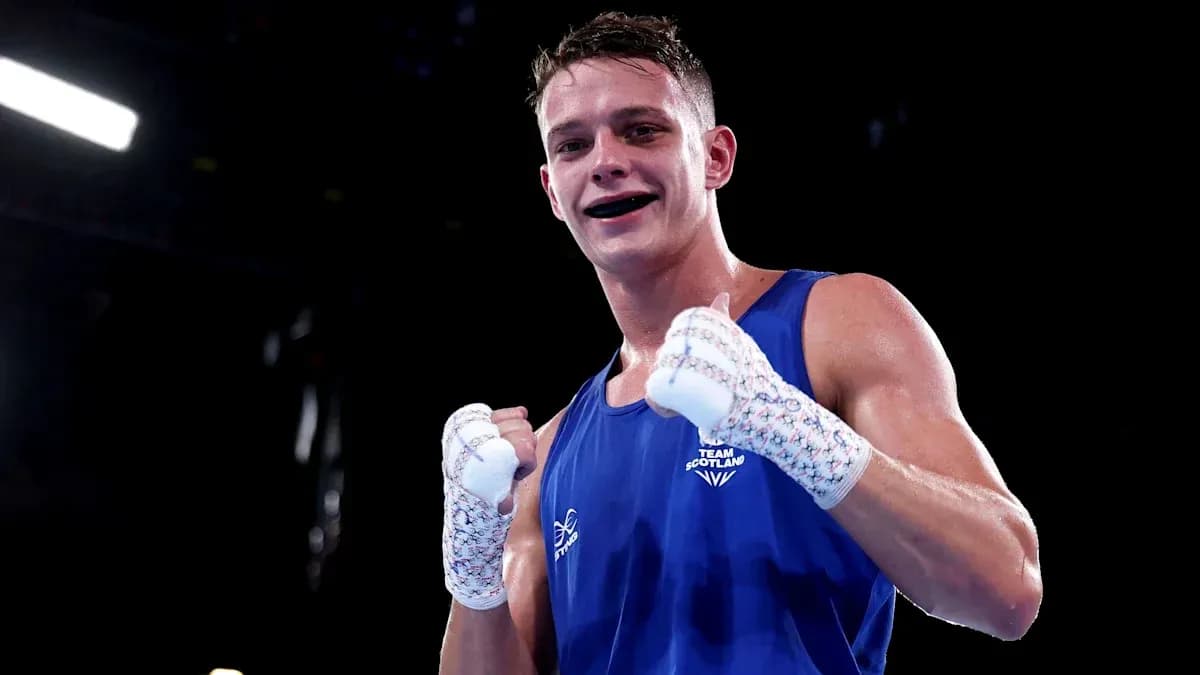
Sonny Kerr's Olympic Dream: Chasing LA 2028
Sonny Kerr can already feel the pull of the professional game – the bright lights, the paydays, the promise of headlining nights. But for now, one image keeps cutting through all that noise: an Olympic ringed podium in Los Angeles in 2028.
The 21-year-old from Aberdeen left the Commonwealth Games in Glasgow with a bronze medal in the 70kg division, a breakthrough moment on home soil that would nudge many young fighters towards the paid ranks. Kerr has certainly thought about it. He admits the temptation is real.
Yet the decision, at least in his mind, is leaning the other way.
“I don't want to peak at this,” he told BBC Scotland. “I want to keep really levelling up now.”
That mindset underpins everything. Kerr is the only Scottish boxer currently on the GB Olympic programme, a status that carries both privilege and pressure. It also frames his dilemma. Walking away from that pathway now would mean turning his back on a genuine shot at the Olympics – and he knows how rare that is.
“The LA cycle is something I would like to stay on for and try and qualify for because that is once in a lifetime stuff really – to be an Olympian,” he said.
Chasing LA from Sheffield
Kerr’s route to that dream runs not through Aberdeen’s gyms, but through the GB Academy set-up in Sheffield, where he spends much of his time sharpening his craft as a light-middleweight. Getting onto that squad is notoriously difficult. Staying there is tougher.
“It is a hard programme to get on to, only the best get on,” he said. “I have just kept plugging away and now hopefully I can reap the rewards.”
Three Four Nations Elite titles, at three different weights, back up his claim. That kind of adaptability and resilience marks him out as more than just another promising name on a long list.
The Commonwealth bronze, though, came with a sting. Kerr wanted more. Standing on the podium in Glasgow, he felt pride, yes, but also frustration that he hadn’t climbed higher.
Big stage, bigger expectations
“That was probably the biggest stage I have been on,” he reflected. “I have boxed in big tournaments before but it being in Scotland, with the crowd, all the eyes are on you boxing. I thought I was quite composed, I didn't let it affect me.”
The composure mattered. So did the lesson. Kerr walked away knowing he could handle the occasion, the noise, the scrutiny. That knowledge, he says, feeds the belief that his years of hard work are finally starting to turn.
“It gives me a lot of confidence, but it also lets you know the hard work is paying off,” he said. “Because there have been a lot of years, a lot of fights that haven't gone my way in the past and when you do start to get a little bit of luck, and things go your way, you know it is for a reason so that gives you a confidence in itself.”
Walking in heavy footsteps
Kerr is acutely aware of the names who have trodden this path before him. Josh Taylor, Anthony Joshua, Luke Campbell – Olympians who turned amateur success into world titles, stadium nights and global recognition. Those are the “big boots” he talks about filling, the standard he wants to chase.
That is where the professional temptation creeps back in. The blueprint is there: medal on the amateur stage, turn over, climb the rankings, cash in. If the right offer lands, he admits he would have to listen.
But at 21, with a Commonwealth bronze around his neck and a GB vest on his back, Kerr sees a different kind of opportunity. The road to Los Angeles is long, brutal and uncertain. It is also the one thing money cannot buy.
For now, the Aberdonian is staying on that road, trading quick rewards for a shot at a once-in-a-lifetime stage. The question is no longer whether he can handle the spotlight.
It is how far that ambition can carry him by the time 2028 comes into view.