.svg&w=384&q=75 "logo")
Serena Williams Returns to US Open: A New Chapter with Venus
The cameras at Arthur Ashe Stadium have always found Serena Williams. This time, they keep drifting a few rows higher.
There is Alexis Ohanian, arm around Olympia, their eldest daughter clutching her baby sister as they lean over the rail and watch Serena share the court with Carlos Alcaraz. The shot says everything: one of the greatest players in history back in the arena that defined her, framed by the family that now defines her life.
“Always cheering for mama @serenawilliams (and @carlitosalcarazz !!),” Ohanian wrote alongside the pictures, charting his wife’s latest return to Flushing Meadows.
A new chapter at an old home
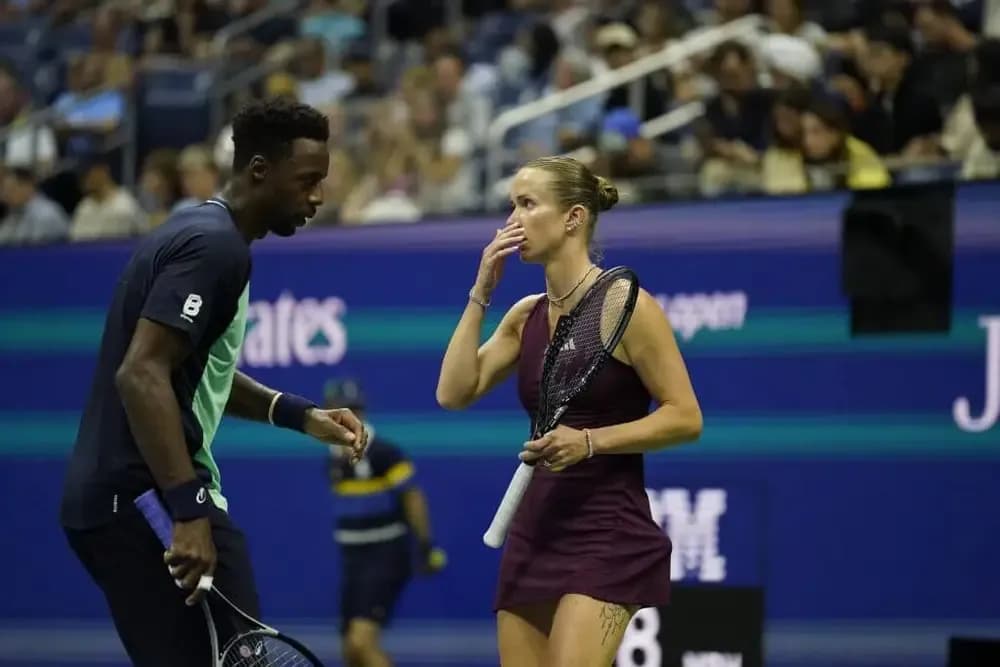
Williams’ comeback to the US Open has not followed the familiar script of solo dominance under the lights. This time, she stepped back into competition in the revamped mixed doubles event, partnering the men’s world star Alcaraz as a wildcard pairing that felt more like an exhibition in star power than a tentative return.
On court, it quickly became clear they were there to compete, not just entertain. The duo opened with a 5-3, 4-1 win over Erin Routliffe and Lloyd Glasspool in the first round at Arthur Ashe, a scoreline that hinted at sharp instincts rather than rust. The run ended in the quarter-finals against Belinda Bencic and Flavio Cobolli, but the message was already out: Serena Williams was back in the draw, back in the noise, back in New York.
Now comes the part that stirs the deepest nostalgia.
Serena and Venus Williams have accepted a wildcard into the women’s doubles, reuniting one of the most formidable partnerships the sport has ever seen. They will open against the 14th seeds, Chan Hao-ching and Maya Joint, in a match that will carry far more emotional weight than its seeding suggests.
It will be the first time the sisters have played doubles together at the US Open since 2022. For tennis, that gap feels longer than two years. For a generation that grew up watching them transform the sport, their names back on the same side of the scoreboard feels like a restoration.
Between them, Serena and Venus have collected 14 Grand Slam women’s doubles titles, including US Open crowns in 1999 and 2009. Those trophies sit alongside Serena’s towering individual record: 23 Grand Slam singles titles, the most by any woman in the Open era, with six US Open singles championships, seven Wimbledon titles and seven Australian Open crowns.
Yet here she is, returning to Arthur Ashe four years after walking away from the tour at the 2022 US Open, not to chase another solo milestone but to share the court with her sister again—and to let her daughters see it.
The view from the stands
Williams has been candid about how different competition feels now that Olympia and Adira are old enough to sit in the stands and watch her work. The roar of Ashe once sounded like validation of a lifetime’s obsession. Now, it shares space with something quieter but stronger.
Asked by Byrdie in 2024 what brings her the greatest happiness, she didn’t hesitate. “My kids.”
She went further, stripping away any illusion that even the sport’s grandest stages could rival her life off court. “I can’t say that a Wimbledon trophy holds a candle to volunteering at my kid’s school,” she said.
For an athlete whose career has been measured in historic numbers, that is a striking recalibration. It also explains the way she lets the world in only occasionally. Over Easter this year, Williams posted rare family photographs with Olympia, Adira and Ohanian, offering a glimpse of the life that now runs the show.
“I don’t share these moments often, but being their mom is my favourite place to be,” she wrote. “I’m with them 363 out of 365 days a year – and I wouldn’t trade it for anything. This weekend was everything.”
The contrast is sharp: the most famous stadium in tennis, the most decorated player of her era, and yet the images that matter most to her are taken far from the locker rooms and practice courts.
Legacy in motion
That is what makes this US Open feel different. Serena is not chasing history anymore; she already owns it. She is curating it—deciding how, where and with whom she wants to step back into the arena.
In mixed doubles, it was with Alcaraz, the sport’s present and future. In women’s doubles, it is with Venus, the partner who has been beside her for some of the most defining nights of both their careers. And above it all, in the stands, two young girls watch their mother not as a distant legend but as a living, breathing competitor.
The Williams sisters will walk out again as a team, one more time under the New York lights, with their record already written and their priorities already shifted. The question now is not what they can still win.
It’s how many more of these nights they want to share before they decide the story is complete.