.svg&w=384&q=75 "logo")
Premier League Transfer Window Review: Clubs Ranked
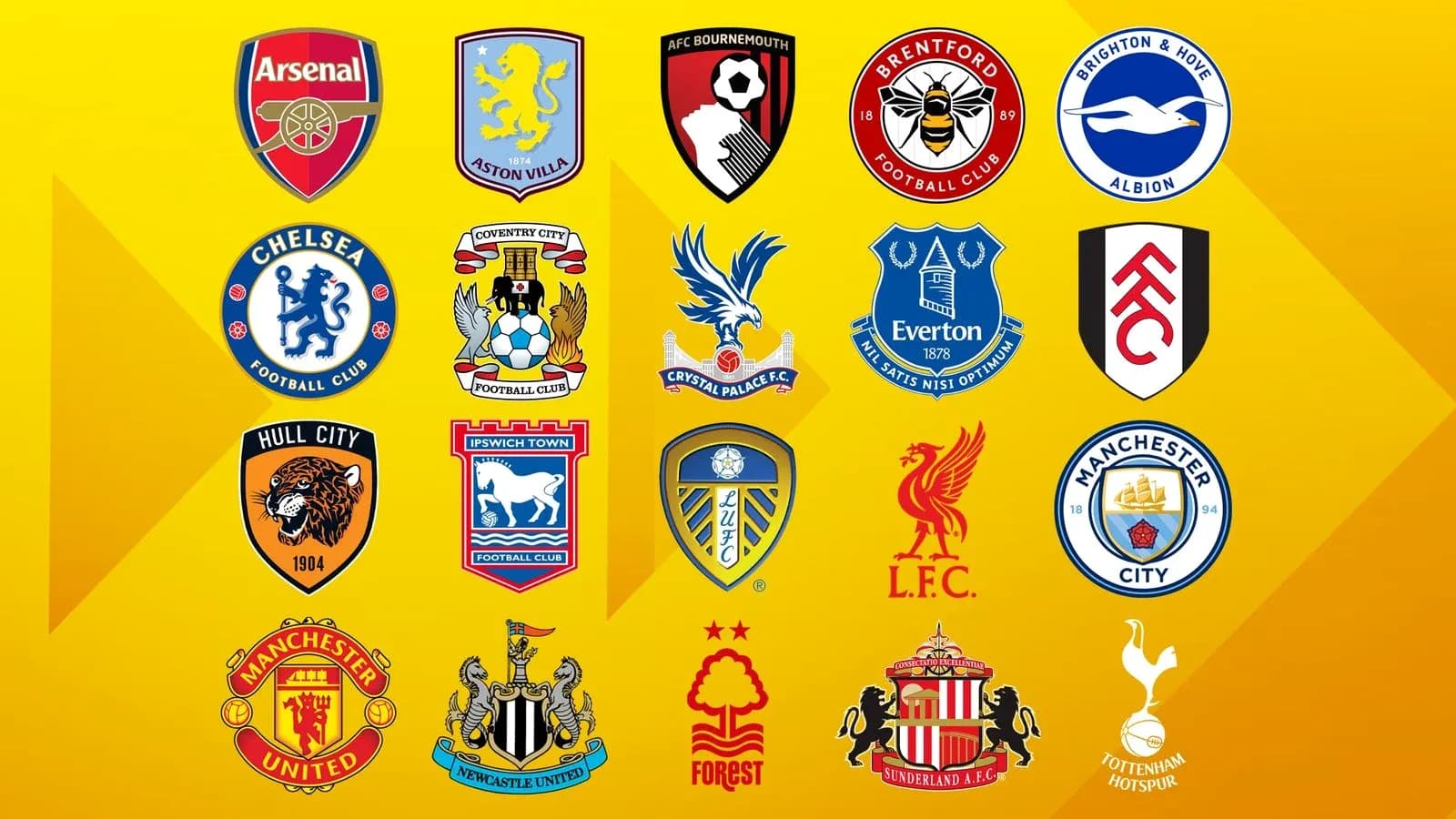
After a record-smashing summer and a Deadline Day that veered from farce to fireworks, the Premier League’s transfer window has finally slammed shut. What’s left is a landscape of bold rebuilds, quiet revolutions and, in one or two places, outright chaos.
Here’s how the clubs stack up, judged by those closest to them.
Arsenal – Ruthless exits, targeted upgrades
Rating: 8/10
Eight senior players out. Eight out of 10. The symmetry isn’t lost on Arsenal.
Gabriel Jesus, Gabriel Martinelli, Leandro Trossard, Christian Norgaard, Fabio Vieira, Ethan Nwaneri (on loan), Jakob Kiwior and Reiss Nelson have all moved on, with only Nwaneri seen as part of the club’s long-term future. The result? More than £100m banked and a significant wage bill trimmed, Jesus’ salary in particular.
The headline disappointment is obvious: no left winger, no striker. Arsenal chased the dream in Vinicius Junior and Julian Alvarez. Either would have transformed this window into a 10/10. Neither arrived. Still, the very fact Arsenal were even in those conversations says everything about their new standing.
Supporters understand the reality but still bristle at one thing: last season’s two main left-sided threats have not been fully replaced. The club tried. The “Vinicius saga” came and went, and nothing quite fit after that.
So Mikel Arteta will improvise. Christos Tzolis has already shown enough flashes – even with a shaky outing at Villa Park – to win the crowd. Eberechi Eze can operate off the left. Noni Madueke and Bukayo Saka can flip flanks. Max Dowman’s minutes on the right may grow because of it. There’s even a theory that Riccardo Calafiori could be pushed higher, in the same way Arteta once reinvented Mikel Merino and Myles Lewis-Skelly.
What Arsenal did do is just as important: they landed Bruno Guimaraes and Ezri Konsa, the two players Arteta really wanted. Depth in defence and midfield now looks genuinely elite, to the point where he can rotate entire units without a significant drop-off.
No new No 9, no marquee left winger. But a leaner squad, better balance and serious depth. Arsenal come out of the window stronger – and still dangerous.
Aston Villa – Champions forced into a reset
Rating: 7/10
A Europa League trophy in May. Six starters from that night gone by September. Unai Emery didn’t plan it this way.
Morgan Rogers, Youri Tielemans, Ollie Watkins, Emiliano Martinez, Lucas Digne and Ezri Konsa have all departed. Replacing that spine while staying within tight financial constraints looked a brutal task.
Villa’s answer has been to go young and hungry. Ibrahim Mbaye and Johan Manzambi bring potential. Leon Goretzka and Aaron Wan-Bissaka bring scars and experience. Nicolas Jackson knows the league and settled quickly with a sharp debut. Zion Suzuki has already hinted he can handle the step up in goal, while Taylor Harwood-Bellis has talked openly about needing to improve – and about Emery being the man to push him there.
The books are balanced, the wage bill reshaped and the squad retooled. The big question is obvious: can this new group match the standards of the one that just conquered Europe? Optimism is there, but Emery will need evidence on the pitch, not just on paper.
Bournemouth – A quiet masterclass
Rating: 9/10
Two summers, two very different stories.
In 2025, Bournemouth sold key players and flirted with dismantling their own project. This time, they dug in. Rayan, Eli Junior Kroupi and Alex Scott all stayed. The club’s model allows exits, but not at the expense of the team’s core – and Marco Rose was given a firm promise they wouldn’t strip the side from under him.
European football complicates everything. Spending must respect UEFA’s financial rules, yet the squad needed both quality and depth. Bournemouth walked that tightrope impressively.
Michele Di Gregorio arrives as last season’s Juventus No 1. Antonio Silva, once linked with Europe’s giants, comes in at what looks like excellent value. Juanlu Sanchez strengthens full-back, Alvaro Rodriguez adds a different dimension up front. Fringe players have been moved on, and crucially, the club acted early. For once, Deadline Day passed quietly on the south coast.
It feels controlled. It feels deliberate. Bournemouth have given Rose a platform. Now they have to prove they can live at this level.
Brentford – Smart, sharp, and almost flawless
Rating: 9/10
Brentford rarely miss in the market. This window might be one of their best.
They wanted a midfielder to build around. They got Mamadou Sangare for £39m, a fee already starting to look like a steal. Call it early, but he has the profile of a season-defining signing.
El Hadji Malick Diouf, a late addition, should nail down the left-back spot. Jaidon Anthony has already started twice, Callum Wilson looks the ideal foil – or challenger – to Igor Thiago, and Jannik Schuster shores up centre-back with Sepp van den Berg out.
Just as important, the core remains. Jordan Henderson’s leadership walks out the door, but Thiago, Kevin Schade and Yehor Yarmoliuk stay, with Michael Kayode and Vitaly Janelt tied to new deals. The only Deadline Day move was a sensible one: Jayden Meghoma heading to Portsmouth on loan for minutes.
Brentford stop short of a perfect 10, but only just. The structure, the planning, the execution – it all feels typically sharp.
Brighton – Heavy spend, new look
Rating: 7.5/10
Brighton, the club that usually sells big and buys quietly, went loud this summer.
Nine first-team signings. Close to £170m spent. Depth everywhere, particularly in defence. Luka Vuskovic arrived for a club-record £50m, a statement deal for a player Brighton believe can anchor their back line for years.
Chema Andres, a Spain U21 holding midfielder from Stuttgart, arrived in a late twist on Deadline Day to help fill the void left by Carlos Baleba’s move to Manchester United. He’ll need time, but the talent is obvious.
The cost of evolution? Experience and goals. Danny Welbeck’s departure strips away a reliable presence up front, and Brighton will lean on loan arrival Promise David to supply end product.
One win off the pitch matters too: Yankuba Minteh, heavily courted by Liverpool, stays. Once injuries clear and Fabian Hurzeler can blend the old with the new, Brighton’s season will hinge on how quickly this rebuilt group clicks.
Chelsea – Strategy reset, Stamford Bridge re-energised
Rating: 9/10
Chelsea have finally changed the script.
After years of hoarding prospects, this window brought a clear pivot: Premier League-ready players to blend with their young core. The pursuits of Jordan Henderson, Emiliano Martinez and Danny Welbeck signalled a shift in thinking as much as any signing.
Geovany Quenda fits the old model of elite youth recruitment. But the headline moves are different. Emiliano Martinez, Morgan Rogers and Maxence Lacroix walk straight into the strongest XI. Joao Pedro has been rewarded with an improved contract, a clear sign Chelsea want to lock down their new nucleus.
Last season unravelled after Enzo Maresca’s departure, despite an FA Cup final run. The mood turned sour. The arrival of Xabi Alonso and a more coherent recruitment policy has changed the air around Stamford Bridge. The 4-3 thriller against Brighton felt like a turning of the page.
There is one cloud: the Enzo Fernandez saga. A self-imposed deadline to resolve his future came and went, uncertainty lingered, and the fanbase split. Yet three wins from three suggest the dressing room has stayed focused.
Marc Cucurella’s exit stings, but Chelsea sold well again. Liam Delap, Nicolas Jackson and Alejandro Garnacho all left for strong fees, reinforcing the club’s reputation as elite traders.
Now comes the hard part. The squad looks balanced, the coach is in place, the stadium is alive again. Results must follow.
Coventry – Bold and brave on their return
Rating: 8/10
Newly promoted sides usually tiptoe into the market. Coventry did the opposite.
They spent big but not blindly. Frank Lampard now has depth he could only dream of last season. Carl Rushworth returns permanently after starring in promotion. Aurele Amenda injects athleticism into centre-back. Caleb Yirenkyi offers energy in midfield, Frank Onyeka brings Premier League experience, and Gustavo Hamer returns to familiar surroundings with his blend of craft and bite.
Up front, Taiwo Awoniyi gives Coventry a proper focal point. Loum Tchaouna and Sidiki Cherif add speed and upside.
The early concern is obvious: two defeats, no goals. For all the investment, the attack hasn’t yet sparked. But the squad is unquestionably stronger, deeper and more rounded than the one that came up.
Coventry have taken a calculated risk. It doesn’t feel reckless. It feels like a club determined not just to survive, but to stay.
Crystal Palace – Losses absorbed, identity intact
Rating: 7/10
Crystal Palace know this story well: lose stars, regroup, go again.
Maxence Lacroix and Daniel Munoz, two of their best performers, have gone. Yet Palace can still count this as a partial win. Adam Wharton, Jean-Philippe Mateta and Ismaila Sarr all stay.
Mateta, still haunted by a collapsed move to AC Milan last January, may have to guide Sarr through similar frustration after Liverpool’s pursuit failed. The Frenchman is in the final year of his contract, and the clock is already ticking towards another window of speculation.
Sarr’s form between now and January will be the litmus test for Palace’s hardline stance.
Their recruitment is typical Palace: clever, not flashy. Axel Disasi, Dwight McNeil, Ben Chilwell and Takehiro Tomiyasu are all proven Premier League performers. Dario Osorio could be the jewel – a highly rated 22-year-old in a club that specialises in turning potential into profit. Honest Ahanor adds depth at the back, while Anan Khalaili may eventually grow into Munoz’s role.
The squad finishes the window with better depth, crucial for another European campaign. Palace have become experts at absorbing big departures and still pushing on. This summer doesn’t guarantee success, but the late flurry of deals, layered onto early planning, suggests they’re ready for another punch-up with the division’s elite.
Everton – A window that leaves scars
Rating: 2/10
This is the one that hurts.
Everton have managed to halve a strike force that was hardly prolific to begin with. Letting Beto go to Fiorentina before Folarin Balogun was secured looks, in hindsight, like a glaring misstep. The scramble for Joshua Zirkzee when the Balogun move faltered only underlined the sense of panic.
Then came the sale of Iliman Ndiaye, the most exciting player on the books. All summer, the message was clear: Everton were in a strong position with three years left on his deal. He left anyway, for £65m. A huge profit on the fee paid two years ago, but still short of the figure that might have softened the blow for supporters.
The proposed swap that never was – Ndiaye to Spurs for £60m, Richarlison back for £35m – collapsed, as did a late move for Kenny Tete, with Fulham refusing to sell without a replacement lined up. There’s a lesson there.
All this unfolded while the ownership weighed up a £40m bid from Nottingham Forest for Harrison Armstrong, even as David Moyes publicly stressed the need for reinforcements.
Some positives exist. Ainsley Maitland-Niles, Jack Grealish, Hayden Hackney, Christian Norgaard, Merlin Rohl, Tyrique George and Brennan Johnson have all come in. But they are dwarfed by the glaring issue up front.
Moyes goes into the season with Thierno Barry as his only recognised striker. Last year it was the failure to sign a right-back and a proven No 9. This year, history feels like it’s repeating in a different guise.
Everton fans are angry, embarrassed, worried. And they’re right to feel it didn’t have to be this way.
Fulham – High press, high risk
Rating: 7/10
Alvaro Arbeloa wants Fulham to run, press and suffocate opponents. The club have bought accordingly.
The headline act is Gonzalo García from Real Madrid. Fulham needed a striker; they’ve found one who has already scored twice in his first three games. Behind him, the midfield has been rebuilt with more Madrid blood in Cesar Palacios and Manuel Angel, plus Shea Charles and Hugo Larsson.
The result is depth and variety in the middle: legs, technique, flexibility. The price is vulnerability. Fulham’s defence has already been exposed, a natural by-product of centre-backs defending high and full-backs bombing on.
That’s why David Affengruber’s Deadline Day arrival matters. The Austria international looks built for this system, comfortable defending big spaces and chaos.
One glaring omission remains: no winger signed to replace Harry Wilson and Samuel Chukwueze. Palacios has started on the left, but it’s not his natural role, and the fanbase knows it.
Even so, the club have backed the manager’s vision rather than simply plugging holes. If Arbeloa can find the balance between relentless aggression and basic defensive security, Fulham should steer clear of trouble.
Hull – Volume and ambition
Rating: 8/10
Eighteen signings. Six of them on Deadline Day. Hull did not tiptoe into the Premier League.
Owner Acun Ilicali has been central to the push, selling the club’s ambition directly to potential signings. The brief was clear: add pace, athleticism and quality. By all accounts, they’ve hit those marks.
The squad now has depth in almost every position, with a clear bias towards youth that can grow with the club. There is risk in that approach, of course. But the upside, if it works, is enormous.
Importantly, the core of the promotion side remains. Hull haven’t ripped out the dressing-room spirit that carried them up. They’ve simply tried to raise the ceiling.
In a brutal first season back at the top, that blend of continuity and fresh energy might be their best chance of survival.
Ipswich – Lessons learned, chequebook open
Rating: 9/10
Ipswich have been here before. Two years ago they spent around £110m to cling to the Premier League. It didn’t work.
This time, they’ve gone harder and smarter. Fourteen arrivals, 18 departures, roughly £200m spent, capped by the Deadline Day signing of Zian Flemming from Burnley. The message is unmistakable: Ipswich intend to stay.
Julio Enciso arrives as a record signing. Abdul Fatawu, Emersonn and Exequiel Palacios bring guile and threat. Sasa Lukic, Issa Diop and Florentino Luis add top-flight know-how, while Daizen Maeda offers pace and relentless work-rate.
The most striking change is depth. Ipswich haven’t just replaced bodies; they’ve upgraded almost every line of the team. Gary O’Neil now faces a different kind of challenge – moulding a big, revamped squad into a coherent unit, and doing it quickly.
The early signs are positive. The ambition is unquestionable.
Leeds – Foundations first, fireworks later
Rating: 8/10
Leeds’ Deadline Day drama will grab the headlines, but the real work was done earlier.
Daniel Farke wanted upgrades in three key positions. He got them in Harry Wilson, Tarik Muharemovic and James Trafford. All three improve the starting XI and raise the technical level of the side.
Depth, a glaring problem last season, has been addressed with Nico Elvedi, Michael Zetterer and Melvin Bard. Then came the wildcard: Jean-Matteo Bahoya. A winger with explosive pace and the potential to change games on his own.
If Bahoya hits, this window looks even better a year from now. Even if he doesn’t, Leeds have built a squad that looks equipped not just to survive, but to consolidate their place in the division.
Liverpool – Good business, nagging gaps
Rating: 7/10
Liverpool went into the summer with a clear to-do list. They ticked several boxes, but not all.
Speed out wide? Bradley Barcola and Victor Munoz bring exactly that. With Cody Gakpo staying – especially after failed moves for Yankuba Minteh and Ismaila Sarr – Andoni Iraola now has four genuine wide options when you add Rio Ngumoha. Gakpo can also cover as a backup to Alexander Isak while Hugo Ekitike recovers.
At the back, Ronald Araujo arrives as a key piece, able to play both centre-back and right-back. Given injuries to Joe Gomez, Conor Bradley and Giovanni Leoni, that versatility is vital. Jeremy Jacquet, whose deal was agreed in the winter and completed this summer, already looks at home as a Liverpool centre-half, his style dovetailing nicely with Araujo’s more combative edge.
The problem? Mohamed Salah has not been truly replaced. Barcola, Gakpo, Ngumoha and Munoz can all operate on the right, but none is a natural, like-for-like heir.
There’s also a lingering sense that another high-level full-back and a specialist holding midfielder would have transformed this squad’s ceiling.
Still, the profile of signings is encouraging. The average age over the last two summer windows is around 22. Lucca Brughmans and Djylian N’Guessan, both 18, are already lined up for the future.
This is a smart, forward-looking window. But not a complete one.
Manchester City – One out, many in, standards unchanged
Rating: 8/10
Selling Rodri – the best player at the World Cup – to Barcelona would break most clubs. City treated it as a problem to solve.
They responded with power. Enzo Fernandez arrived on a dramatic Deadline Day, City smashing their transfer record for the second time this summer. He joins Elliot Anderson and Ayyoub Bouaddi in what could become a £300m midfield, the kind of engine room that makes rivals wince.
Those close to the club insist the squad is stronger now than 12 months ago. The numbers back that up. Sales of Savio, Omar Marmoush, Nico Gonzalez, Tijjani Reijnders, Nathan Ake and James Trafford funded the arrivals of Iliman Ndiaye and Allan in attack.
Enzo Maresca now has the tools he wanted for his version of City. The question isn’t whether this team can compete. It’s whether anyone can stop them.
Manchester United – Not perfect, but purposeful
Rating: 7/10
Manchester United needed a new midfield. They got one.
Andrey Santos, Youri Tielemans and Carlos Baleba arrive at a combined cost of around £155m. Alongside Kobbie Mainoo, they give Michael Carrick a variety of combinations and a platform for a more balanced side.
Left-back remains a sore point. United didn’t get the reinforcement they wanted there, but they do have makeshift options. Noussair Mazraoui has already covered the role for Morocco at the World Cup. Diogo Dalot can also slot in.
Departures didn’t materialise as expected. Joshua Zirkzee, Manuel Ugarte and Marcus Rashford all stayed, limiting room to manoeuvre elsewhere. That could yet be a blessing. If Rashford builds on his bright start to the season, his resurgence will feel like a new signing in its own right.
This wasn’t a spectacular window. It was a necessary one.
Newcastle – Crisis averted, ambition restored
Rating: 8/10
At one stage, Newcastle’s summer looked on the brink of disaster. Early hijacks threatened to derail the project. Then came the reset.
By Deadline Day, Matias Fernandez-Pardo had become their eighth signing. He joins Lukas Hornicek, Amar Dedic and Nico Gonzalez as immediate contenders for the strongest XI. Behind them, Sean Steur, Aladji Bamba, Bazoumana Toure and Ewan Jaouen represent the future – raw, but with serious upside.
The numbers are eye-catching. Around £262m spent, £245m recouped from the sales of Sandro Tonali, Bruno Guimaraes and Anthony Gordon. The squad is younger, deeper, and arguably more balanced.
The late moves for Gonzalez and Fernandez-Pardo, costing a combined £101m, feel particularly significant. They signal that Newcastle are still willing to swing big.
Add the early-season impact of Anthony Elanga and Yoane Wissa, both big buys last summer, and this team suddenly looks refreshed rather than gutted.
Nottingham Forest – Glasner gets his pieces
Rating: 7.5/10
Oliver Glasner arrived with a clear idea of what he wanted. Forest did their best to deliver.
He asked for a physical No 9 with room to grow. Liam Delap fits the bill. He wanted a starting wing-back. Daniel Munoz, reunited with his former boss, provides exactly that. Ousmane Diomande was another Glasner target, and Xaver Schlager links up again with the coach he knows from Wolfsburg.
The one miss is a familiar one: no young, dynamic, forward-thinking midfielder to replace Elliot Anderson. The fee from Manchester City was good. The replacement never came.
Even so, this feels like a coherent first window under Glasner. The squad looks more like his team now.
Sunderland – Chaos, cash, and a winger at the wire
Rating: 7/10
Sunderland wanted a winger all summer. They found one with hours to spare – and not without drama.
Malick Fofana wasn’t the first choice. He was the best available when the clock began to bite. Then came the tug-of-war with Crystal Palace at Lyon airport, a surreal chase that ended only when owner Kyril Louis-Dreyfus stepped in, put more money on the table and forced the deal through.
After all that, Fofana has to start. Dayann Methalie, the other headline arrival, will too.
The bigger victory, though, lies in retention. Granit Xhaka, Brian Brobbey and Noah Sadiki all stayed. For a club that has often seen its best players picked off, that matters.
Tottenham – Big spend, big questions
Rating: 7/10
On intent alone, Tottenham score a 10. The chequebook has been wide open. The verdict on the players themselves is more cautious.
Spurs burst out of the blocks, beating Manchester United to Mateus Fernandes and landing Sandro Tonali, a signing many thought beyond their reach. Roberto De Zerbi has been handed real power to reshape the squad.
Jan Paul van Hecke arrived for around £50m with just a year left on his deal – the sort of move the old Spurs would never make. Defence and midfield have been addressed. So has the forward line, at least on paper, with the year-long pursuit of Savio finally ending in success and Omar Marmoush joining him.
Then came the twist. De Zerbi wanted one more marquee forward. Cody Gakpo was the dream, but Manchester City entered the race and the outcome became inevitable.
After a bruising defeat to Newcastle, Spurs thought they had their answer: a fee agreed with Everton for Iliman Ndiaye, with Richarlison heading the other way. It would have been a blockbuster. Ndiaye chose City. Richarlison then publicly criticised the club.
Spurs pivoted. They turned to Chelsea, of all clubs, for Mykhailo Mudryk and Tosin Adarabioyo. The Mudryk deal, in particular, is loaded with risk. He hasn’t played competitive football in nearly two years. But it also screams backing for De Zerbi from a board willing to break old taboos.
Chelsea’s insistence on a high loan-to-buy fee shows they haven’t given up on Mudryk. Spurs are betting that De Zerbi can unlock the version of him that once terrified defences.
The money is spent. The squad is reshaped. Now we find out whether Tottenham have paid for a new era – or just another expensive false dawn.