Pat Brown Claims British and Commonwealth Titles in Tribute to Ricky Hatton
Pat Brown didn’t just win titles in Manchester. He wrote a piece of British boxing folklore and signed it with a left hook to the ribs.
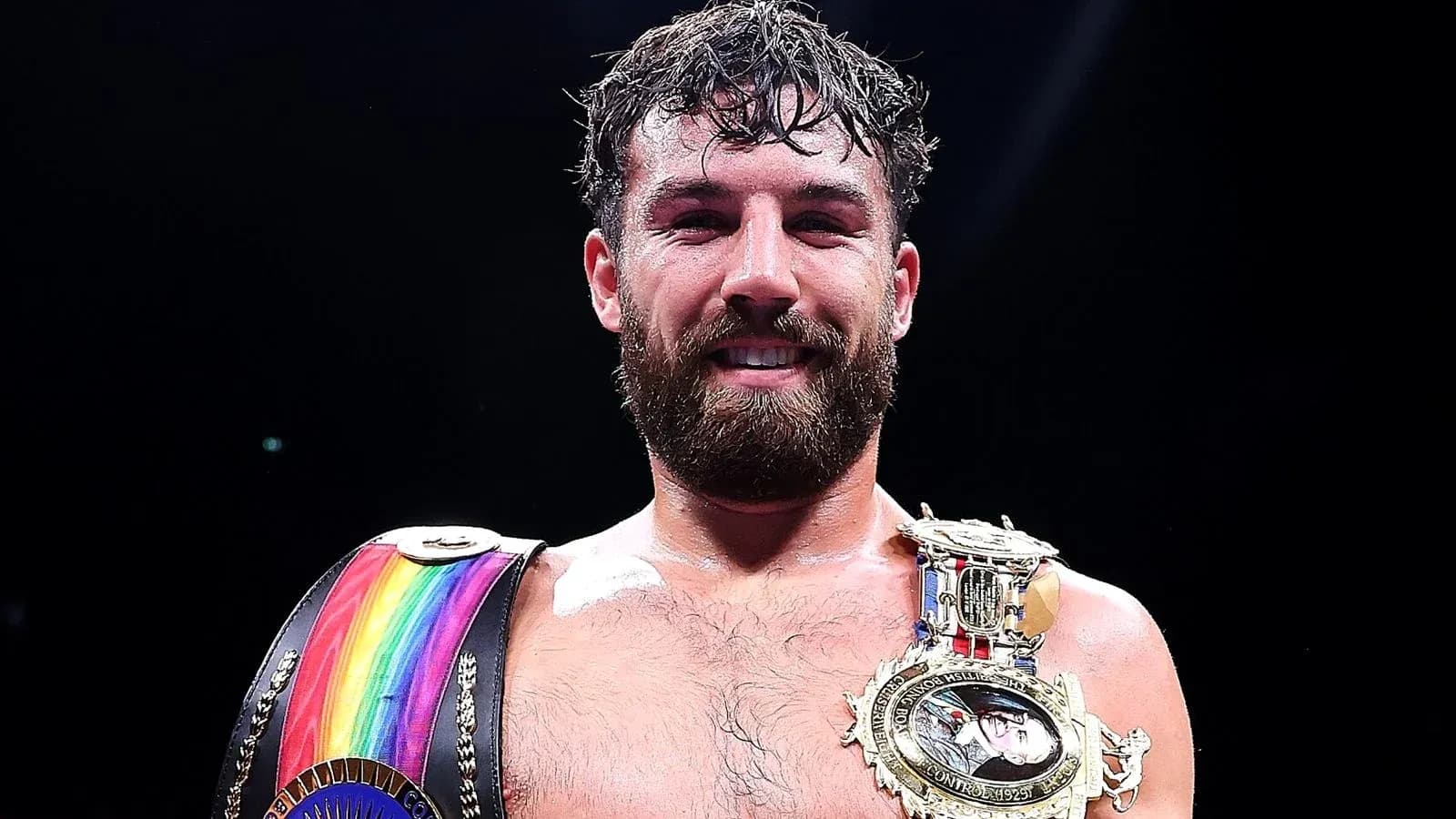
On home turf at Co-op Live, the 26-year-old Olympian climbed off a frustrating start to stop John Hedges in the sixth round and claim the vacant British and Commonwealth cruiserweight belts. The finish, a savage body shot combination, was delivered with one man in mind: Ricky Hatton.
“I finished him with a body shot in memory of him,” Brown said, dedicating the win to the British boxing great, who died a year and five days before fight night.
A perfect seven. Seven inside the distance.
Brown’s record now reads seven fights, seven stoppages. The Lonsdale Belt joins the WBA International and IBF Intercontinental straps already in his collection, a rapid haul for a man still learning the professional craft.
For Hedges, unbeaten in his first 12 contests, this was unlucky number 13. The Harlow southpaw arrived with height, reach and momentum. He left with his body broken down and his ambitions briefly stalled.
Early on, though, Brown looked like the man with the puzzle, not the solution.
Hedges, all of 6ft 6in and a tricky left-hander, spent the opening rounds turning Brown, smothering the action and refusing to give the Mancunian a clean target. When Brown did work his way inside, Hedges tied him up, leaned on him and spoiled.
The hometown favourite grew irritated. He began to rough Hedges up, driving him back over the top rope, dipping in with his head and trying to bully his way into range. Referee Reece Carter stepped in, issuing firm words as the contest threatened to turn scrappy.
The fight needed a shift. It came in the fifth.
Brown stopped loading up on single, desperate shots and started behaving like the Olympian he is. The jab snapped out, straight and purposeful. Hedges, who had been so elusive, suddenly had to deal with a cleaner, more patient attack.
Then Brown found the shot that changed everything – a right uppercut drilled straight up the middle, catching Hedges flush under the chin. It didn’t finish the fight, but it broke the rhythm and, crucially, the resistance.
The pressure finally told in the sixth.
After five rounds of aiming high, Brown dropped his attack downstairs. A thudding hook to the body folded Hedges onto one knee, the tall frame crumpling as the air rushed out of him. He rose, bravely, but the damage was done.
Brown went back to the same well. Another heavy shot to the ribs, another collapse. This time, Hedges stayed down, unable to beat the count. The arena erupted, Sale’s travelling support roaring for their man as he sealed the most meaningful win of his career.
The victory carried an extra layer of emotion. Both fighters had deep ties to Hatton. Brown shared a gym with the former world champion. Hedges had been trained by Hatton and guided to the English title. On a night heavy with memory, it was Brown who produced the kind of finish Hatton himself would have approved of.
“I can't just go bulldozing in with him, people think you can't box,” Brown told DAZN afterwards, keen to underline the thought behind the violence. “With John, you're not going to get him out of there straight away because he'll just make you miss and make you look silly. That's why it was a patient performance.”
Patient, then ruthless. The kind of mix that wins belts – and keeps them.
Masoud shines, Jeffers and O’Regan move on
The undercard in Manchester delivered its own stories of ascent.
Shabaz Masoud cruised to a shutout win over Ckari Mansilla, taking every round on all three cards – 100-90 across the board – to secure the WBA International and IBF Intercontinental featherweight titles. It was the sort of composed, one-sided display that nudges a fighter closer to world-level conversations.
In a British super-middleweight eliminator, Mark Jeffers outpointed Kieron Conway, edging himself into the domestic title frame in a division that rarely stays quiet for long.
Cory O'Regan also enjoyed a breakthrough night, becoming English lightweight champion at Joe Howarth’s expense. Another strap changing hands, another career kicking into a higher gear.
Cruz flattens Bravo and calls out Garcia
Thousands of miles away in San Diego, Isaac “Pitbull” Cruz was busy demanding his own slice of the spotlight.
At Pechanga Arena, Cruz retained his WBC interim super-lightweight title for the second time, stopping Nestor Bravo in the sixth round of a fight overshadowed by refereeing controversy.
The Mexican started like a man in a hurry. He caught Bravo with a hook in the opening round as the Puerto Rican tried to clinch and slow the pace, setting the tone for what followed.
Referee Thomas Taylor soon became a central figure. He docked Bravo a point in the second for holding, then warned both fighters in the third after a string of low blows. In the fourth, he penalised Bravo again for dumping Cruz to the canvas, bluntly telling the challenger that a disqualification would leave him without pay.
Amid the chaos, Cruz kept punching.
Midway through the sixth, he landed a lead left hook that detonated cleanly and sent Bravo to the canvas. The fight was over, Bravo beaten for just the second time in his career, Cruz marching on to 29-3-2.
Then came the callout.
“Hey, Ryan, I'm here,” Cruz said in the ring. “My next fight for you. Come on, Ryan.”
Ryan Garcia, fresh off a two-round demolition of Conor Benn in Las Vegas to retain his WBC welterweight title, has been talking about a quick return – December or January – and had already named Cruz as one of the men on his radar.
He didn’t duck the challenge.
“Pitbull proved me wrong tonight. Let's do this in December, the offer is on the table,” Garcia responded. “I can tame a lion, I'm not too concerned about taming a pitbull.”
Whether the fight lands as cleanly as Cruz’s left hook is another matter. Garcia has also been heavily linked with Teofimo Lopez, who holds a world title up at welterweight, while Cruz operates a division below at super-lightweight. Weight, politics and timing will all have their say.
For now, Cruz has done his part. He’s winning, he’s entertaining, and he’s shouting the right name.
Daniel Blancas, Marco Verde and Eumir Marcial all added inside-distance victories on the undercard in San Diego, padding records and sharpening tools in the shadows of the main event.
In Manchester and in California, the message was the same: belts are changing hands, contenders are emerging, and the next wave is no longer waiting. It’s already here.