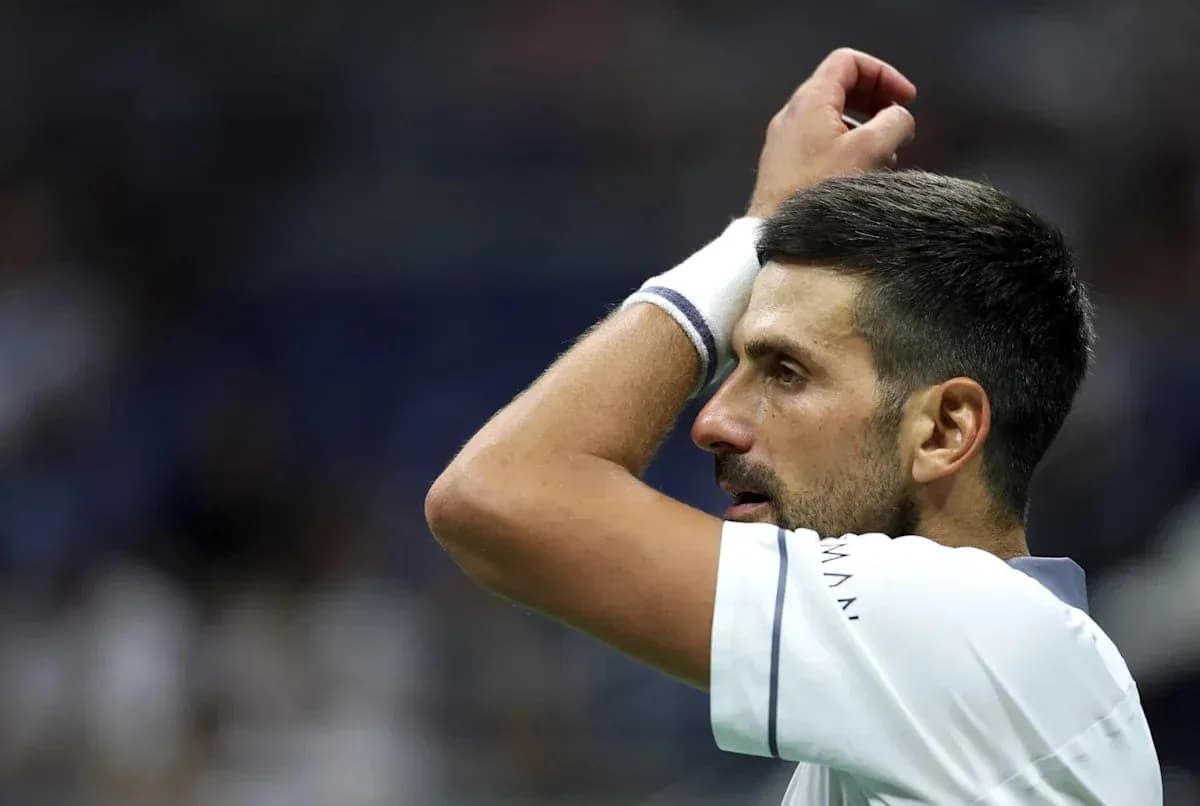
Novak Djokovic's Lasting Influence on Tennis Greatness
Novak Djokovic has spent two decades reshaping what greatness looks like in tennis. At 39, an age when most of his peers are long retired or working television studios, he is still trading blows with players nearly half his age — and beating them often enough to remain a central figure in the sport’s present, not just its past.
He owns a win over Jannik Sinner in 2026. He pushed Carlos Alcaraz to the limit in an Australian Open final that underlined how narrow the gap remains between the old master and the sport’s new standard-bearers. His game, his routines, his relentless professionalism: all of it has helped define an era.
Now, it is his words rather than his forehand that are causing the stir.
Djokovic’s claim on his influence
Speaking with Kevin Hart on a podcast snippet released this week, Djokovic reflected on his legacy and the way the modern game looks. In that conversation, he suggested that both Alcaraz and Sinner have, in part, copied his style of play, pointing to his influence as a reason why they perform the way they do.
He did not frame it as a put-down. The tone, from the available clip, was one of pride — a champion acknowledging that his fingerprints are all over the sport that followed him. For a player with his résumé, it is hardly an outlandish idea to believe that younger stars have studied and borrowed from him.
The reaction, though, has not been gentle.
Sinner comparison accepted, Alcaraz one challenged
Many observers accept the Sinner link. The Italian’s balance from the baseline, his elastic movement, his ability to turn defense into attack with a single swing — there are clear echoes of Djokovic’s own blueprint. Sinner has often been described as a “modern” hard-court player, and Djokovic, more than anyone, helped define what that looks like.
The Alcaraz comparison has landed very differently.
Alcaraz plays with a more explosive, improvisational edge. His frequent forays to the net, his heavy use of the drop shot, and his willingness to inject chaos into rallies have led plenty of fans to see him as a blend of multiple influences rather than a direct descendant of Djokovic’s style. So when Djokovic suggested that the Spaniard had copied elements of his game, some supporters bristled.
One fan on X captured that feeling bluntly: “I'm genuinely lost for words at this point. I'm being totally serious here. I don't know what to say.”
It was just one post, but it echoed a wider thread of disbelief running through parts of social media. For those critics, linking Sinner to Djokovic felt logical. Extending that same line to Alcaraz felt like a stretch, even from a player with Djokovic’s status and impact.
Legacy, ego, and a new generation
This is the tightrope every aging great must walk. Djokovic has every statistical right to speak about his influence. Multiple generations have grown up watching him dominate the sport’s biggest stages. Young players study his return position, his sliding on hard courts, his fitness standards. Many have openly admitted as much over the years.
Yet the arrival of stars like Alcaraz has shifted the conversation. The Spaniard is not just winning; he is winning with a style that feels fresh, unpredictable, sometimes wild. To many fans, he represents a break from what came before, not a continuation of it. So when Djokovic folds Alcaraz into his own legacy, it touches a nerve in a fanbase eager to see their new hero as something entirely new.
Djokovic, though, is unlikely to step away from these debates. He has built a career on pushing boundaries, on refusing to be written off, on inserting himself into every conversation about greatness and then backing it up on court.
Even as his form dips in patches, he remains close enough to the sport’s summit to make his voice impossible to ignore. The numbers say he has shaped this era. The arguments now revolve around how far that influence stretches into the next one — and whether players like Alcaraz are his heirs, his imitators, or something altogether different.