Nikita Tszyu Shifts Focus to America After Controversial Draw
Nikita Tszyu has watched the tape, sat with the doubt, and changed his mind. Now he’s convinced: his work at home is done, and the next chapter belongs in America.
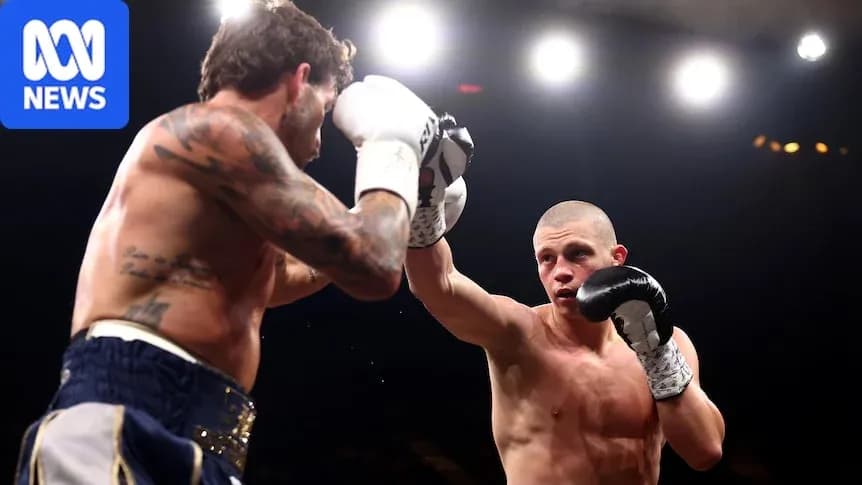
A month on from his controversial draw with Ben Mahoney in Brisbane, the younger Tszyu brother has flipped the script on his own post-fight verdict. On the night, he was brutally honest, admitting he thought Mahoney had edged him. The judges couldn’t agree – three wildly different scorecards produced a stalemate – and Mahoney celebrated like a new world champion, drawing a sharp response from Tim Tszyu and cries of robbery from the Tszyu camp.
Time and replay have hardened Nikita’s view.
“I’m not a very good judge,” he admitted after revisiting the bout. This time, he scored it 7–3 in his own favour, maybe 8–4 “in a good way”. In his mind, Mahoney banked the first two and the last two rounds. Everything in between, he believes, belonged to him.
He doesn’t walk back his honesty in the ring. “I don’t regret it, because it was what I felt at the time.” But the still-undefeated Sydney southpaw now sees that bruising super-welterweight clash as something else entirely: a lesson, and a launchpad.
At 29, with a record of 12-1-0 and 10 knockouts, Tszyu talks like a man who knows the domestic grind has served its purpose. The ambition has never been subtle, just deliberately delayed. He and his team resisted the urge to chase the bright lights too early, content to build slowly rather than rush into big-name opponents in the sport’s most unforgiving market.
Now he wants in.
The shadow of his brother’s recent American experiences hangs over that ambition. Tim Tszyu surrendered his IBO super-welterweight belt in the US to Sebastian Fundora, lost the rematch, and then endured a savage beating in another world-title defeat to Bakhram Murtazaliev. Those nights underlined the risk. They haven’t scared Nikita off.
“I think I can figure it out,” he told AAP, framing the Mahoney fight as a turning point. “This fight was a great learning curve for me and it puts things a lot into perspective. I’ve got to be a lot more professional with the way I do things.”
That line says plenty. So does what followed.
“I can’t be landscaping close to the fight. I can’t be doing woodworking close to the fight. Just some bad habits I do. Yeah, I’ve got to be a professional athlete.”
It’s a rare glimpse behind the curtain. While many fighters talk about sacrifice, Tszyu is openly admitting he hasn’t always lived like a full-time contender. Odd jobs, manual work, distractions in the final stretch of camp – they’re now on his personal blacklist. The Mahoney scare has forced him to tighten the screws.
The timing of his renewed push could be ideal. No Limit Boxing is working to secure him a slot on the undercard of the David Benavidez–Michal Cieslak unified blockbuster in Phoenix, Arizona, on December 12. That kind of stage would drop him straight into the consciousness of the American fight public, away from the comfort of Australian arenas and into a market that demands both substance and spectacle.
If that opportunity falls through, the plan doesn’t stall. No Limit has already committed to getting Tszyu back in the ring at least once more in 2026 on home soil. The message is clear: the activity will continue, with or without the US breakthrough.
For now, though, the target is unmistakable. Tszyu has rewatched his toughest night, claimed it as his win, and turned it into fuel. He has put down the tools, literally, and picked up the burden that comes with chasing America.
The question is no longer whether he thinks he beat Ben Mahoney. It’s whether the version of Nikita Tszyu that walks into his next camp – leaner in habits, sharper in focus – can turn that belief into something far bigger on the other side of the world.