.svg&w=384&q=75 "logo")
Nick Kyrgios Returns to Tennis After One-Month Ban for Cocaine Use
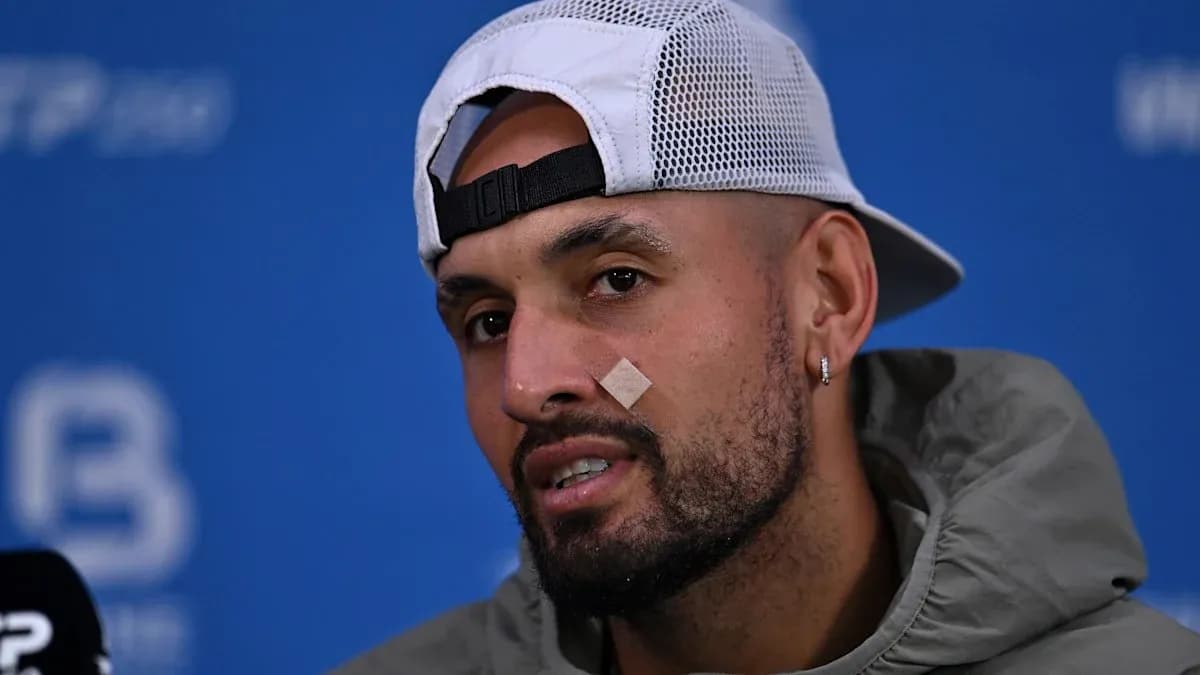
Nick Kyrgios is free to return to professional tennis after accepting a one‑month ban for testing positive to cocaine – a suspension that, in reality, has already come and gone.
The 31-year-old had been provisionally sidelined since August 4, meaning his ban officially expired on Thursday. On Friday morning, the International Tennis Integrity Agency (ITIA) confirmed the outcome and cleared the Australian to compete again.
This is not a full-scale comeback story. It is a line in the sand.
As part of the deal, Kyrgios agreed to undertake a treatment program. Completion is non-negotiable: if he fails to see it through, the one‑month sanction can be reinstated under anti-doping rules.
The positive test stemmed from an ATP Tour event in Mallorca in June, where Kyrgios returned a sample showing a metabolite of cocaine. He told ITIA investigators he had taken the drug while out partying on a night before the tournament began, not during competition.
ITIA officials turned to World Anti-Doping Agency (WADA) scientists, who judged that the level of cocaine in his system aligned with his account of out‑of‑competition use. On that basis, the integrity body accepted his explanation and treated the violation as use of a prohibited substance outside competition.
That distinction matters. Under WADA rules, the default sanction for this type of case is three months, but it can be cut to one if the athlete commits to a recognised treatment program. Kyrgios took that option, and the calendar has already done the rest.
When news of the positive test first broke last month, Kyrgios went public with an expression of regret.
“I made a huge mistake and I take full responsibility for it,” he wrote on social media, adding that his body has not been able to match the demands of his mind and that confronting the twilight of his career has been “harder than I ever imagined.”
The reaction inside the locker room was icy. Sympathy was in short supply for a player who has long been outspoken about others who failed drug tests.
Former world No.1 Simona Halep, herself previously at the centre of a high-profile doping case, was among those to take aim at Kyrgios after the news surfaced. At the US Open this week, Stefanos Tsitsipas went further, suggesting Kyrgios’ drug use was widely known among people on tour. Tsitsipas and Karen Khachanov both made it clear they could not feel sorry for their former rival.
It is a sharp comedown for a player who, at his peak, seemed capable of bending the sport to his will. Kyrgios climbed to a career-high ranking of No.13 and reached the Wimbledon men’s singles final in 2022, where he pushed Novak Djokovic before falling short.
Since that run on grass, his body has betrayed him. A string of injuries has stripped away his edge and his presence on the tour. The ranking list tells the story bluntly: Kyrgios now sits at No.918 in the world.
He has his eligibility back. What he no longer has is time to waste.