.svg&w=384&q=75 "logo")
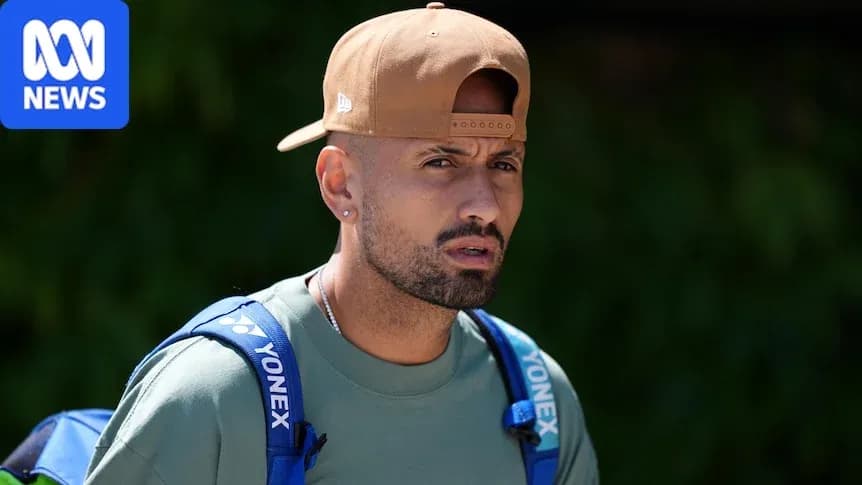
Nick Kyrgios Accepts One-Month Ban After Cocaine Positive Test
Nick Kyrgios has entered a treatment program and accepted a one‑month ban after testing positive for cocaine, drawing a stark new line in the turbulent story of one of tennis’s most compelling figures.
The 2022 Wimbledon finalist, provisionally suspended since August 4, is free to return to competition from Friday after the International Tennis Integrity Agency (ITIA) reduced what could have been a far heavier sanction. Under World Anti-Doping Agency (WADA) rules, a three‑month suspension is standard for this type of offence, but that can drop to one month if the player commits to an approved treatment program.
Kyrgios chose that route. He also chose not to fight.
The ITIA confirmed the 31‑year‑old tested positive for benzoylecgonine, a cocaine metabolite, from a sample taken during the ATP 250 event in Mallorca, where he lost in the first round to fellow Australian Adam Walton and earned 6,570 Euros in prize money. That money is now forfeited.
During an interview with ITIA investigators, Kyrgios said he had used cocaine socially on a night out in the days leading up to the tournament, not as a performance enhancer. The agency consulted an independent scientific expert at a WADA‑accredited laboratory, who stated that his account matched the level of cocaine detected. The ITIA therefore accepted the use occurred out of competition, a key distinction that helped limit the length of his ban.
Even with that mitigation, the episode lands at a fragile moment in his career.
Kyrgios, whose ranking once climbed to No.13 in the world, has played only four official singles matches on the ATP Tour this year. Knee and wrist injuries have stripped him of rhythm, stripped him of certainty, and left him openly wondering if his time as a singles force is effectively over.
He did not hide from the mistake when it became public. In a post on Instagram last month, Kyrgios wrote: “I recently failed a drug test in Mallorca after testing positive for cocaine. I made a huge mistake and I take full responsibility for it. I’m sorry to my fans, my family, my sponsors and everyone close to me. Above all, I’m sorry to the kids who follow me. I know the example this sets and I’m deeply disappointed in myself.”
The words carried a tone rarely associated with the combustible Canberra‑born star. The usual defiance was replaced by something else: resignation, and a candid glimpse into the mental toll of a body that can no longer do what his mind demands.
“I’m not going to make excuses, but I do want to give some context about where I’ve been,” he wrote, describing how the last couple of years of injuries had battered him “physically and mentally”. The reality of being “near the end” of his career, he admitted, had been harder to accept than he imagined.
He has long described his relationship with the sport in conflicted terms. “I’ve always said I didn’t choose tennis — tennis chose me,” he wrote. That line, once a throwaway Kyrgiosism, now reads differently. Letting go of something that has been his whole life, he added, has left him at times “helpless and alone”.
Then came the pivot. None of that, he stressed, excuses what he did.
The ITIA confirmed that Kyrgios could have appealed against his provisional suspension. He declined. Instead, he opted for the treatment program that allowed his ban to be cut to one month and, he hopes, will help him address the issues he says have been building in the background.
“The good news is that this has given me a wake up call,” he wrote. For the next 28 days, he said, he will step away from social media and public life to “focus on getting myself right”, asking for privacy for himself and his family. “I’m sorry. I’ll do the work and come back better.”
Until now, his last appearance came on the lawns that once showcased his most electrifying tennis: men’s doubles at Wimbledon on July 2, where he and Alexander Bublik lost in the first round. After the positive test was confirmed by a WADA laboratory on July 17, Kyrgios was banned from playing, coaching or even attending any event sanctioned by the ATP, WTA or national bodies in Australia.
Now the suspension clock is almost done. The questions, though, are only just beginning.
What version of Nick Kyrgios will walk back through the gates when he is allowed to compete again: the entertainer who bent Wimbledon to his will two summers ago, or a player inching towards a reluctant farewell?