.svg&w=384&q=75 "logo")
NBA Punishes LA Clippers Severely for Salary Cap Violations
The NBA dropped a hammer on the LA Clippers on Thursday, ending a year-long investigation with one of the most severe punishment packages the league has handed down in the salary-cap era.
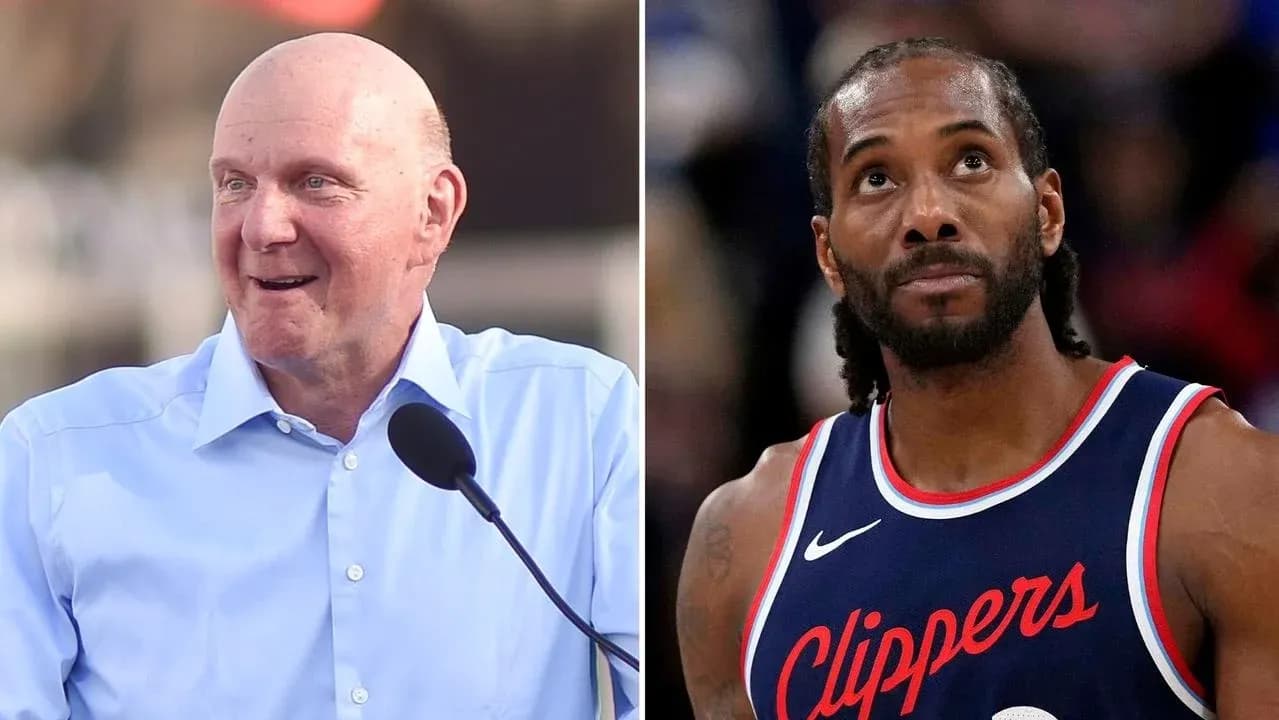
Five first-round picks gone. A $30 million fine. Owner Steve Ballmer barred from league and team activities for a year. Senior executives suspended. Kawhi Leonard hit in the pocket. And his uncle and former business representative, Dennis Robertson, effectively exiled from NBA business.
This wasn’t framed as a technicality. It was framed as a scheme.
A “pattern of misconduct”
The league’s ruling, built on a summary report prepared by law firm Wachtell Lipton, said it uncovered “a pattern of misconduct and multiple significant rules violations” by a franchise it described as a “prior offender” of salary cap circumvention rules.
At the center: off-court money.
Investigators concluded the Clippers didn’t just sit back and watch endorsement opportunities fall into Leonard’s lap. They say the team initiated and facilitated income streams with four companies that do business with the franchise — Aspiration Partners, Boingo Wireless, Daktronics, and Lockton Insurance — and then used the organization’s business leverage to help close those deals.
The NBA says the Clippers:
- Initiated off-court income opportunities between Leonard and those four companies.
- Helped facilitate the endorsement agreements.
- Induced the companies by offering them team business in return.
- Paid personal expenses for Leonard and his representatives.
- Failed to report improper solicitations for off-court income made on Leonard’s behalf by Robertson.
Those are the kinds of moves the league views as backdoor compensation — money and benefits tied to a player’s relationship with a team, but routed through third parties to dodge the cap.
The league didn’t stop at the franchise. It went straight into Leonard’s inner circle.
Leonard, Robertson and the cap rules
In its findings, the NBA said Leonard, “through the conduct of Mr. Robertson on his behalf,” violated circumvention rules by pressuring the Clippers to help him secure off-court income, receiving those opportunities, and not reimbursing personal expenses the team covered.
For that, Leonard must pay the league $700,000.
Robertson’s fate is harsher. The NBA banned him for five years from conducting business or engaging with any NBA team or affiliate “on behalf of or with respect to any player, employee, or other league or team personnel.”
In a statement released through his agent, Leonard did not challenge the league’s version of events head-on. Instead, he leaned into accountability and intent.
“Integrity and respect for this game are fundamental to who I am. I accept full responsibility for lapses in judgment by people within my inner circle and regret the distraction this situation has caused the fans and my family,” he said.
He insisted he signed both his Clippers contract and the endorsement agreements “in good faith,” saying he had “no knowledge of any intent on anyone’s part to circumvent the salary cap.”
Then he pivoted to the floor.
“For 15 years, my priority has been giving everything to my family, the game, and those I share the court with. As I return to Toronto, I am focused on what I can control, closing this chapter, and moving forward with a clean slate.“
The message: accept the punishment, deny the intent, move on.
The organization chose a very different tone.
Clippers come out swinging
If Leonard’s response tried to calm the waters, the Clippers’ statement churned them.
“We vehemently reject the NBA’s findings,” the team said, calling the investigation “heavily biased” and accusing the league of chasing “a predetermined narrative rather than facts and evidence.”
The franchise claimed the league’s private communications did not match Thursday’s public announcement and accused the NBA of failing to meet the standard of fairness and accuracy Commissioner Adam Silver had laid out when the probe began.
“For the past year, we cooperated fully and in good faith and we will now fight just as hard to demonstrate our innocence,” the statement continued.
The Clippers vowed to “vigorously challenge these findings and penalties through every avenue available” and said they “look forward to an ethical and impartial arbitration process.”
So while the league tried to close the book, the Clippers tried to rip it back open.
The penalties: a franchise reshaped
The cost to the franchise is enormous, and not just financially.
The NBA ordered the Clippers to forfeit five first-round picks — one each in the 2029, 2030, 2031, 2032 and 2033 drafts. In a league where long-term control of first-rounders is the lifeblood of roster-building, that’s a generational hit.
The $30 million fine to the organization lands on top of that.
Ballmer, one of the most visible and engaged owners in the sport, is suspended from all league and team activities for a year. The league said he “knowingly” sought to help Leonard secure off-court income, approved a business deal he knew was a precondition for Aspiration’s endorsement agreement with Leonard, and failed to ensure his organization followed cap circumvention rules.
Inside the front office, the fallout is just as stark.
President of Business Operations Gillian Zucker is suspended without pay for a year. The league labeled her “primarily and directly culpable” for the improper endorsement arrangements and said she provided “false and misleading statements” to investigators.
President of Basketball Operations Lawrence Frank receives a six-month suspension without pay for his role in the endorsement setup and for approving impermissible expenses for Leonard and his family.
On top of all that, the Clippers now fall under a five-year compliance and monitoring program overseen by the league office — a long runway of scrutiny that will shadow every major decision they make.
The NBA wanted to send a message about the line between on-court salary and off-court money tied to team influence. On Thursday, it didn’t whisper it. It shouted.
The Clippers insist the league got it wrong and say they’re ready for a legal fight. The league insists it uncovered a pattern, not a one-off mistake.
The draft picks are gone. The suspensions are in place. Leonard writes a check and heads back to Toronto.
What’s left now is a battle over reputation — of a franchise, of an owner, and of where the limits of creativity in the cap era really sit.