.svg&w=384&q=75 "logo")
NBA Punishes Clippers: Heavy Fines and Suspensions
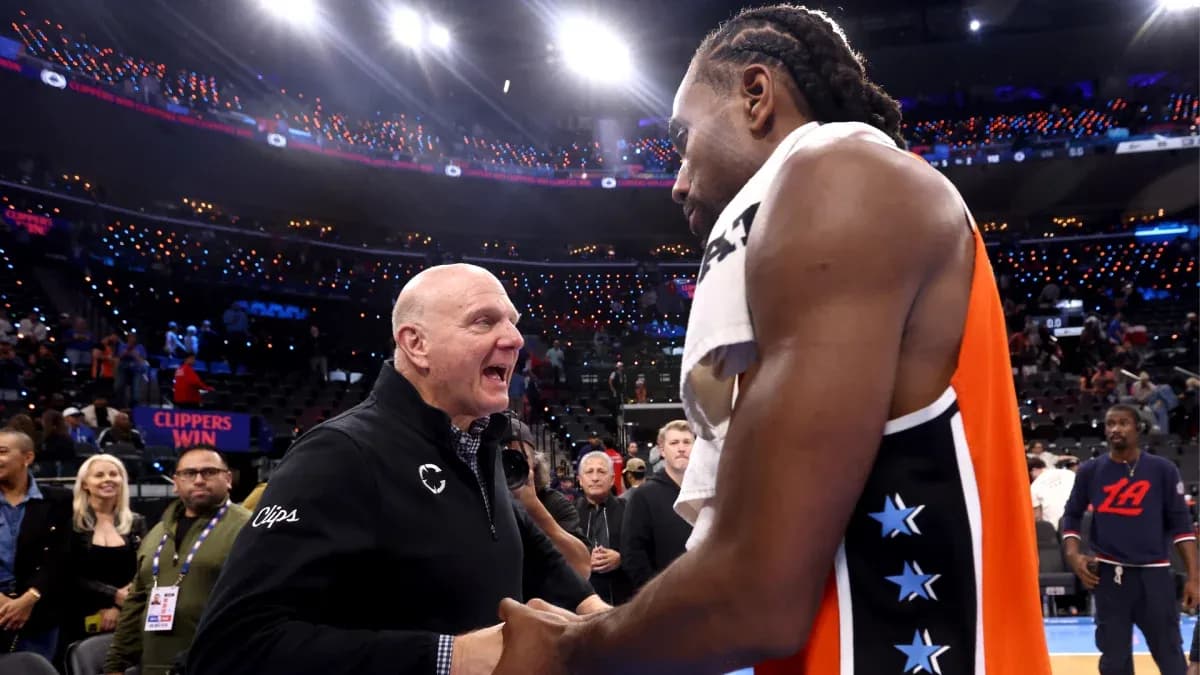
The NBA dropped a hammer on the Los Angeles Clippers on Wednesday, punishing the franchise, owner Steve Ballmer and star forward Kawhi Leonard for what the league called “violating the salary cap circumvention rules” after a nearly year-long investigation into off-court endorsement deals.
The price is staggering: a one-year suspension for Ballmer, a $30 million fine for the Clippers, five forfeited first-round picks and a $700,000 payment from Leonard to the league. The franchise’s future has been shoved into a different lane overnight.
Leonard, crucially, keeps his contract and avoids suspension. He is still expected to be traded to the Toronto Raptors after the sides agreed to a deal in June, a move that has been frozen while the NBA dug through bank records, emails and testimony.
“The investigation found a pattern of misconduct and multiple significant rules violations by the Clippers organization, a prior offender of the salary cap circumvention rules,” the league said in a statement.
Adam Silver did not soften the blow. The commissioner called the Clippers’ behavior “flagrant violations” and framed the case as an attack on the core of the NBA’s economic system, the collectively bargained structure that governs player pay and competitive balance. The penalties, he stressed, were designed to match the seriousness of the breach.
How the Clippers crossed the line
The league’s summary report paints a detailed picture of how the Clippers and Leonard ran afoul of the rules.
Investigators concluded the team “affirmatively initiated off-court income opportunities” and facilitated endorsement arrangements for Leonard with four companies: Aspiration Partners, Boingo Wireless, Daktronics and Lockton Insurance. Those companies, the NBA found, were “induced” into deals with Leonard by the promise of business from the team.
The Clippers also paid personal expenses for Leonard and his representatives and failed to report improper solicitations for off-court income made on Leonard’s behalf by his then-business manager and uncle, Dennis Robertson.
Leonard’s violations, the league said, flowed through Robertson’s actions.
“Mr. Leonard, through the conduct of Mr. Robertson on his behalf, violated the circumvention rules by pressuring the Clippers to assist him in obtaining off-court income opportunities, successfully obtaining those opportunities, and failing to reimburse payments by the Clippers for personal expenses,” the NBA said.
The investigation began last September after investigative journalist Pablo Torre released a podcast alleging that the Clippers had used endorsements to get around the cap. That show cracked open a hidden arrangement between Leonard and Aspiration, a now-bankrupt “sustainability” company that had raised hundreds of millions of dollars from investors.
The Aspiration deal promised Leonard large sums of money with little evidence of meaningful services in return. Another similar agreement with scoreboard manufacturer Daktronics surfaced later. The league’s probe then uncovered additional off-court income routes pushed by the Clippers with Boingo Wireless and Lockton Insurance.
The pattern was clear to investigators: the team helping secure and sweeten endorsement money for a star, in ways the rules do not allow.
The penalties: sweeping and personal
The fallout stretches from the ownership suite to Leonard’s inner circle.
The Clippers must forfeit five first-round draft picks from 2029 through 2033. For a franchise already wrestling with a murky competitive window, that is a brutal long-term hit.
The organization also faces a $30 million fine.
Ballmer, one of the league’s most visible and wealthy owners, is suspended from “all league and team activities” for one year. The league said he “knowingly” sought to help Leonard obtain off-court income, approved a business deal that was a precondition for Aspiration’s endorsement with Leonard, and failed to ensure his organization followed the circumvention rules.
Gillian Zucker, the team’s president of business operations, received a one-year suspension without pay for being “primarily and directly culpable” for the impermissible endorsement structures and for giving “false and misleading statements” to investigators.
On the basketball side, president of basketball operations Lawrence Frank was suspended without pay for six months for his role in the endorsement arrangements and for approving improper expenses tied to Leonard and his family.
Leonard must pay $700,000 to the NBA “in connection with his violations.”
Robertson, the uncle who has long been a central figure around Leonard’s career, faces perhaps the most severe personal sanction: a five-year ban from “conducting business or otherwise engaging with NBA teams and their affiliates” on behalf of any player or team personnel.
The NBA and the National Basketball Players Association agreed that the penalties are “final and binding on all parties,” closing the door to internal appeals.
Clippers push back, Leonard looks to move on
The franchise is not taking the ruling quietly.
In a lengthy statement, the Clippers said they “vehemently reject” the findings and blasted the investigation by law firm Wachtell Lipton as “heavily biased,” accusing the league of chasing a “predetermined narrative” rather than following the evidence.
“What the league told us privately differs from what it announced today publicly,” the team said, arguing the NBA had failed to live up to the standard of fairness and accuracy Silver set at the outset.
The Clippers said they had cooperated “fully and in good faith” over the past year and vowed to “vigorously challenge” the findings and penalties “through every avenue available,” signaling a looming arbitration battle.
Leonard’s response struck a different tone.
In a statement released through his new agent, Harrison Gaines, Leonard said “integrity and respect for this game are fundamental to who I am” and accepted “full responsibility for lapses in judgment” by people in his “inner circle,” while maintaining he had “no knowledge of any intent on anyone’s part to circumvent the salary cap.”
He said he entered his Clippers contract and the disputed agreements “in good faith,” fully committed to his obligations. He acknowledged the distraction caused to fans and family and framed his return to Toronto as a chance to “close this chapter” and “move forward with a clean slate.”
The Aspiration trail and a long shadow from 2019
The road to Wednesday’s decision runs through a failed fintech dream and a string of allegations that had trailed Leonard’s free agency since 2019.
Aspiration co-founder Joe Sanberg was sentenced in June to 14 years in prison for defrauding investors. When Sanberg was arrested and the company collapsed, bankruptcy filings listed Leonard as a creditor. Ballmer had poured $60 million into Aspiration. Dennis Wong, the Clippers’ only minority owner, invested $1.99 million just nine days before a $1.75 million payment went to Leonard. Wong’s daughter worked at Aspiration. The company even reached a jersey patch sponsorship agreement with the Clippers that never ultimately took the floor.
In 2023, two former Aspiration employees filed an SEC Whistleblower Complaint under penalty of perjury, alleging the company paid Leonard “an incentivized bonus to circumvent the NBA’s salary cap, disguised as an organic marketing sponsorship agreement.” A former finance department employee later told Pablo Torre’s show they were instructed not to question Leonard’s deal because “it was to circumvent the salary cap.”
When the NBA interviewed Sanberg as part of its probe, the league told Judge Stephen V. Wilson that he had cooperated. Ballmer, in a victim impact statement, attacked Sanberg’s credibility.
The league’s investigation also brushed against long-circulating stories from Leonard’s 2019 free agency, when Robertson reportedly asked suitors for illegal benefits. Bruce Arthur of the Toronto Star reported that Leonard’s camp sought ownership stakes in the Raptors and Maple Leafs and an extra $10 million per year in sponsorship income. When Toronto officials suggested local companies would eagerly sign Leonard as an endorser, the response from his side, Arthur reported, was: “We don’t want to do anything.”
The Athletic reported similar requests to the Los Angeles Lakers at the time, including use of a private plane, a home and a stake in the franchise. The Lakers declined. The NBA looked into those claims in 2019 and cleared the Clippers of wrongdoing then.
This time, the paper trail and testimony led to a very different conclusion.
A season already on edge, now upended
All of this unfolded against the backdrop of a season that never matched the Clippers’ lofty expectations.
Leonard played well, but the team stumbled early, finished 42–40 and fell to the Golden State Warriors in the Play-In Tournament. At the trade deadline, the Clippers moved on from James Harden and Ivica Zubac, signaling a pivot toward the future even before the league’s verdict arrived.
Now that future has been stripped of five first-round picks, saddled with massive fines and forced to operate for a year without its owner and key executives. Leonard is headed back to Toronto under a cloud, his inner circle reshaped by sanctions, his reputation tested.
For a franchise that has spent the past decade trying to reinvent itself as a model operation with a new arena, big spending and star power, the question is stark: how do you rebuild trust — and a contender — when the league has just ruled that the foundation was compromised?