.svg&w=384&q=75 "logo")
Naomi Osaka Overcomes Mid-Match Struggles to Advance at US Open
Naomi Osaka flirted with trouble, then slammed the door.
On a bright Thursday in New York, the two-time US Open champion rode out a mid-match collapse and surged past Katerina Siniakova 6-2, 5-7, 6-1 to reach the third round at Flushing Meadows.
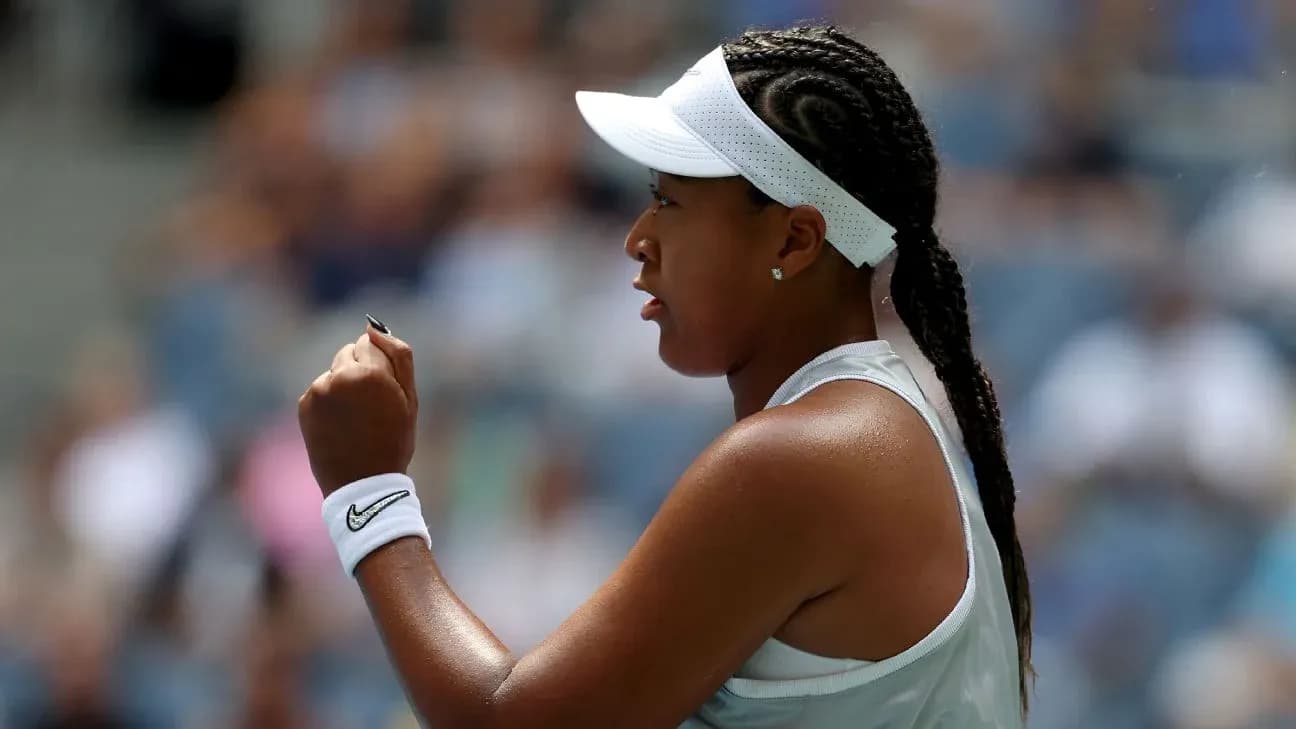
This was Osaka in full day-session contrast. Gone was the black outfit and cornrows that paid homage to Allen Iverson in her opener under the lights. On Arthur Ashe Stadium, she stepped out in silver and white beneath a long white jacket, visor pulled low, businesslike from the first ball.
For half an hour, it looked like a routine shift.
She ripped through the opening set in 30 minutes, bossing rallies against Siniakova, the world No. 1 in doubles but a far less imposing force in singles against a four-time major winner. The No. 13 seed dictated with her first strike, kept the errors down — just four in that first set — and looked every bit a player intent on a short afternoon.
When she broke and moved ahead 4-2 in the second, the match seemed all but done.
Then the gears jammed.
Osaka’s serve wobbled in a long, draining game. Siniakova broke back and suddenly Osaka’s timing deserted her. The unforced errors piled up — 20 in the set — as her clean, early hitting gave way to rushed swings and tight misses. The Czech, sensing a crack, hung around, made balls, and let Osaka’s frustration do the rest.
The set slipped away 7-5. A match that had looked like a straight-sets stroll had turned into a test of temperament.
Osaka answered it the old-fashioned way: she left the court.
“I took the bathroom break, regrouped a little, came back and just tried to have no regrets,” she said afterward. She admitted she had been “a little bit too hard” on herself in that second set, the kind of self-criticism that has so often defined her inner battles as much as her tennis.
The reset worked.
She came out for the decider with a clearer head and a sharper game. The serve steadied. The depth returned. She broke immediately for 2-0 and, with that, reasserted control. The pressure finally told on Siniakova, whose counterpunching no longer drew the same loose errors.
Osaka then produced one of the points of the match, winning a 19-shot rally with a crisp volley winner to help secure the next game. Her reaction said plenty: not a roar, not a theatrical celebration, but a visible exhale — more relief than elation at finding her touch again.
From there, she did not look back, closing out the third set 6-1 and booking her place in the last 32. It was not flawless, but it was resilient, and on a day when the women’s draw began to sharpen, that mattered.
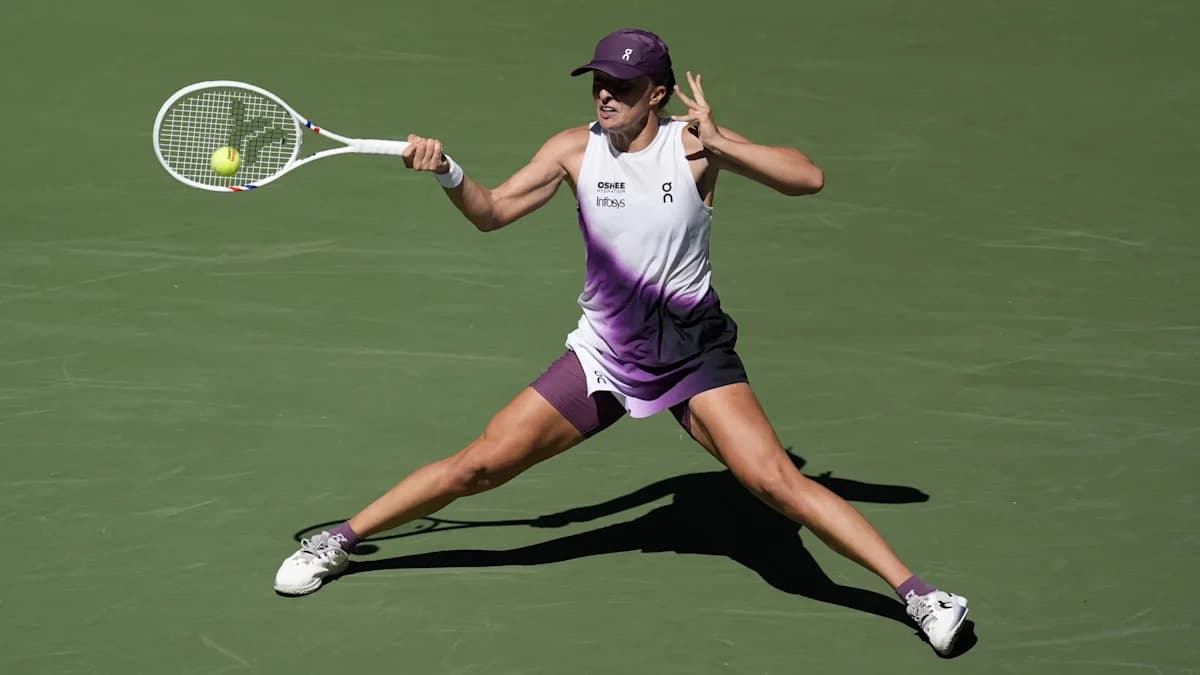
Across the grounds, another recent champion made lighter work of her assignment. Iga Swiatek, the 2022 US Open winner, dismissed Nadia Podoroska 6-3, 6-2, a clean, controlled performance that underlined why she remains one of the tournament’s benchmarks.
Alex Eala, the No. 17 seed from the Philippines, had to wait. Her match was pushed back after Felix Auger-Aliassime, the No. 3 seed, needed four sets to get past Karen Khachanov in the preceding encounter, stretching an already packed day schedule.
The night belonged to Coco Gauff.
The 2023 champion at Flushing Meadows returned under the Ashe lights to face Paula Badosa, who came in with extra mileage in her legs after being forced to finish her rain-delayed first-round match on Wednesday. Badosa’s quick turnaround highlighted a tournament that had been at the mercy of the weather for days, before the clouds finally cleared and the sun returned on Thursday.
Once Gauff and Badosa were done, the spotlight was set to swing to No. 1 seed Alexander Zverev. He stepped in hoping for a calmer evening against Quentin Halys after surviving a five-set scare against Lorenzo Sonego on Tuesday, when he narrowly avoided becoming the first top seed to lose in the opening round of a men’s major since 2003.
Doubles also stirred to life on Thursday, though without two of the biggest names in the sport. Serena Williams and Venus Williams were absent from the schedule but are expected to open their campaign on Friday against Hao-Ching Chan and Maya Joint — the same Joint who beat Serena in singles at Wimbledon this summer.
For Osaka, the day ended with more questions answered than asked. The scoreline will show three sets and a brief stumble. The way she responded — bathroom break, mental reset, ruthless third set — hints at something more important: a champion slowly rebuilding the habit of winning ugly when the game goes missing.
In New York, that habit often separates a nice run from a second-week charge.