.svg&w=384&q=75 "logo")
Naomi Osaka's Resilience Shines at US Open
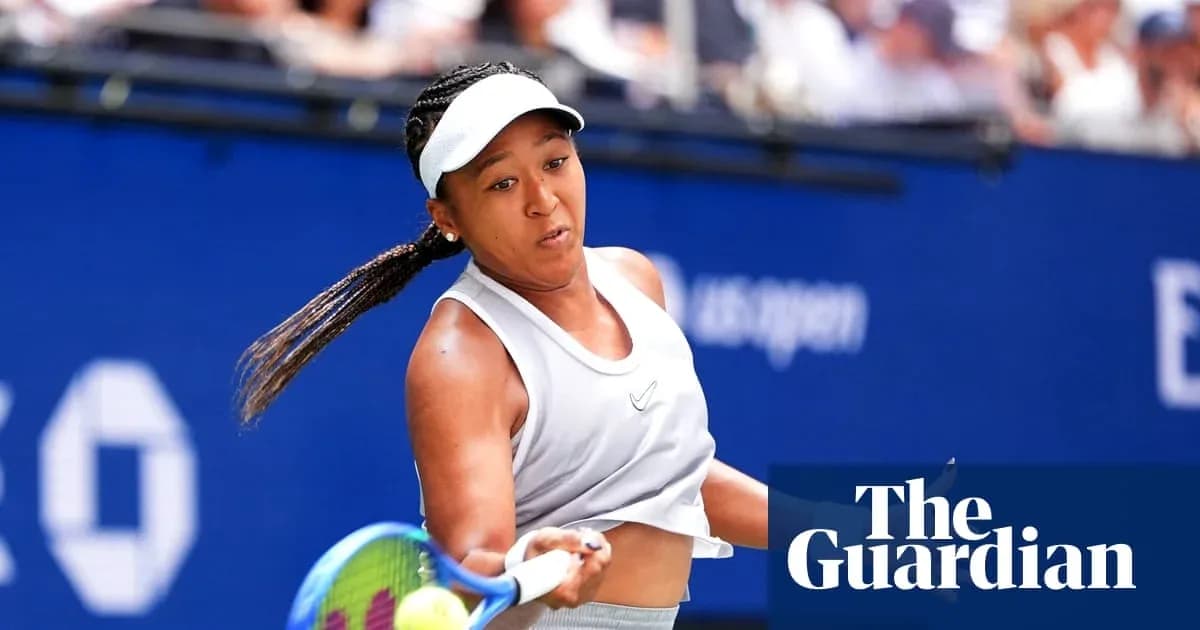
Naomi Osaka had the match in a headlock. Again.
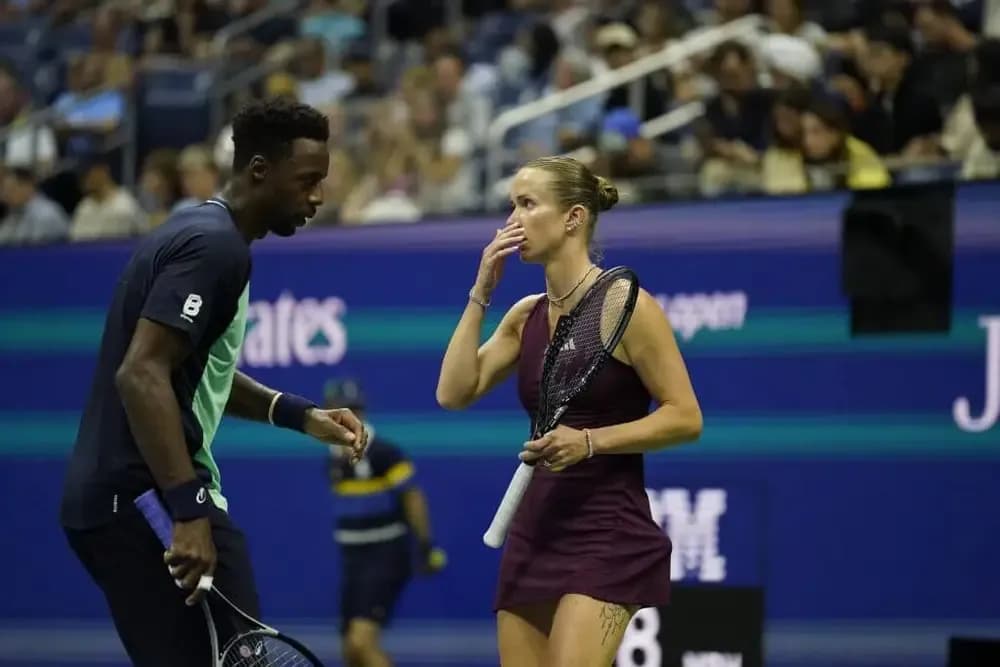
For the second straight outing at this US Open, the two-time champion built what looked like an unshakeable lead – a set and a break up on Katerina Siniakova, the evening drifting towards a routine passage into round three.
Then the tension walked on court.
Osaka’s arm tightened, her footwork lost its snap and the clean, heavy strikes that had put her in control began to spray. The second set slipped, almost casually at first, then all at once. Siniakova levelled, Osaka stared at a decider she had no real business playing, and Ashe suddenly felt smaller, tighter, noisier.
That was the moment that mattered. Not the early dominance, not the wobble. What came next.
Osaka reset, dug into the experience that has shaped her career and tore through the final set with a ruthlessness that silenced any lingering doubt. She dropped just one game in the decider to close out a 6-2, 5-7, 6-1 win and return to the third round in New York.
The scoreline says she wobbled and then recovered. The performance says something more important: the big-match instincts are still there.
A contender again
This North American swing was always going to be a litmus test. The hard courts of late summer built Osaka’s reputation – US Open titles in 2018 and 2020, the sense of inevitability that used to follow her into these stadiums. For the first time in years, she has arrived here looking like a genuine grand slam threat again.
The difference has been her year as a whole. The clay and grass seasons, once long, joyless stretches she simply had to endure, turned into something else entirely. Osaka reached the fourth round at the French Open, then the quarter-finals at Wimbledon – both career-best runs on those surfaces.
Wimbledon, in particular, felt like a line in the sand. On grass, a surface that has often exposed her timing and movement, she produced some of the cleanest ball-striking of her career. The highlight came in the fourth round, where she took out world No 1 Aryna Sabalenka, a statement win that echoed far beyond the lawns of the All England Club.
She ran out of gas in the quarter-finals, her legs heavy after a run to the Bad Homburg final the previous week. Yet the level she sustained through that stretch was the best she had shown since lifting her last major trophy at the Australian Open in 2021. She arrived in North America carrying something she has not always had in recent seasons: sustained form and genuine confidence.
The weight of expectation
That confidence comes with a cost. Expectations have risen again, and Osaka’s first two matches in New York have carried the imprint of that pressure.
Her opening win over Anastasia Zakharova was a grind. Twice she went up a break, twice she let it go, and both sets were decided in tight tie-breaks. Osaka edged them 7-6 (6), 7-6 (3), but her nerves were obvious, the shoulders a little stiff, the reactions a touch delayed. It was a win that felt like a sigh of relief as much as a step forward.
Against Siniakova, the nerves escalated. This time they cost her a set. From 6-2, 4-2 up, Osaka’s level dipped and Siniakova, too solid and too seasoned to turn down such an invitation, pounced. The Czech forced a third set, and Osaka suddenly had to confront the kind of mental test that has defined her biggest moments.
She leaned straight into her history.
“I’m quite fortunate to have a lot of high-quality matches that went in my favour,” Osaka said afterwards. When the match stretched into that deciding set and she needed to gather herself, her mind went back to Melbourne, to the 2019 Australian Open final and her three-set victory over Petra Kvitova. “Then it’s just like you can just pull from your memory bank for every certain situation that you need to get finished.”
That is the advantage of scars and trophies. They become reference points. They turn panic into something more manageable.
“I think that’s the best thing about being a more experienced player,” she added. “You’ve been able to play so many different matches in different situations. Here, obviously, I’ve had a lot of good memories, and I hope to continue making them.”
The early rounds of a major rarely demand perfection from the elite. They demand survival, a path into the second week where the true level can emerge. Osaka, edgy but effective, has given herself that chance.
More than just the tennis
Talking about Osaka now without mentioning everything around her feels incomplete. Her game is sharpening again, but every grand slam appearance this season has also become a cultural moment, a visual event.
Her walk-ons and match outfits have become talking points in their own right. In New York this year, she is paying tribute to Allen Iverson, channelling the former NBA star in a series of looks that nod to his defiant style and influence. The designs are bold, layered, unmistakably hers.
Those choices have drawn as much noise as her backhand.
For a player as naturally reserved as Osaka, the reaction can be jarring. She is, by nature, introverted. She speaks softly, often hesitates before answering, rarely seeks the spotlight away from the court. Yet her fashion has become the way she expresses herself with clarity and intent, a way to show personality without having to explain it.
That, inevitably, has made her a lightning rod. Critics label her an attention seeker, demand that she “just focus on tennis,” and circle back to the mental health struggles she disclosed in 2021 as if they were a contradiction rather than a chapter. Much of it is bad-faith commentary, driven by those who have never forgiven her for the anti-racist stance she took in the early 2020s.
The outrage misses the point. Osaka is an athlete who entertains for a living, a player who runs, stretches and swings for the enjoyment of those watching. This is sport, not a morality play. Wearing elaborate dresses to hit forehands is hardly a crime against the game.
What it does do is underline who she is now: a more mature, more self-assured version of the player who once seemed almost overwhelmed by her own success. The shyness remains, but the sense of self is firmer. The tennis is catching up.
A brutal road ahead
The draw, though, offers no comfort. Osaka has landed in one of the toughest sections in the women’s field. Second seed Elena Rybakina looms as a potential fourth-round opponent, a matchup that would test Osaka’s serve, her timing and her nerve all at once.
Getting there is the first job. The Siniakova scare will serve as a warning and, perhaps, a useful reminder: one bad patch can flip a match, but one decisive response can flip it back.
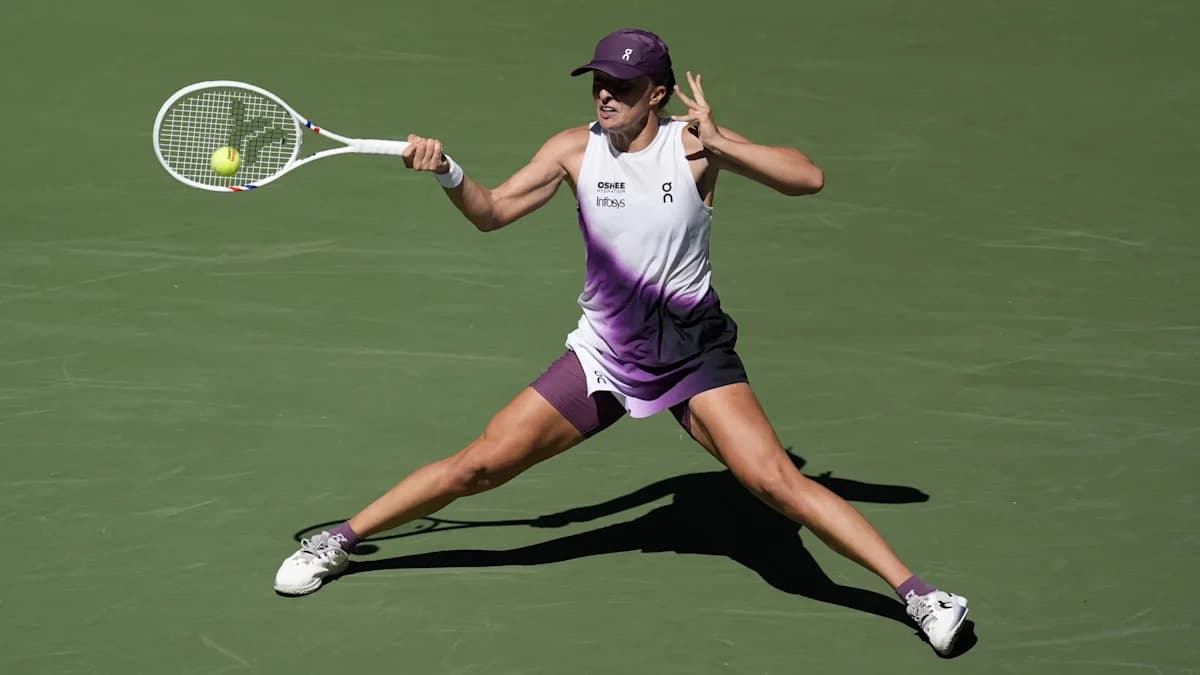
Elsewhere in the women’s draw, another former champion moved with less drama. Iga Swiatek, the 2022 winner and eighth seed this year, eased into the second round with a composed 6-3, 6-2 victory over Nadia Podoroska. The Pole’s game, built on relentless depth and suffocating intensity, looks increasingly well-tuned to New York’s bounce and pace.
For British fans, the day brought disappointment. Qualifier Harriet Dart, who had battled through the preliminary rounds to reach the main draw, was swept aside 6-2, 6-2 by 25th seed Marie Bouzkova, the Czech’s consistency and court coverage proving far too much.
The men’s event delivered an early jolt of its own. Félix Auger-Aliassime, seeded third and a semi-finalist here last year, saw his campaign unravel as dizziness and illness undermined him in a four-set defeat to Karen Khachanov. After taking the opening set in a tie-break, Auger-Aliassime faded, losing the next three 6-3, 6-2, 6-2 and exiting far earlier than expected.
Osaka, though, remains in the draw, still standing, still searching for the level that once made her untouchable on these courts. The nerves are back, the scrutiny has never left, and the path only gets steeper from here.
The question now is simple: with her game returning and her resolve hardening, how far can she push this run on the stage that has always felt most like home?