.svg&w=384&q=75 "logo")
Naomi Osaka Advances to US Open Third Round After Scrappy Finish
Naomi Osaka’s return to Arthur Ashe Stadium came with all the familiar noise, the glare, and—late in the second set—a surprising amount of chaos. In the end, the two-time US Open champion did what champions tend to do: she absorbed the wobble, reset, and closed.
Osaka beat Katerina Siniakova 6-2 6-3, but the scoreline hides a messy, nervy finish to the second set in which both players traded breaks and chances before Osaka finally served it out at the second time of asking.
Osaka in control, then under pressure
For an hour, Osaka looked like the player who once owned this court. She dictated from the baseline, bullied the rallies, and kept Siniakova pinned behind the baseline, especially in the opening set, which she wrapped up 6-2 with minimal fuss.
That authority carried into the second set. Osaka held to start, then kept Siniakova under constant pressure. The Czech, already frustrated by a fifth double fault of the match early in the set, needed a big first serve just to stay level at 2-2.
The pattern seemed set. Osaka held again for 3-2 without alarm, and Siniakova’s game began to fray. A faltered forehand left her glaring at herself as she slipped 0-30 down, then Osaka carved out three break points. Siniakova saved one with the help of a lucky net cord and a sharp forehand, but Osaka dragged her side to side, finally ripping a winner to break for 4-2 and seize control.
From the baseline, Osaka looked ruthless. She saw the finish line. Everyone in Ashe did.
Siniakova fights back
Then the match twisted.
Serving at 4-2, Osaka suddenly lost her range. Siniakova, who had spent most of the afternoon chasing, at last earned her first break point of the match after a strong return and a rare Osaka error. After a long, tense game that dragged through multiple deuces, the Czech took her second break chance, capitalising on a cluster of unforced errors from Osaka to drag the set back to 4-3.
For a player who had struggled even to create opportunities, it was a jolt. “Game on” felt like more than a cliché. Osaka’s smooth progress had been checked.
But the response from the two-time champion was immediate. Siniakova stepped up to serve at 3-4, only to find Osaka’s power and depth back at full volume. Osaka stormed to three more break points, Siniakova saving one with brave hitting before conceding on the second. The disappointment was obvious; she had waited so long to break, only to hand the advantage straight back.
Osaka led 5-3 and walked to the line to serve for the match.
A scrappy finish, a clear statement
What should have been a routine close-out turned into a scrappy, stop-start game that summed up the second set. For a fourth straight game, there were break points—this time two for Siniakova as Osaka’s first serve briefly deserted her.
The Czech had the chance to extend the contest, but Osaka dug in, shrugged off the tension and the errors, and found enough first-strike tennis to shut the door. The final hold was not pretty, but it was ruthless in its own way: a reminder that winning on Ashe is as much about nerve as it is about clean winners.
The crowd had its own role in the drama. More than once, the chair umpire had to ask spectators to stay quiet during points, with Osaka even double-faulting on a game point earlier in the set amid the distraction. Each time, she reset and pushed through.
By the time Siniakova’s final resistance faded, Osaka had secured her place in the third round and, perhaps more importantly, another step in her rebuilding process on a court that has defined so much of her career.
Swiatek cruises, Lego on her mind
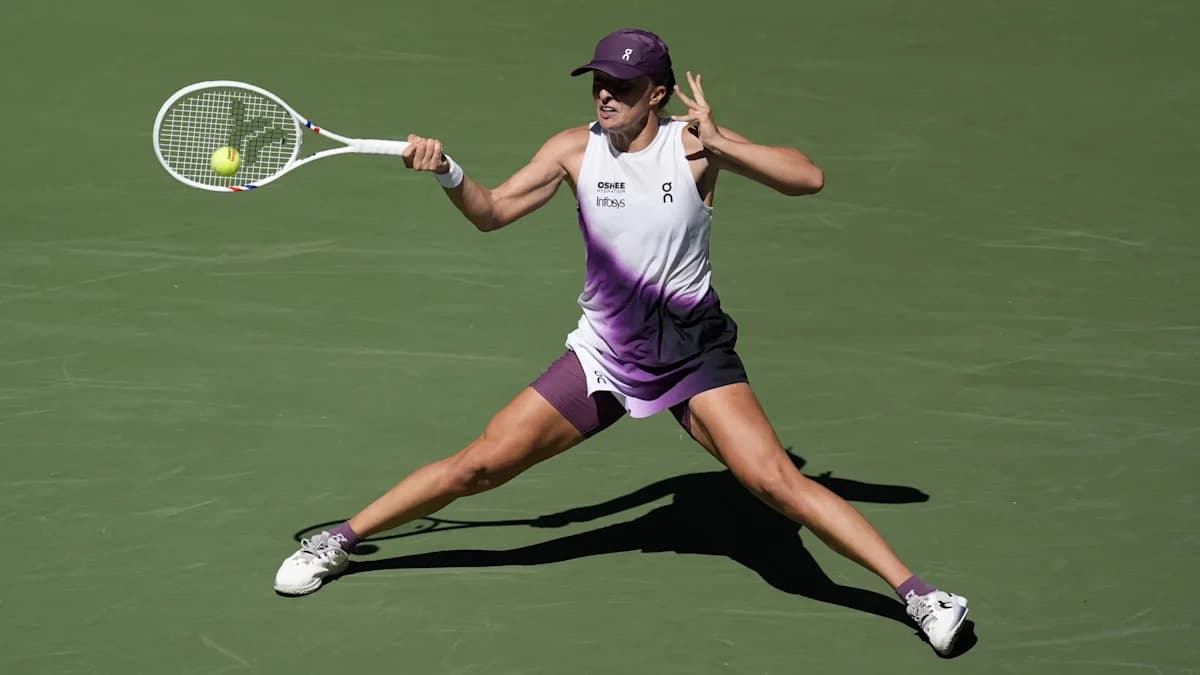
On the nearby Grandstand, Iga Swiatek delivered a far more straightforward message. The world’s dominant force dismissed Nadia Podoroska 6-3 6-2 with a performance that impressed even seasoned observers.
“It's a much more disciplined approach from Iga Swiatek,” said 17-time Grand Slam doubles champion Mark Woodforde on BBC Radio 5 Sports Extra, noting the heavy spin and control from the Pole’s forehand wing.
Swiatek sealed the match with a late flurry: a searing cross-court forehand winner, then another unplayable forehand to bring up match point, before forcing an error from Podoroska to book her own third-round berth.
Afterwards, Swiatek spoke of arriving in New York with “a better feeling probably than any other Grand Slam this year” and being “happy to have another opportunity to play here.” Off court, her focus is lighter—she smiled as she talked about working through a small 18+ Lego set at a relaxed pace, a quiet counterpoint to the intensity she brings between the lines.
Dart opens strongly, Auger-Aliassime edges a tight one
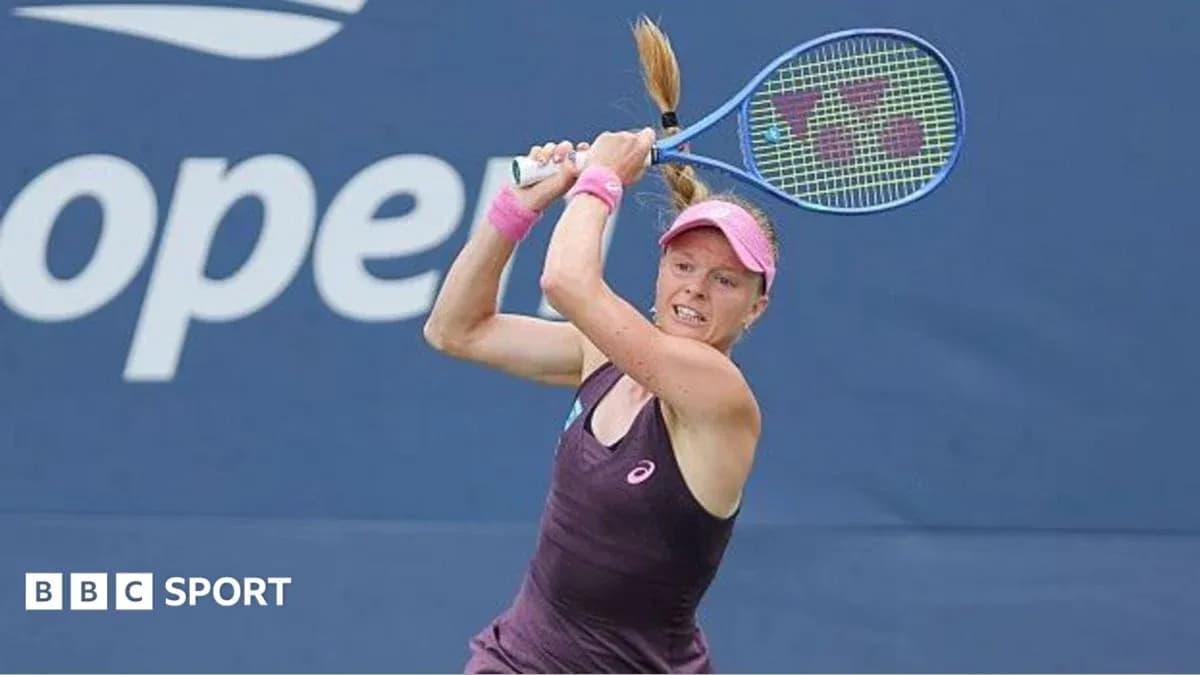
For British fans, attention turned to Court 11, where Harriet Dart began her campaign against 25th seed Marie Bouzkova. One of only two Britons left in the singles draw, alongside Fran Jones, Dart started with intent.
She settled quickly, winning a couple of solid baseline rallies and then stepping forward decisively, closing the opening game at the net as Bouzkova failed to find a passing shot. Dart had beaten the Czech in three sets at Eastbourne earlier this year, and her early body language suggested she believed she could do it again.
Over on the men’s side, Felix Auger-Aliassime found himself in a familiar US Open dogfight. Facing fellow former semi-finalist Karen Khachanov, the Canadian saw a break advantage slip away before the first set went to a tie-break.
Under pressure, the third seed dug deep. He mixed his patterns just enough, taking the breaker 7-5 to edge ahead in what already looked like a long, physical contest. Woodforde, watching closely, suggested Auger-Aliassime should keep varying the ball, especially with the backhand slice, to avoid feeding Khachanov the same rhythm.
On a day when Swiatek cruised, Osaka laboured then surged, and Dart stepped out swinging, the US Open reminded everyone of its core truth: the margins are thin, the noise is relentless, and those who keep their nerve tend to stay longest under the lights.