.svg&w=384&q=75 "logo")
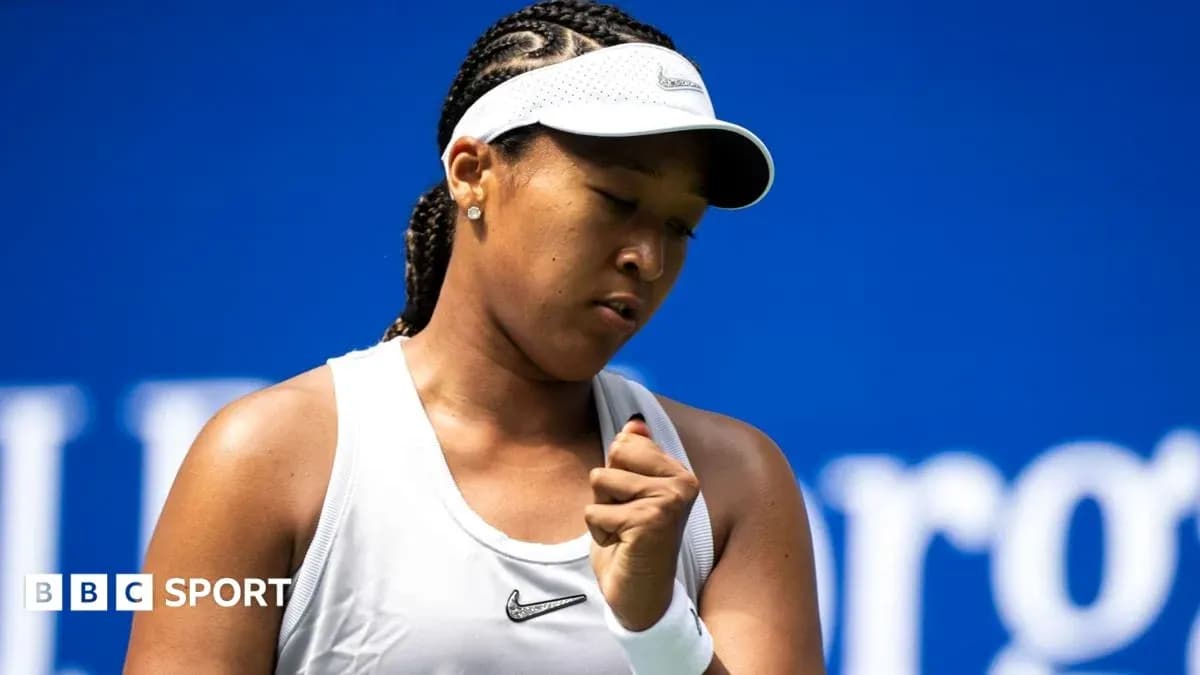
Naomi Osaka Advances to Third Round at US Open
Naomi Osaka wobbled, then roared back.
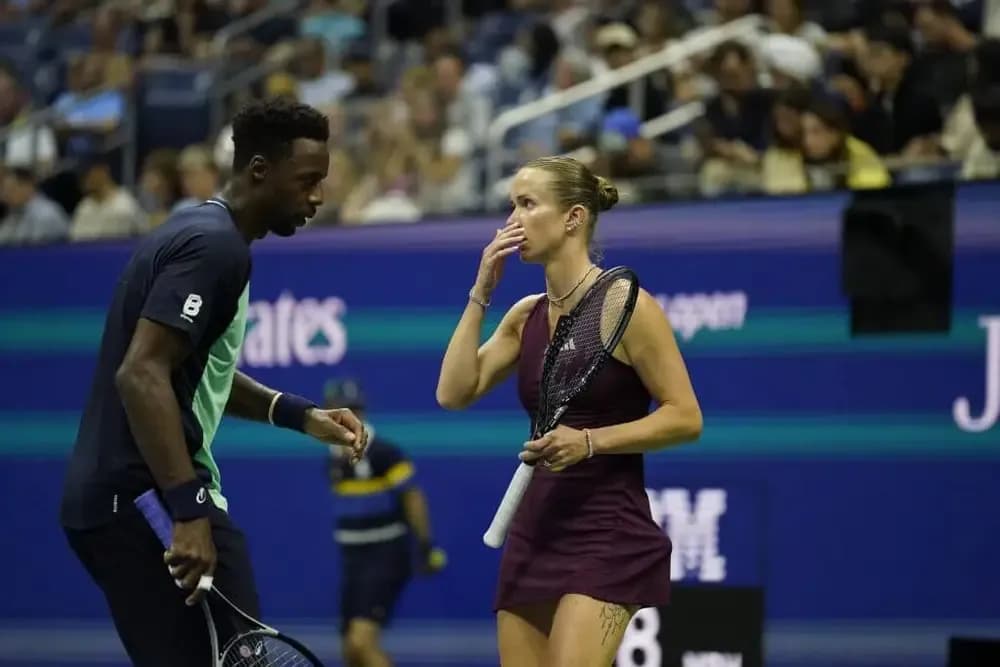
Under the lights of Arthur Ashe Stadium, the two-time US Open champion survived a jagged second set and a stubborn Katerina Siniakova to reach the third round in New York, winning 6-2 5-7 6-1.
It was a night that felt unmistakably like Osaka: part runway, part ruthless hitting, part psychological battle.
She walked out in a crisp white dress embroidered with tennis racquets, a quieter statement after her Allen Iverson-inspired look in the first round, but the tennis at the start was anything but subdued. Osaka tore through the opening set in just 30 minutes, striking cleanly, serving with authority, and dictating rallies as if she had never been away from the sharp end of this tournament.
At 4-2 up in the second set, by the hour mark, it looked like a routine win for the four-time major champion. She broke Siniakova again, stepped up to serve for the match at 5-3 and had the finish line in clear sight.
Then the match turned messy.
Osaka’s consistency deserted her. The forehand that had been punishing suddenly sprayed. The backhand dropped short. She lost four straight games, part of a run of four consecutive breaks of serve between the pair, and with it, the second set. Twenty of her 29 unforced errors came in that passage alone, a stark contrast to the control she had shown early on.
Siniakova, the world’s top-ranked doubles player, sensed the opening and pounced. She dug into rallies, made Osaka play extra balls, and dragged the 13th seed into uncomfortable, extended exchanges. The crowd, restless and a little stunned, watched as what looked like a straight-sets stroll morphed into a three-set scrap.
Osaka headed off court for a bathroom break at the end of the second set. When she returned, the mood shifted.
The serve tightened. The shoulders loosened. The ball started to explode off her strings again.
The decider was a reminder of why Osaka has lifted the trophy here twice, in 2018 and 2020. She overpowered Siniakova from the baseline, ripped through her service games, and reclaimed control of the match with a ruthlessness that had been missing in that ragged middle stretch. She won six of the final seven games, sealing the contest in two hours and two minutes.
“The match was definitely really tough. I just felt like I was a little bit too hard on myself after opportunities in the second set,” she told the Arthur Ashe crowd, speaking with the candour that has come to define her as much as her tennis. “I took the bathroom break, regrouped a little, came back and just tried to have no regrets.”
The reset worked. The scoreboard, and the body language, told the story.
Osaka’s reward is a third-round meeting with Belgian 23rd seed Elise Mertens, a different type of test against one of the tour’s most reliable baseliners. If Osaka can bottle the ferocity of the first and third sets and leave the second-set turbulence behind, the echoes of her past New York triumphs may grow a little louder.