.svg&w=384&q=75 "logo")
Moses Itauma: The Next Heavyweight Champion?
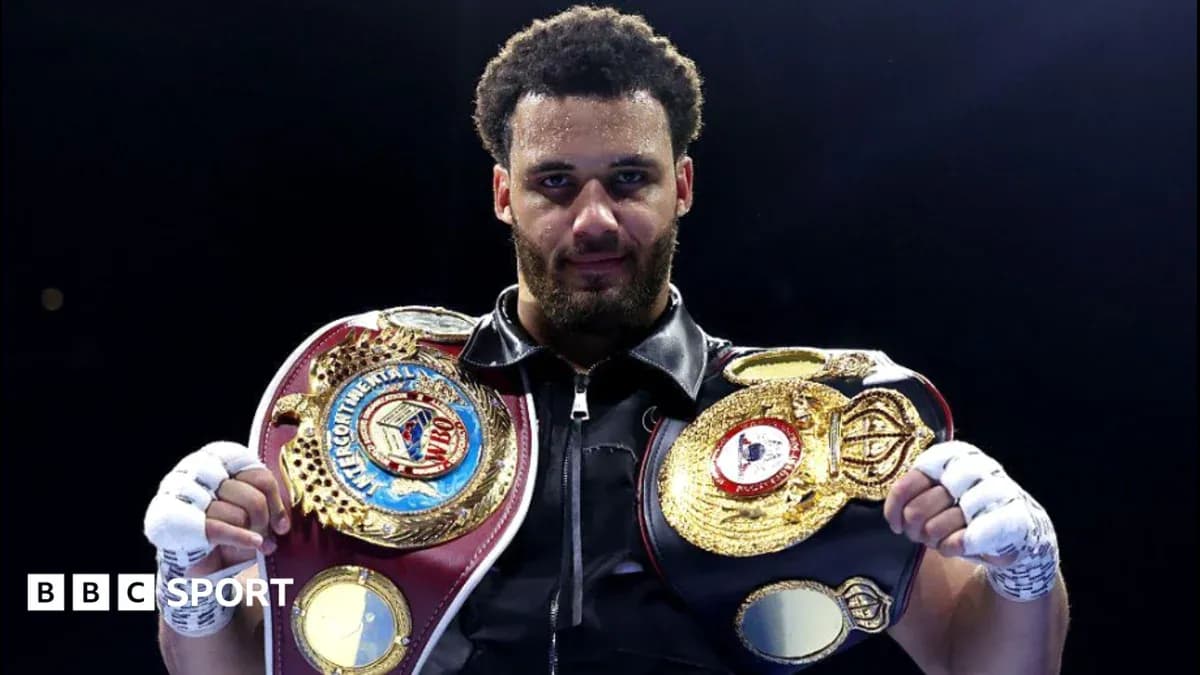
Moses Itauma scrolls through his phone and stops on a meme.
Olusegun Obasanjo, the former Nigerian president, stands in traditional dress, hands on hips, staring straight down the lens. The caption reads: “This is how an African dad looks at you when you pursue a career that goes against his wishes and you turn out to be successful.”
“That is pretty much my dad,” Itauma laughs.
From that look to this moment has been a short, brutal, accelerated journey.
On Saturday, in just his 15th professional fight, the 21-year-old steps through the ropes to face Filip Hrgovic for the vacant IBF heavyweight title. Win, and he becomes the second-youngest world heavyweight champion in history and the quickest British heavyweight to a world belt.
The son of a Nigerian father and Slovak mother, born in Slovakia and raised in Kent, was never supposed to end up here. Not at first. His parents wanted a doctor or a lawyer, not a heavyweight wrecking ball.
Then his older brother turned professional. Then the family saw what Moses could do.
“Don’t worry about school. Just focus on your boxing,” his mother told him.
That was the turning point. Everything since has been a sprint.
Carrying the flag
Itauma knows exactly what is at stake, and not just for himself.
“There’s a lot of expectations on my shoulders to carry the flag of British boxing. I just have to live up to it,” he says.
Tyson Fury and Anthony Joshua are edging towards the twilight of their careers. The sport is already searching for the next heavyweight to build around, the next name to fill stadiums and shape eras. A win over Croatia’s Hrgovic would shove Itauma straight into that conversation.
The contrast with the men he is tipped to follow is striking. Fury has turned his life into a rolling documentary, a constant show. Joshua, though a global star, has often kept an emotional distance from the media.
Itauma leans closer to Joshua’s side of the spectrum, only more guarded.
“What irritates me most is when people think you’re public property,” he says. “What people don’t know about me is that I don’t actually want to be in the limelight. The way my career is going, I just have no choice.”
He treats fight week like a job, not a circus. When Hrgovic tried to needle him by interrupting Thursday’s news conference, there was no back-and-forth, no rehearsed outrage. Itauma simply turned to host Adam Smith and asked for the next question.
No theatrics. Just business.
Fastest of the fast-tracked?
The parallels with Joshua’s rise are already being drawn.
Joshua fought Charles Martin for the same IBF belt in his 16th pro bout, after 34 completed rounds. Itauma arrives at his world-title shot one fight earlier, with 31 rounds behind him. Joshua, though, had an Olympic gold medal and a long, decorated amateur career. Itauma does not have that pedigree on paper, but if he wins on Saturday the comparisons will be unavoidable.
He would have done it quicker.
Trainer Ben Davison, who has worked with both Fury and Joshua, insists Itauma is built for the pressure that comes with that kind of company.
“Pressure is a privilege,” Davison says. “Moses has already had that pressure for such a long time and I just think it’s water off a duck’s back.”
Most blue-chip prospects are wrapped in cotton wool. They learn on undercards, move up slowly, and only see genuine danger when they’ve clocked up years in the game.
Itauma has been handled differently. He has been fast-tracked, and everyone in boxing knows it.
Francis Warren first noticed him as a teenager, already mixing with grown professionals in sparring. Former British heavyweight champion Jeamie ‘TKV’ Tshikeva saw the warning signs even earlier.
“Moses was a big 11 or 12-year-old, around 75 to 80kg, and sparred an adult of the same weight,” TKV recalls. “He really showed up, put hands on this grown man, and I was shocked.
“The guy he sparred was around 25. Imagine going home and telling your wife you got beat up by a kid.”
That story has become a kind of origin myth in British gyms. The kid who beat up men.
Destruction, then doubt
The professional evidence has been equally ruthless.
Itauma has ripped through seasoned names like Dillian Whyte and Jermaine Franklin. Neither sits at the very top of the division, but the manner of the wins — the composure, the punch selection, the cold finishing — hardened the belief that this was not just another prospect. This was a future ruler.
Then Oleksandr Usyk vacated the IBF belt. Frank Sanchez stepped aside. Suddenly, Itauma’s meeting with Hrgovic, originally a major contender’s bout, became a world-title fight.
The fast track started to look, to some, like a shortcut.
Hrgovic, even before the belt was confirmed, accused Itauma of being handed “everything on a plate”. Social media piled in. Many argued he should have gone through a final eliminator first, proved himself in the traditional way.
Itauma has no interest in ticking boxes for anyone else.
“It’s a lose-lose situation for me because if I win, I’ve done what people expect, and if I lose, it’s just like, I wasn’t as good as what I thought,” he says.
“I don’t find happiness in trying to please other people’s expectations.”
He fights for something more private than that. Pride. Family. The promise his mother made when she told him to forget school and chase this dream.
The unanswered question
There is, though, a question that only the ring can answer.
What happens when his power doesn’t blow the door off its hinges? What happens when the man in front of him is still there in round eight, still punching back, still dangerous?
To date, Itauma has not had to live in that kind of deep water under the lights. Those who have shared the gym with him insist he can.
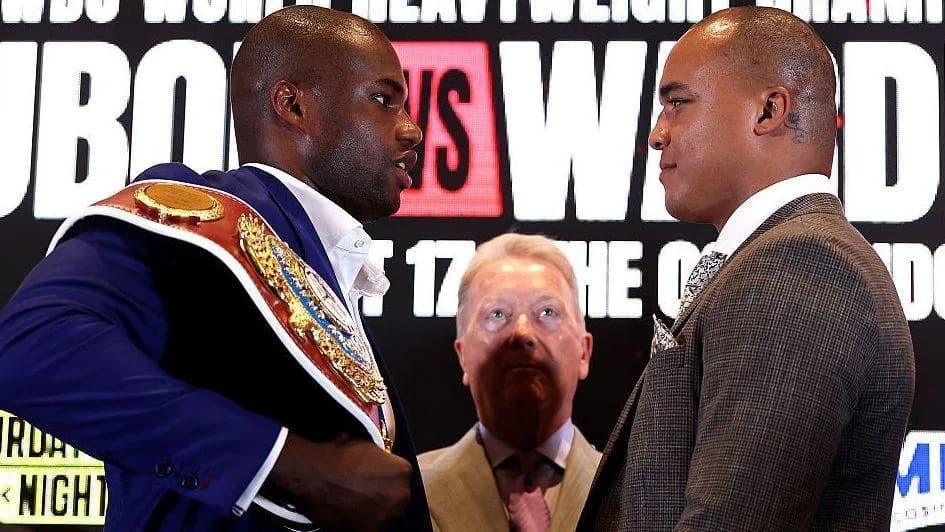
TKV, who has sparred Joshua, Daniel Dubois and Fabio Wardley, has seen enough behind closed doors.
“Moses works hard even though he hasn’t had to face adversity in his fights or training,” he says. “I’ve never seen him slack. He’s fast, sharp, a good learner and I rarely see him get hit.
“I believe he can do the rounds, too. He has the potential to dominate the division for years.”
Inside Itauma’s camp, there is no debate about whether he belongs at this level. The doubts live outside, in the columns, on the broadcasts, in the comments. They will all fall silent when the bell goes.
On Saturday night, a 21-year-old who once upset his parents’ plans and chose fists over textbooks walks into a ring with 12 rounds to change the shape of the heavyweight landscape.
If he gets it right, the division may be looking at its next long-term problem.