.svg&w=384&q=75 "logo")
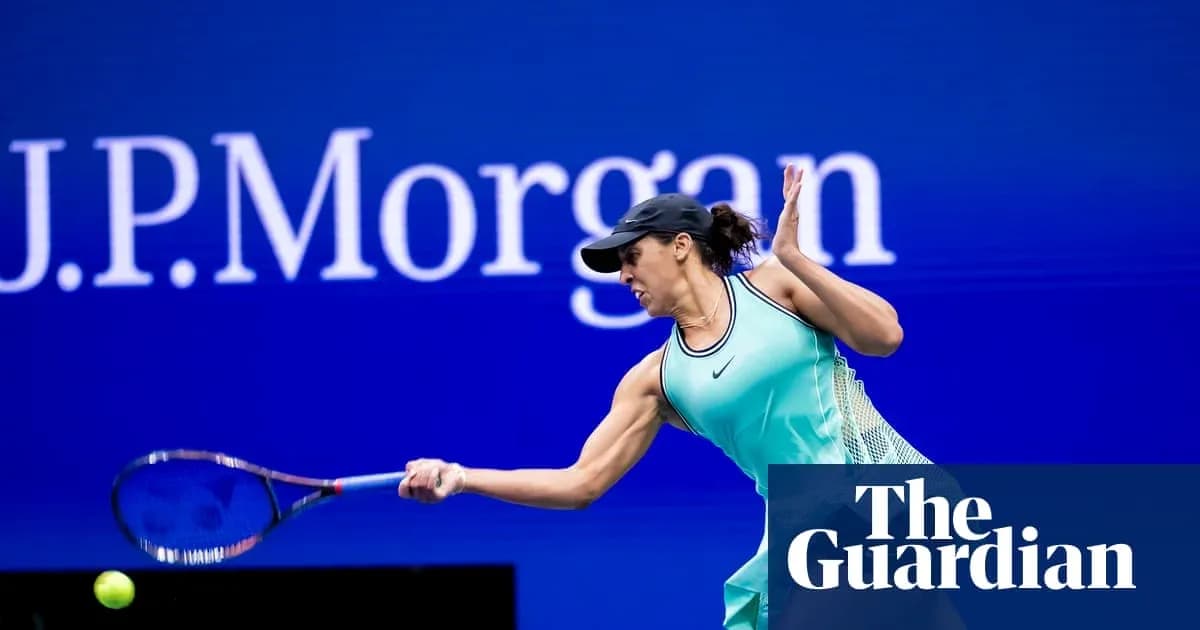
Madison Keys Triumphs Amidst Chaos to Reach US Open Second Round
On a day when the US Open schedule dissolved into a mess of rain delays and restless players pacing the corridors, Madison Keys had something priceless: a roof and a rhythm.
While most of the first round sat on ice, the 31-year-old walked into Arthur Ashe Stadium, shut out the chaos and took care of business, beating 17-year-old Alina Korneeva 7-5, 6-4 to reach the second round.
It was not vintage Keys, but it was exactly what she needed.
A veteran in a teenager’s body of work
This is Keys’s 15th US Open. The number sounds wrong when you say it out loud. She is 31, but her New York story began so early that she has now been doing this job for more than half her life.
She turned professional on her 14th birthday in February 2009. Since then, she has ridden the full tour rollercoaster: slam finals, injuries, doubts, comebacks, and this January, the defining breakthrough as 2025 Australian Open singles champion.
The milestone has been following her around Flushing Meadows all week.
“I was thinking a little bit more about it just because the last couple of days everyone keeps reminding me that it’s my 15th US Open, which doesn’t feel possible because I’m so young,” Keys said, laughing.
There was a lighter side to her reflection, but also something more layered. Starting so young, she explained, had shaped not just her tennis, but her entire sense of self.
“It’s just I think that in a lot of ways it’s been a huge blessing I started so young, just because I really got to get into it at such a young age and when I didn’t really even understand what was going on, so I was able to just kind of experience it in a really different way.
“But it’s definitely been, I think, the most interesting, because I feel like as a person I’ve changed a lot throughout the years and kind of just evolved as a person while getting to kind of do the same job.”
That evolution was written all over this performance. No panic. No rush. Just solid, adult tennis.
Banishing last year’s ghosts
Keys’s calm on Ashe carried extra weight given what happened 12 months ago. Then, she walked out for her opening match as a heavy favourite and walked off stunned, beaten in the first round by world No 82 Renata Zarazúa. It ranked among her toughest defeats in New York.
The tension of that memory still lives in the locker room for her, and she did not pretend otherwise.
“You can kind of feel [the tension] as the days are getting closer,” she said. “Everyone gets here, you have a week, everyone is excited to be here, and then as the days are slowly getting closer to first rounds, rackets are maybe getting a little slippery, you can hear more yelling happening, and you can kind of feel the tension.
“I think collectively we all just get really anxious. We’re probably feeding off of each other as well, but we all want to do well. It all feels like I think the buildup is always so hard, just because you’re so in it and you’re anticipating the tension that’s going to happen and the anxiety that’s going to happen. So it’s definitely very relevant and very real.”
This time, she managed that anxiety with a steady hand. Against Korneeva, a talented teenager still feeling her way into this level, Keys leaned on experience: choosing the right moments to accelerate, accepting the odd loose game, never letting the match spiral.
On a stop-start, rain-soaked afternoon, she found something precious in New York – a routine win.
Rybakina moves cleanly towards No 1
On the women’s side, Elena Rybakina’s own mission is far less about survival and far more about ascent.
The Wimbledon champion opened her campaign with a crisp, businesslike 6-3, 6-2 victory over 17-year-old American wildcard Thea Frodin, a performance that doubled as a reassuring fitness test.
Rybakina had arrived in New York with a question mark hanging over her foot after she was forced to retire from her Cincinnati Open quarter-final against Iga Swiatek. Any lingering doubts eased as she moved comfortably through the match, controlling the baseline and never allowing Frodin a foothold.
The stakes for Rybakina this fortnight are clear. She sits at No 1 in the live rankings and will become the official world No 1 for the first time in her career if she reaches the semi-finals – provided Aryna Sabalenka, Jessica Pegula and Coco Gauff all fall short of the title.
The equation is simple. The pressure will not be. Her first step, though, was as smooth as she could have hoped.
Cobolli’s five-set escape act
The men’s draw delivered a very different kind of story.
On an outside court, far from the shelter of Ashe’s roof, fifth seed and French Open finalist Flavio Cobolli found himself staring down the barrel of an early exit. Francisco Comesaña came out swinging, took the first two sets 6-3, 6-2, and had Cobolli scrambling for answers.
Then the match turned.
Cobolli dug in, tightened up his game and began to dictate longer rallies. The third set went his way 6-3. The fourth, 6-4. By the time they reached the decider, the Italian’s belief had completely flipped the dynamic. He closed it out 6-4, completing one of the best comebacks of his career and booking his place in the second round with a 3-6, 2-6, 6-3, 6-4, 6-4 win.
On a drenched New York afternoon that left so many players waiting, those who did step on court sent a clear message. Keys steadied, Rybakina advanced, Cobolli survived. The rain will pass, but the tone they set for this US Open may linger far longer.