Laver Cup: Tennis' Bold Experiment in Team Competition
Tennis has always loved its traditions. White at Wimbledon. Quiet, please. Best-of-five on the sport’s grandest stages.
Innovation? That has usually been someone else’s problem.
In 2017, Roger Federer tried to change that.
A Ryder Cup for tennis
The Laver Cup arrived seven years ago with a bold promise: give tennis its own Ryder Cup. Europe against the rest of the world. Six players a side. Singles and doubles across three intense days. Points ramping up as the weekend goes on. Benches roaring, captains pacing, teammates living every point.
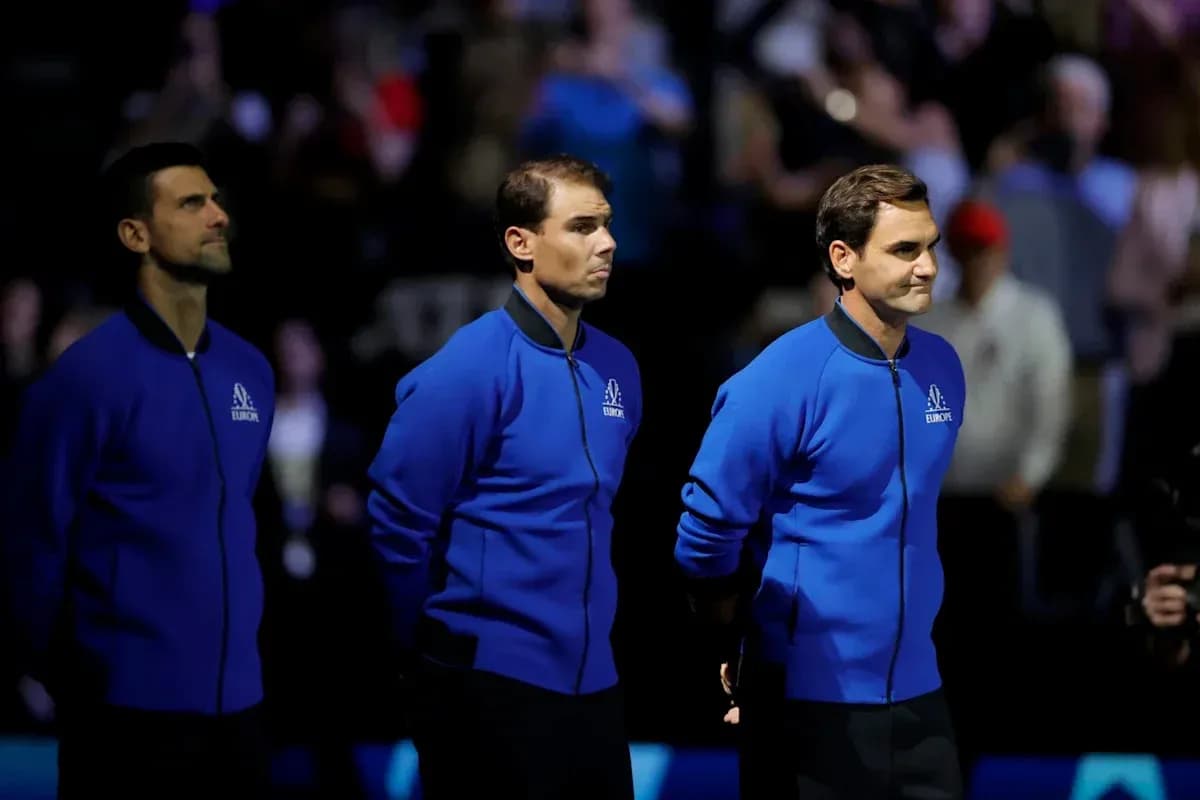
Co-created by Federer, the event was designed as more than just another stop on the calendar. It was meant to feel different – darker courts, louder crowds, players in team colours, the sport’s biggest stars suddenly part of something collective in a game built on solitude.
Now, with the ninth edition set to begin on 25 September 2026, the Laver Cup has carved out a permanent slot in the tennis year. It continues to attract elite names, and its highlight reels – wild comebacks, emotional huddles, unlikely doubles pairings – have helped it grow in profile and polish.
Yet for all the theatre, the debate refuses to go away.
Exhibition or competition?
To some, the Laver Cup is still nothing more than a high-end show.
The criticism has been sharp at times, and not just from fans. Former French pro Julien Benneteau delivered one of the most cutting assessments on the Grandes Gueules du Sport podcast in 2024, saying the Laver Cup had “no sporting value” and insisting: “The players are only participating because the cheque is huge.”
The money is not insignificant. The total prize pool for the 2026 edition stands at $1.5 million. Each player on the winning side will earn $250,000. The losing team goes home without prize money.
For purists, that structure only fuels the perception of a made-for-TV product: big cheques, big names, limited consequence. No ranking points. No direct impact on the season’s bigger picture.
But that is only half the story.
Nadal’s 4am alarm
From the start, Federer and Rafael Nadal pushed back against the idea that this was just an exhibition. Before the inaugural event in 2017, the two great rivals sat side by side in a press conference and were asked the obvious question: was this just a friendly?
Nadal did not hesitate.
“No, is not an exhibition at all. No, no, I don't think,” he said. “No, we are here to try our best, no? I woke up today at 4:00 in the morning to practice. An exhibition match, I don't practice before an exhibition match normally, no.
“We are here to try our best. We are here to try to win. Not at all like a friendly match, no? We are here to really play with passion and to play for our continent.
“We have a great team behind us. We want to do it well for all of them. Let's see if we are able to do it.”
That week, Team Europe did exactly that, beating Team World 15–9 in the first Laver Cup. The scoreline, and the celebrations that followed, suggested the players had bought into the concept far more than the sceptics expected.
What lit the fuse for Federer
Federer, too, understood that without real emotion, the project would never last. Asked in 2017 how crucial it was to recreate the Ryder Cup’s famous passion, he pointed to the behaviour of his own teammates before a ball had even been struck.
“Well, I think it's going to be vital,” he said. “That's why I'm very excited to see that the guys all arrived a day early.
“You know, they were supposed to arrive on Wednesday. They all came in on Tuesday. Everybody seems really eager to play, to win.
“But of course we have to give it the passion and the energy. Without that, the fans are just going to sit there and maybe enjoy some tennis, but they're not going to get into it.
“I hope that while we are playing on home soil, the fans are going to understand how much we need their support and how lovely it would be if everybody got really excited and make this event something very unique and special for years to come. But it's clearly crucial.”
That early arrival, that eagerness, was what “excited” Federer most. It suggested the format could tap into something real – pride, rivalry, the thrill of playing for a team and a continent rather than just for oneself.
A tournament still fighting for its place
Nine editions in, the Laver Cup sits in an awkward but intriguing space. It has atmosphere, buy-in from many of the sport’s biggest names, and a financial package that underlines its ambition. It also carries a reputation it cannot quite shake, a sense among critics that without ranking points it will always live in the shadow of the traditional tour.
The event’s backers argue that not every meaningful contest needs to feed into a ranking system. Its opponents see the prize money and the staging and remain unconvinced.
On 25 September 2026, when Europe and the rest of the world walk out again, the same questions will hover over the black court. Exhibition or competition? Show or showdown?
The Laver Cup still has to answer that, not in words, but in how hard its stars are willing to bleed for the colours on their backs.