.svg&w=384&q=75 "logo")
Katie Taylor's Final Fight: A Historic Farewell at Croke Park
Katie Taylor will step into a boxing ring for the final time on Saturday night, and of course it will be on Irish soil, under the lights at Croke Park, with 80,000 voices trying to lift her to one last act of defiance.
The opponent is Flora Pili of France. The stakes are the undisputed super-lightweight title. The backdrop is something much bigger: the closing chapter of one of the most transformative careers in modern sport.
From hiding her hair to filling a stadium
Taylor is 40 now. Old enough, in boxing terms, to measure her life in rounds. She started by hiding who she was, covering her hair and pretending to be a boy just to get fights in the junior ranks. On Saturday, she walks out as the main event in front of a crowd that would dwarf many men’s world-title cards.
"I'm not sure if there's any other country in the world where 80,000 people would turn up for a female athlete," she told reporters in Dublin this week. It wasn’t boastful. It sounded like someone still trying to process the scale of what she has built.
"I'm so grateful for the support. I'm blown away by it, to be honest. I want to put on a performance worthy of everyone's support over the years. This country has traveled around the world to watch me fight … and they'll be with me again on Saturday night."
Ireland has always loved its boxers. Of the country’s 42 Olympic medals, 19 have come in the ring. Taylor’s gold at London 2012 did more than add to that tally. It turned women’s boxing from a curiosity into a centrepiece, and turned a quiet fighter from Bray into a national symbol.
Four years later she went pro. The medals gave way to belts and purses she could barely have imagined when she was sneaking into boys’ brackets just to get bouts.
A career built on speed, grit and history-making nights
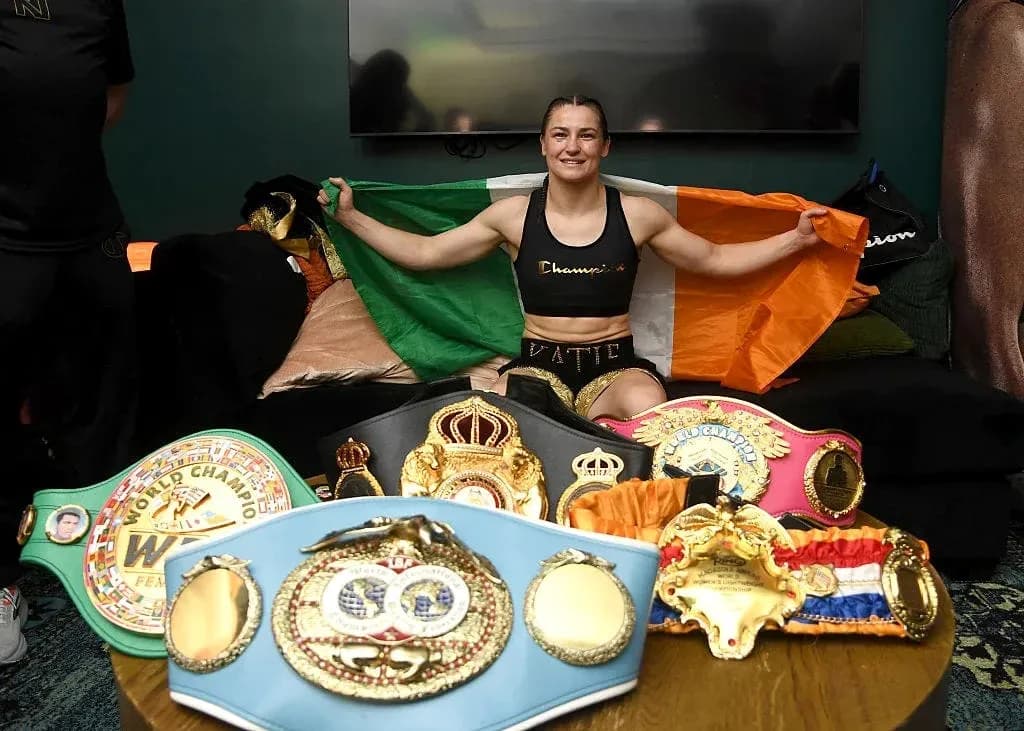
From the seaside town of Bray, just south of Dublin, Taylor tore through the professional ranks with a style that mixed relentless speed and controlled aggression. She claimed the WBA title in only her seventh professional fight and barely paused to look back.
The milestones came thick and fast. Together with Amanda Serrano, she broke through one of boxing’s most stubborn ceilings when they headlined Madison Square Garden in April 2022. Two women, top of the bill, in the sport’s most storied arena. The fight lived up to the billing: a furious, breathless classic that Taylor edged on a razor-thin split decision.
Nights like that redefined what was possible, not just for her, but for every woman who laced up gloves after watching.
Dark shadows and a painful homecoming
The road to this Croke Park farewell has not been clean or simple. Irish professional boxing still carries scars from the gangland shooting at the Regency Hotel in 2016, near Croke Park, when a man was killed at a weigh-in. The fallout brought the sport in Ireland to a standstill and delayed Taylor’s dream of a major homecoming fight.
When she finally did box in Dublin in May 2023, the script turned on her. Chantelle Cameron came in and handed Taylor the only defeat of her professional career, edging her on the judges’ scorecards. The loss cut deep. This was supposed to be the triumphant return, the conquering hero back in the capital. Instead, it was a reminder that even legends are mortal.
Taylor, being Taylor, didn’t let it stand alone. Six months later, at the same venue, she adjusted, dug in and won the rematch. The belt came back. The blemish stayed. That first defeat still lingers in the story of her career, a bruise that never quite fades.
One last test, one last roar
Now comes Flora Pili, a 29-year-old challenger with youth on her side and the freedom of a fighter with nothing to lose. She will not be in Dublin as a supporting act. She is a real test, a live threat on a night framed as a celebration.
Taylor’s focus is narrow: one more walk, one more performance, one more time with her hand raised.
On Wednesday, she gave Dublin a glimpse of what’s left in the tank during an open workout on the north side of the city. It was light, playful, part show, part goodbye. At one point she picked a young girl from the crowd, 10-year-old Clodagh Keating, and brought her into the ring. Taylor laced up a pair of gloves for her. The child burst into tears.
"To feel the atmosphere even in this small arena, I can't imagine what Saturday night's going to be like, and getting the chance to meet little Clodagh there, who got into the ring, this is what it's all about for me," Taylor said.
That line said as much about her legacy as any belt. Taylor has spent a career fighting for space, for respect, for the right to be centre stage. Now there are children in Dublin who grow up assuming that women headline cards, fill stadiums and own nights like this.
"In a few days, I'll make my last ring walk and I'll look back on this in a few years, and I imagine I'll be overwhelmed."
The final bell will come, as it always does. The question now is simple and brutal, the way boxing likes it: can Katie Taylor, the girl who once had to pretend to be a boy just to be allowed to fight, script one last perfect ending in front of 80,000 believers at Croke Park?