.svg&w=384&q=75 "logo")
Katie Taylor's Historic Fight at Croke Park: A Boxing Homecoming
Eddie Hearn likes a line. He likes a stage even more.
"It's not often I'm lost for words," he boomed at Croke Park last June, launching into a nine‑minute sermon about the Taylor‑Pili fight and the stadium he was determined to sell as boxing’s promised land.
Then he reached for history – and missed.
"The last person to fight at this incredible stadium? Mohammad Ali," he declared, blithely skipping past the many other occasions when “foreign” sports had already tested the old ground’s foundations. The mythology suited his pitch. The facts were messier.
When Ali Came to Croker
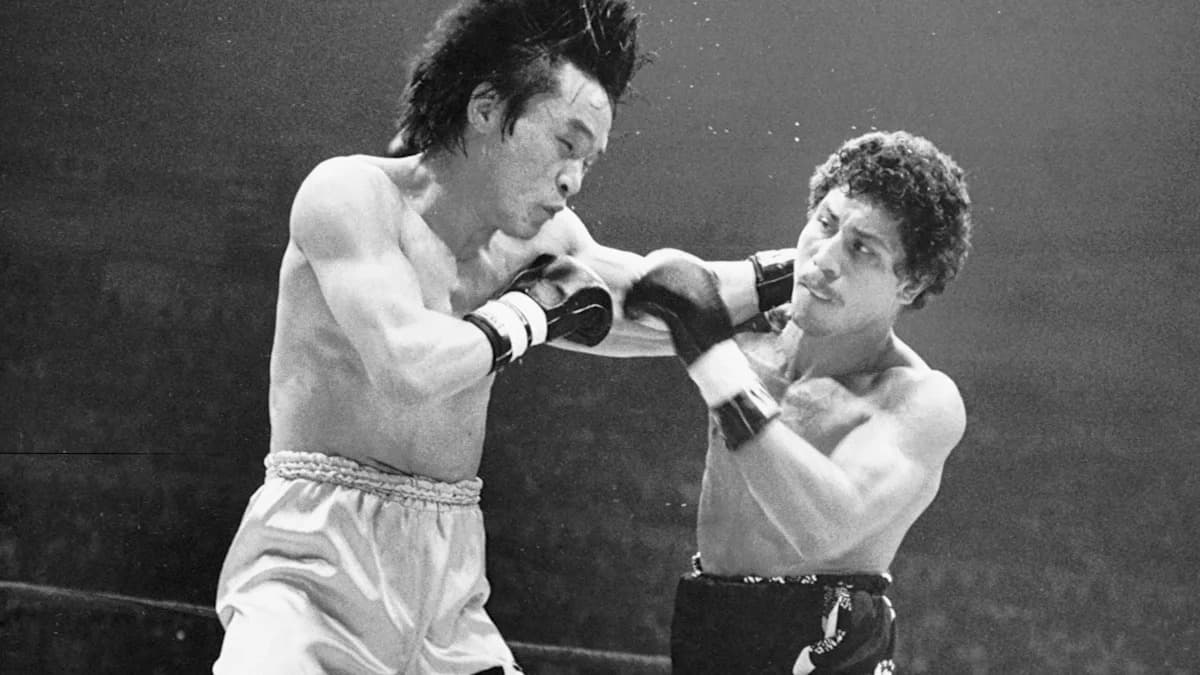
When Muhammad Ali fought Al “Blue” Lewis at Croke Park in July 1972, Dublin treated him like a visiting head of state.
He was mobbed at Leinster House. He had a private audience with Taoiseach Jack Lynch. Cathal O’Shannon sat him down for a long, searching television interview. Eddie Keher showed him how to swing a hurl.
Ali wanted to talk politics as much as prizefighting. He specifically asked to meet Bernadette Devlin. They had lunch on the day of the bout, talking through a world they saw in much the same way.
The spectacle outside the ropes, though, did not translate into success at the gate. Only around 18,000 turned up, many of them without paying. The promotion haemorrhaged money for its driving force, Killorglin-born publican Michael “Butty” Sugrue, once billed as “Ireland’s Strongest Man” in his Duffy’s Circus days.
GAA director general Seán Ó Siocháin publicly rebuked Sugrue for setting ticket prices too high. Writer Dave Hannigan, in his book The Big Fight: When Ali Conquered Ireland, argued that Ali had been almost too omnipresent in Dublin, his mystique thinned by constant visibility before fight night.
It was a cautionary tale, sitting there in the archives for any modern promoter willing to look.
Rule 42 and the Myth of the Forbidden Ground
Ali’s visit came long before the partial unpicking of Rule 42, a regulation widely misunderstood to have barred all “foreign sports” from GAA grounds.
On paper, the rule was narrower. It excluded horse racing, greyhound racing and “field games other than those sanctioned by Central Council.” In practice, that meant the rival British codes that everyone knew but didn’t have to name.
Even then, Croke Park was never quite as pure as the folklore suggested. Four American football games were played there before the rule was softened, plus a couple of baseball exhibitions in the late 1940s. The ground has always had a small rebellious streak.
The big shift came at the 2005 Congress. Delegates, facing the redevelopment of Lansdowne Road, balked at the idea of Ireland’s home soccer games being shipped off to Anfield. The rule was lifted, initially on a temporary basis, to allow the national teams a home that still felt like home.
It wasn’t the first attempt. In 2001, a move to scrap Rule 42 fell just two votes short of the required two‑thirds majority. President Seán McCague, a traditionalist by instinct, brushed off calls for a recount. Two votes kept the gate closed for another four years.
Those decisions have shaped the stage Katie Taylor will walk onto. The Croke Park she enters bears little resemblance to the one Ali did 54 years ago. The old citadel has become a multi-purpose arena, a money-making machine and a cultural weather vane.
From Stop-Gap to Showpiece
Croke Park was originally opened to soccer and rugby as a stop-gap, an emergency measure to avoid the embarrassment of Ireland playing competitive home fixtures abroad. That was the deal. A temporary fix. Needs must.
Look at it now.
This summer, the stadium hosted a pre-season friendly between Manchester United and Leeds United, a fixture that ended up as the best-attended soccer match ever played on the island of Ireland. Not a competitive international. Not a European tie. A July friendly.
GAA president Jarlath Burns turned up representing the association, happy to acknowledge the scale of the event even if he admitted no emotional tie to either club. His loyalties lie with Arsenal, as he has said often enough.
The contrast with previous eras is stark. In the late 1980s, then-president John Downing told a Sunday newspaper he would miss Ireland v England at Euro ’88 in Stuttgart because he planned to mow the lawn. The message was clear: that world was not his world.
By 2026, the United–Leeds game irritated League of Ireland ultras more than it did the GAA faithful. There was grumbling within the association, but the real fury came from those who saw English clubs muscling in on their domestic patch.
Pat Gilroy summed up the unease in an interview with the Irish Times, saying he now calls Croke Park “Ceasar’s Palace because it’s just a revenue generator. And that’s not Peter McKenna’s fault. He’s doing a great job but he’s doing it with the hand he’s dealt, which is ‘we need more money’.”
The nickname has stuck in some quarters. So has the logic behind it.
Ceasar’s Palace and the Balance Sheet
Peter McKenna, Croke Park’s commercial supremo, makes no secret of his ambitions. He has spoken enthusiastically about staging more Premier League pre-season games at the ground. He has even floated Croke Park as a possible Champions League final venue.
The numbers explain his enthusiasm.
The GAA’s 2024 annual financial review reported a 19% jump in overall revenue, driven heavily by a packed summer at Croke Park. Stadium income rose by 60% compared with the previous year, despite a drop in match-day attendances.
The difference? Concerts. Seven of them. Bruce Springsteen, AC/DC twice, and four nights of Coldplay turned the place into a festival hub. In 2023, there had been none – unless you count the Mary Wallopers’ pre-match set before the All-Ireland hurling final.
Critics of the split season like to point at those concerts as the real engine behind the GAA’s new calendar, a neat villain that fits a simple narrative: the games pushed aside so the stage can be cleared for rock stars and pop acts.
It’s a more comfortable target than the club player who wants certainty about when his championship starts and finishes.
Yet when a compromise motion emerged from the GAA hierarchy to nudge the All-Ireland finals into August, it didn’t come from the grassroots. It came from the top. By the time Congress rolled around, the proposal was so obviously doomed that it was pulled before delegates could even vote it down.
Result? “Ceasar’s Palace” remains wide open for business in August and early September, free to roll out the red carpet for global music acts, Premier League giants and, now, a boxing spectacle with a very different emotional charge.
Katie Taylor and the First Weekend in September
Taylor’s long-awaited fight at Croke Park lands on a weekend that once belonged almost exclusively to hurling.
The first Sunday in September had long been the All-Ireland hurling final’s natural home, broken only by a stretch between 1997 and 2005 and again in 2012–13, when the decider moved to the second Sunday.
From a traditionalist’s vantage point, this Saturday should have seen Galway and Limerick supporters pouring into Dublin, filling pubs and pavements on the eve of a final. It should have been a night for Daithí and Jacqui to sit down with Joe Connolly and Joe McKenna and rewind to the 1980 All-Ireland, the stories told once more under the bright studio lights.
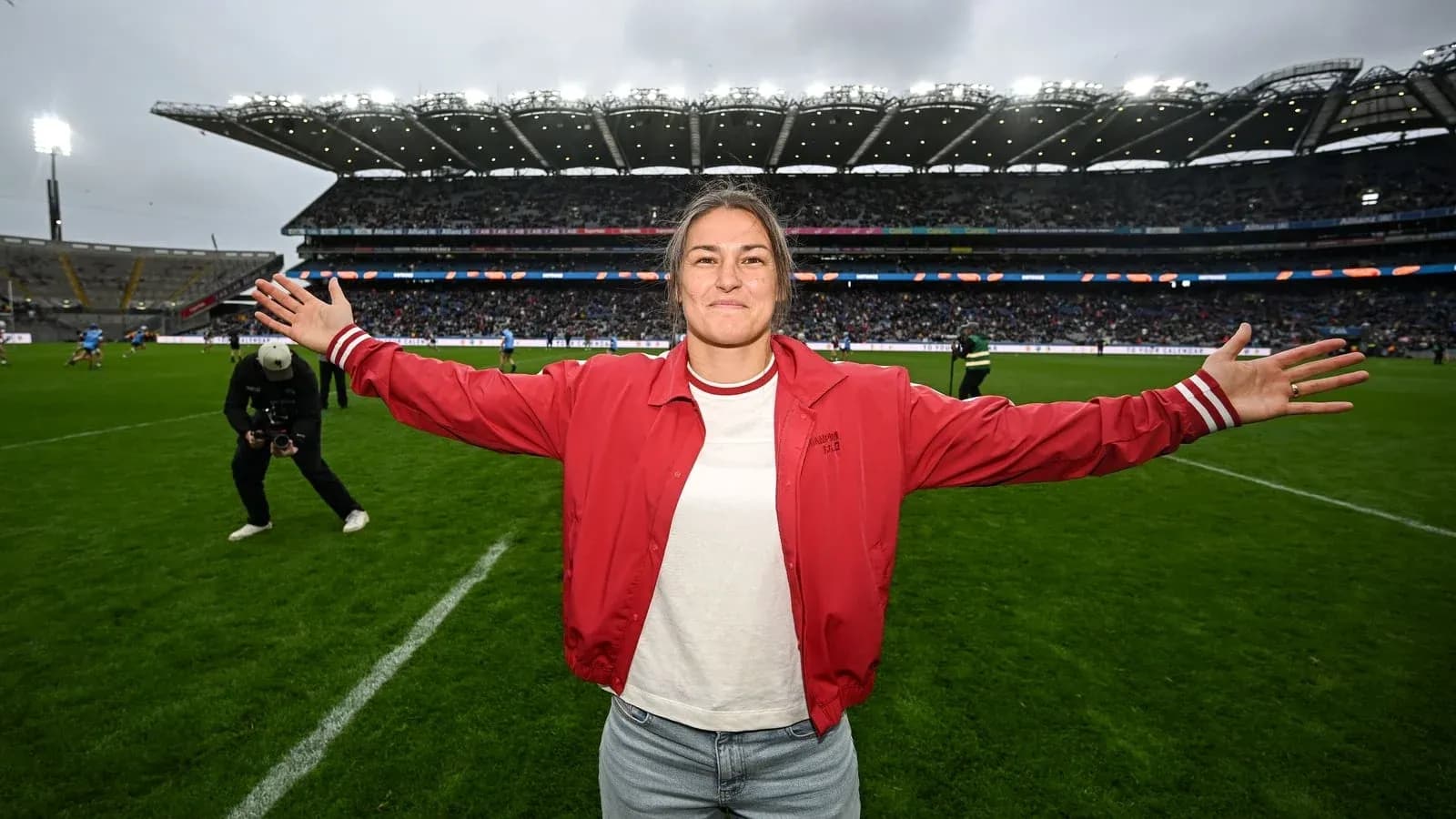
Instead, the stadium belongs to a boxer from Bray who has carried Irish sport on her shoulders for more than a decade.
Even the staunchest GAA loyalist will struggle to begrudge her that. Taylor has earned this stage in a way that transcends code and calendar. She is not just another act on the bill. She is the bill.
And crucially, she was never interested in compromise. Back in June, Taylor made it clear that the Aviva Stadium would not do. If that was the only option, she said she would walk away. No half-measures. No polite acceptance of second-best.
It was Croke Park or nothing.
Now, in a stadium once ring-fenced from “foreign games,” an Irish boxer will step out under the lights and claim it as her own. The same turf that once hosted Ali in a financial misadventure, that now doubles as concert venue and Premier League playground, will stage a homecoming with a very different kind of risk.
The numbers will matter to the accountants. The noise will matter to McKenna’s spreadsheets.
For Katie Taylor, it’s simpler. This is the night she demanded. This is the ground she chose.