.svg&w=384&q=75 "logo")
Katie Taylor's Historic Croke Park Farewell: A Champion's Journey
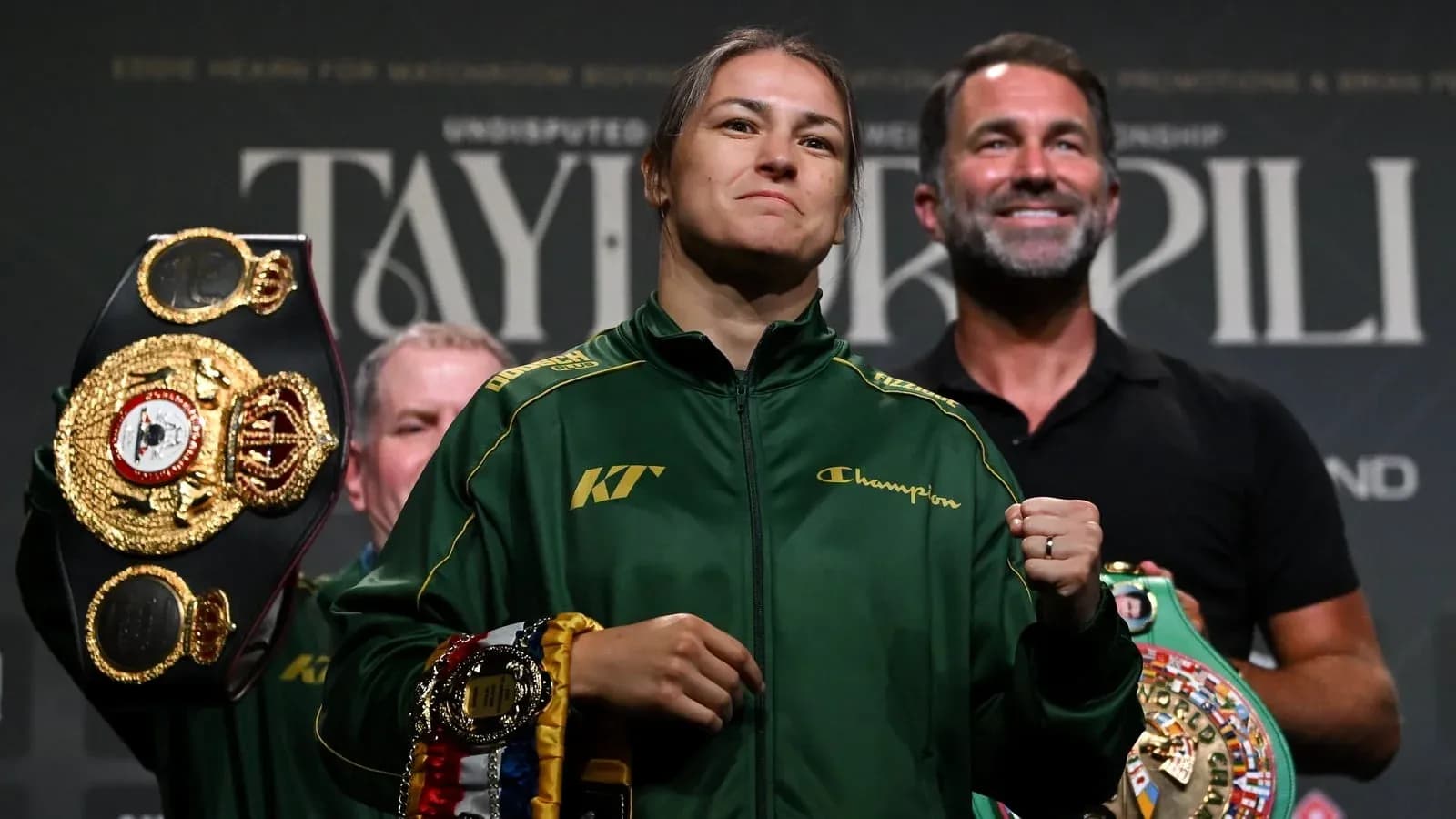
Four days out from Katie Taylor’s long‑awaited Croke Park farewell and her camp is floating somewhere between nostalgia and disbelief.
The circus rolled into the Helix Theatre at DCU on Tuesday, a change of backdrop from June’s Hogan Stand launch but essentially the same show: the greatest Irish boxer of them all on the brink of a homecoming that once felt impossible. Outside, students drifted across campus, largely oblivious that a generational figure in Irish sport was in the building. Inside, it felt like a different country.
GAA reporters shared cramped space with Matchroom and DAZN staff, their London accents cutting through the low hum. Over the speakers, that familiar tin‑whistle Croke Park track played on loop, the soundtrack to countless All‑Ireland build‑ups now repurposed for a prizefight. It looked and sounded like a big match day, just without the rain and the smell of chips.
Croke Park, at last
The big difference from June? Nobody is worrying about tickets anymore.
Back then, there was a quiet, nervous question hanging over everything: could they really fill Croke Park for a women’s fight? Those doubts are now a relic. Half of the 80,000 seats vanished in pre‑sale. The rest were gone in 17 minutes on 28 July. No drip‑feed, no late push, no “last few remaining” charade. Just a rush and then nothing left.
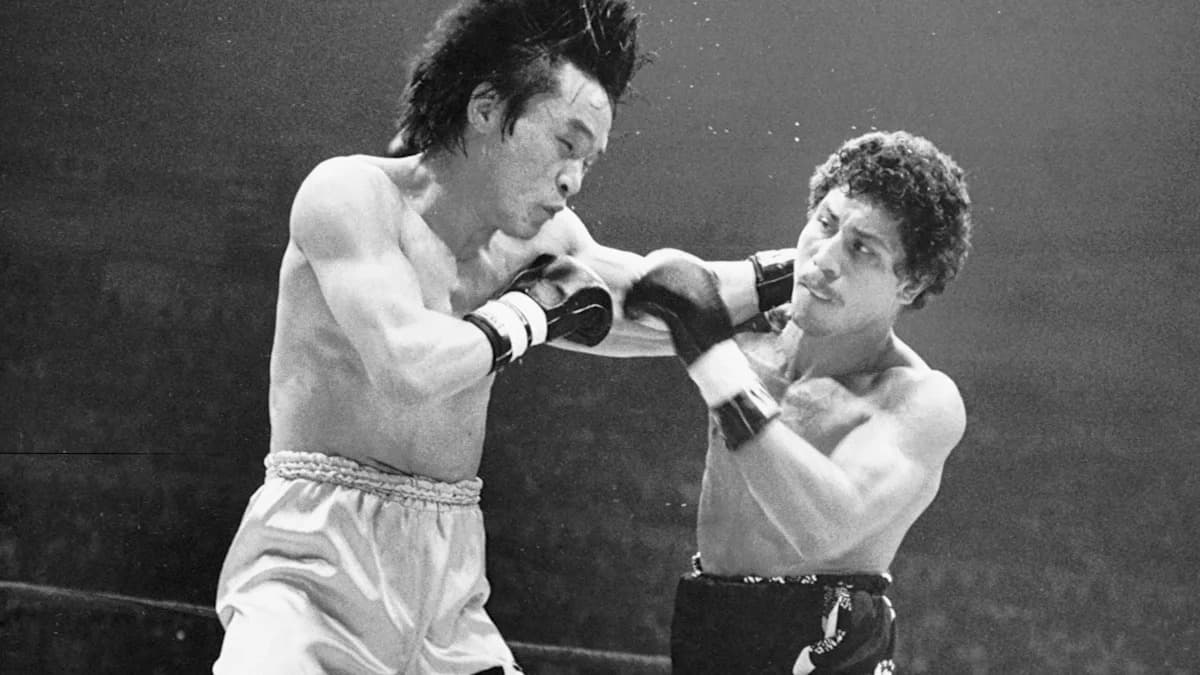
Taylor will become the first boxer to headline at Croke Park since Muhammad Ali fought Al “Blue” Lewis in 1972. The comparison flatters Ali as much as Taylor, as Brian Peters might say. Ali drew about 18,000 that night and the GAA hierarchy tore into the promoter for pricing the locals out. This time, there’s no such problem. The market spoke, and it roared.
Before the main press conference, 18 journalists were herded into a tiny dressing room to wait for Eddie Hearn. When he eventually ducked through the doorway, he took one look around.
“Wow, blimey! This is small!” he laughed, before settling into the familiar role of ringmaster‑in‑chief.
The sellout still stings him a little. Not because of the success, but because it confirmed what he suspected all along: they could have done this sooner.
He recalled his earlier negotiations with Croke Park, and the resistance he felt from the stadium side.
“People can sort of deflate your spirit, which is quite unusual for me,” Hearn said. “They did deflate my spirit a bit over the years. They made me question whether we could do it or whether it would actually work.
“I’m disappointed with myself that I allowed that to happen because maybe we could have done it earlier.
“If Croker had originally gone, ‘Yes, this is going to be massive!’, we would have done it.
“But they was like, ‘Hmm… I dunno’. And it was like, well blimey, if they’re not sure, do we really want to be gambling with these costs?
“Listen, they [Croke Park] helped out as well, they were fantastic in the end.”
The promoter who never doubts now admits he did, briefly, and that it cost them time.
From sceptic to believer
Hearn retold the origin story, the one that has become part of Taylor’s professional mythology. A dejected Katie Taylor and Brian Peters arriving in his office after the Rio Olympics, making their pitch to a man who understood numbers better than sentiment.
Eddie, like his father Barry, has the gift of the gab, but their instincts didn’t initially align on Taylor. Barry Hearn, who fronted one of the great Irish fight nights when Chris Eubank met Steve Collins in Millstreet in 1995, couldn’t see the business case.
“We decided to headline her in November [in 2016],” Eddie recalled. “I think we paid her – she’s still having a go at me about this – six grand for her debut. For a four rounder.
“Which at the time, in women’s boxing by the way, was a lot of money.
“I said to my Dad, I’m going to put Katie Taylor on last. And he’s like, ‘What? A women’s fight?’
“I was like, ‘yeah, dad, like she’s unbelievable. You’ve got to watch her.’
“He said, ‘No one’s interested in women’s boxing, son.’ It’s the same sort of thing Frank Warren would say – or anyone from that era. And he [Barry Hearn] watched her and went ‘oh my God!’”
That conversion moment has echoed through every step of Taylor’s pro career. From scepticism to sellout at Croke Park in less than a decade. The industry didn’t believe. Then it watched. Then it cashed in.
On Tuesday, that business triumph was front and centre. The build‑up felt less like a fight week and more like a case study in sports promotion. Less Rocky, more Art of the Deal.
At the top table, promoter Peter Aiken batted away praise for the sellout, insisting the equation was simple: “she [Taylor] sold the tickets.” Peters, a little less teary than in June but no less animated, went even further. He called Taylor the greatest Irish sportsperson of all time, with a quick nod to Roy Keane as “a good second.” He tipped Barry Keoghan for an Oscar for his performance in the promo and, with a promoter’s wink, claimed he’d arranged with “God almighty” that there’d be “no rain after 5 o’clock.”
The opponent in the shadows
Somewhere in the middle of the back‑slapping, the challenger emerged.
Flora Pili walked onto the Helix stage to polite applause, dreadlocks dipped in the French tricolour, the visiting fighter in a show not quite built for her. To the wider public, she may as well be listed as “AN Other,” but her record says different.
Pili last boxed in Dublin as an amateur, at a low‑key round‑robin tournament in the National Stadium in 2017. She lost twice, first to Kellie Harrington and then to Italy’s Irma Testa. That feels like a lifetime ago. As a professional, she has pieced together a 12‑0 record and arrives holding the IBO super lightweight title that Taylor vacated late in 2025.
Hearn and Taylor’s team kept circling back to the same line: this is a real fight. Beneath the nostalgia, the ticket‑sale triumph and the farewell framing, there is a live opponent with a belt and nothing to lose.
Taylor herself skipped the small media huddle but spoke from the stage, her voice steady until it wasn’t. She thanked the public again, openly awed by the scale of what Saturday will look like.
“I’m not sure there’s another country in the world where 80,000 people would turn up for a female athlete,” she said.
Then the façade of routine fight‑week talk slipped and the room caught a glimpse of the kid who started this.
She talked about walking into gyms as a child, hair tucked away, pretending to be a boy just to get rounds. About the sniggers. The laughter. The sense that she was an intruder in someone else’s sport.
“I was walking into some boxing gyms as a young girl, being sniggered at and laughed at. Who’s this girl trying to be a boxer? I had to earn people’s respect along the way.
“I’m so delighted that these young girls coming through now don’t have to go through the same struggles and adversity that I had to go through. The door is actually opened for them.
“You walk into every boxing gym now and it’s packed with female fighters. That to me is the greatest part about this legacy.”
In the end, that’s the real sellout. Not the 80,000 in Croke Park, but the rows of girls in crowded gyms, gloves on, no disguises needed, stepping into a space she had to fight just to enter. On Saturday night, they’ll watch her walk out in the stadium she was once told she’d never fill and decide what they want to do next.