.svg&w=384&q=75 "logo")
Karolina Muchova and Jakub Mensik Win Grand Slam Mixed Doubles Title
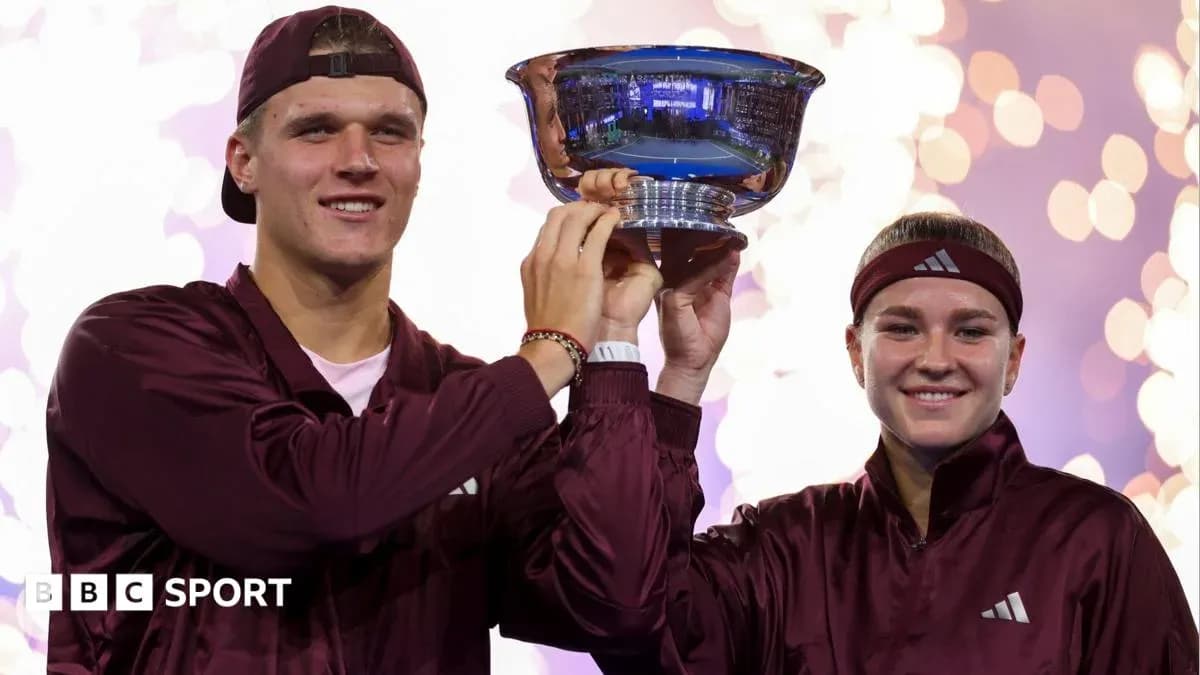
Karolina Muchova walked back into the spotlight at Flushing Meadows with stitches still fresh in the memory and a new partner at her side. A month and a half after losing the Wimbledon final and undergoing what she called a “small surgery”, she left New York as a Grand Slam champion for the first time – in the most unlikely of disciplines, with the most unlikely of partners.
Beside her stood Jakub Mensik, 20 years old, a French Open semi-finalist in singles and a complete novice in mixed doubles. By the end of the week, he was a $1m winner and a closer of the highest order.
Their title run was built on brinkmanship. Twice they stood on the edge of defeat. Twice they found a way back.
A final decided by nerve and a 131mph cannon
Under the lights, with the mixed doubles now occupying prime-time territory rather than a quiet afternoon slot for grounds pass holders, Muchova and Mensik beat Belinda Bencic and Flavio Cobolli 6-3 1-6 10-6 in a final that swung wildly before ending with a thunderclap.
Mensik, whose inexperience in the format was obvious but whose serve was not, finished the match in style. On their third championship point, he uncorked a 131mph ace, a statement of raw power and nerve that ripped through the night session and sealed the title.
The match itself was jagged. Muchova and Mensik controlled the opening set, lost their grip completely in the second, and then reset in the match tie-break, racing ahead and holding their nerve when it mattered most. The pressure finally told on Bencic and Cobolli; the Czech-Slovak pairing never flinched again.
It was a fitting end for a team that had already stared down elimination once.
Surviving the knife-edge
Their semi-final against Andrey Rublev and Mirra Andreeva was where the title almost slipped away. In a format where everything is compressed – short sets, a deciding tie-break, the entire event wrapped up in under 48 hours – the margins are razor-thin.
Muchova and Mensik edged through 5-4 (8-6) 3-5 11-9, saving match points and refusing to blink in the final points of a tense deciding tie-break. The scoreline tells the story: chaotic, tight, and decided by a couple of bold swings rather than long, grinding rallies.
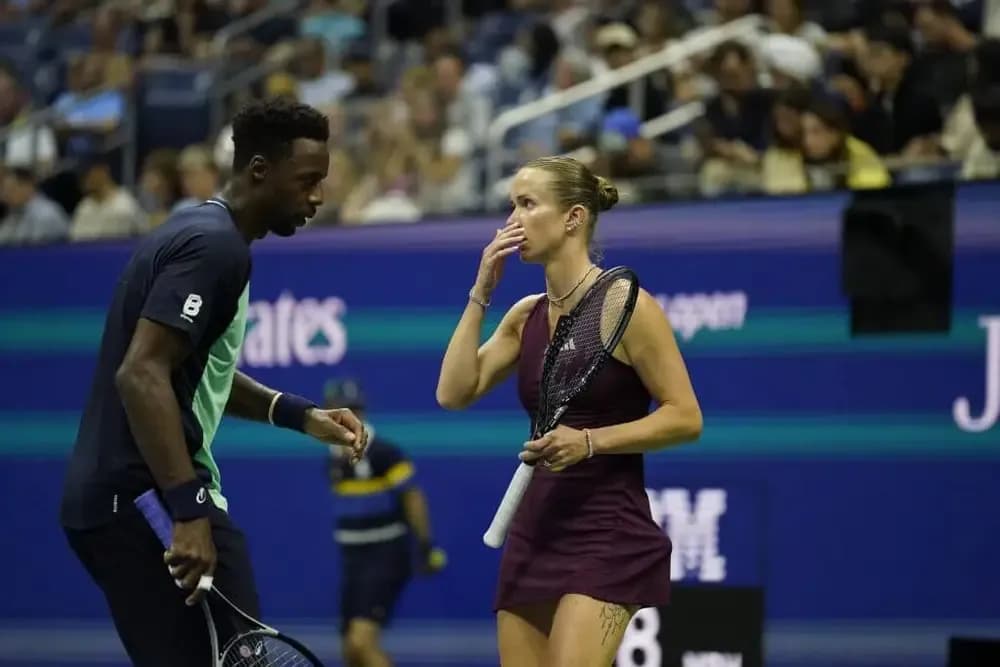
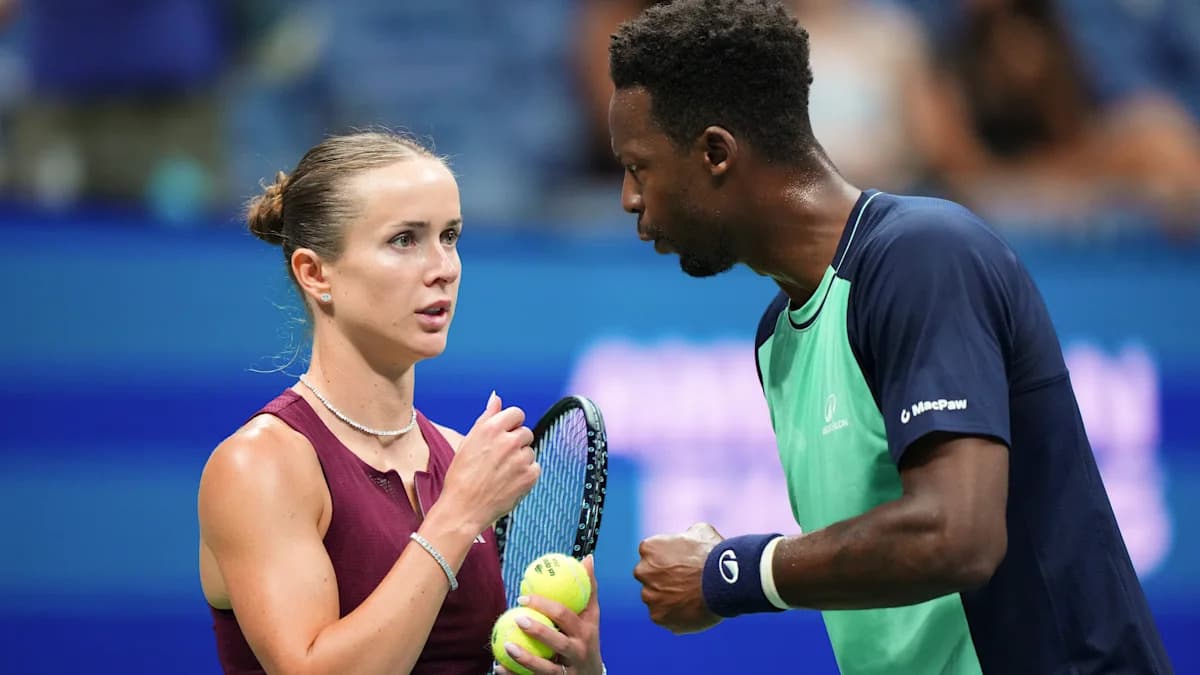
Both semi-finals went to 10-point tie-breaks. On the other side of the draw, Bencic and Cobolli had already spoiled one storybook run, beating Elina Svitolina and Gael Monfils 10-5 in their own decider. That defeat denied Svitolina and Monfils the chance to become the first married couple to win a Grand Slam mixed doubles title since 1939. They will not get another shot at it. Monfils retires at the end of the season.
So the door opened for Muchova and Mensik, two singles-focused players who treated the event as a sharpener and left with a major title.
A partnership born in jest and built on belief
Mensik had never played mixed doubles before this week. It didn’t show on serve. His delivery, already one of the weapons that carried him to the last four at Roland Garros, became the foundation of their run. What he lacked in experience, he made up for in pace and accuracy.
They also embraced the theatre of it. The pair agreed to wear matching maroon outfits – once Muchova had explained to her younger partner what maroon actually was. It was a small detail, but it captured the dynamic: a 30-year-old veteran guiding a 20-year-old newcomer through the nuances, on and off the court.
Mensik was clear about what the week meant to him.
“It’s not probably the main fact that we won the title, but that we had really great matches to play,” he said. “It’s good we tried a lot of things on the court. It gives you a little bit of boost of confidence.”
For Muchova, who had been sidelined since Wimbledon, the timing could hardly be better. A first Grand Slam trophy, even in mixed doubles, arrives as both validation and ignition ahead of the singles campaign.
Mixed doubles, reimagined – and suddenly loud
This was not the old mixed doubles, the one tucked away on outer courts, watched mostly by those wandering between show courts with a grounds pass and time to kill. The US Open has rebuilt the event into something else entirely: a sprint, a spectacle, and a showcase for star names.
The entire competition now unfolds in under two days. Purists may bristle at the idea that a Grand Slam title can be decided so quickly, but the shift is clear. The semi-finals and final were staged at night, under lights, in front of big crowds and a far larger television audience than the discipline has ever enjoyed.
The money tells its own story. The champions walked away with $1m, a prize five times larger than under the old format. Specialist doubles players still face a squeeze – even with a qualifying event introduced this year, places in the draw are limited, and the structure is increasingly built around singles stars. Yet for those who do get in, the rewards are now enormous.
The ripple effect has reached the rest of the doubles world too. The prize pot for men’s and women’s doubles has been raised significantly to match what is on offer in mixed, a rare moment where doubles specialists see their craft directly valued.
Stars, withdrawals and the bigger picture
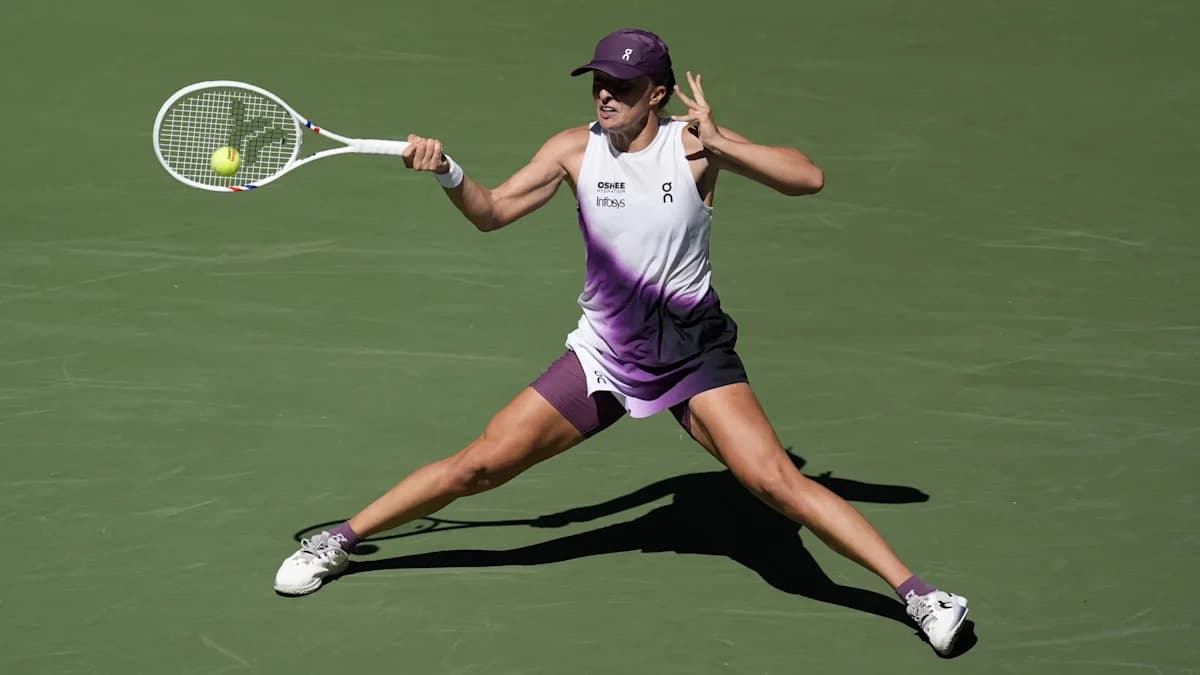
Not every top singles player has bought in. Iga Swiatek, Frances Tiafoe and Daniil Medvedev all withdrew shortly before the event began. Swiatek and Tiafoe needed rest after heavy schedules; Medvedev wanted more singles matches in his legs before the main draw.
That tension will not go away. For most singles players, mixed doubles will never be a priority, no matter the prize money or the stage. But the United States Tennis Association knows what success would look like. If they can regularly attract pairings of the calibre of Serena Williams and Carlos Alcaraz, or Aryna Sabalenka and Novak Djokovic, the experiment will be deemed a triumph.
For now, mixed doubles is one piece of an ever-expanding US Open “Fan Week”, a festival that starts long before the first ball is struck in the main draw. This year, Roger Federer joined Andre Agassi, John McEnroe and Andy Roddick in an exhibition on Tuesday, with Amanda Anisimova and Alexandra Eala among those featuring in the “Stars of the Open” on Thursday night. The Lumineers opened the tournament with a concert inside Louis Armstrong Stadium the previous Friday.
Nine days of build-up. One reimagined event. One new champion pair.
And at the centre of it all, a 30-year-old returning from surgery and a 20-year-old debutant in mixed doubles, closing out a Grand Slam title with a 131mph ace. If this is what the new era of mixed doubles looks like, the question now is simple: who will dare to ignore it?