.svg&w=384&q=75 "logo")
ICA Defends Judicial Integrity Amid Briatore's Accusations
The International Court of Appeal has moved to firmly defend its own house, issuing a rare and pointed statement after Flavio Briatore accused one of its judges of having ties to McLaren during the fallout from the Monaco Grand Prix.
This is no minor committee. The ICA, independent of the FIA and sitting at the top of motorsport’s judicial ladder, was dragged into the spotlight when McLaren and Red Bull challenged the stewards’ decision to overturn Pierre Gasly’s penalties from Monaco.
Gasly had been among several drivers wrongly hit for pitlane speeding, a clerical error that initially cost him a podium. Alpine successfully pushed through a right of review, and his punishment was rescinded. Others were not so fortunate. Their penalties had already been served in-race, leaving no way back. McLaren and Red Bull argued that was an uneven application of justice and took the matter to the ICA.
They won. The court sided with the appellants and reinstated Gasly’s penalties, a ruling that infuriated the Frenchman and his team. Alpine’s frustration did not stay behind closed doors for long.
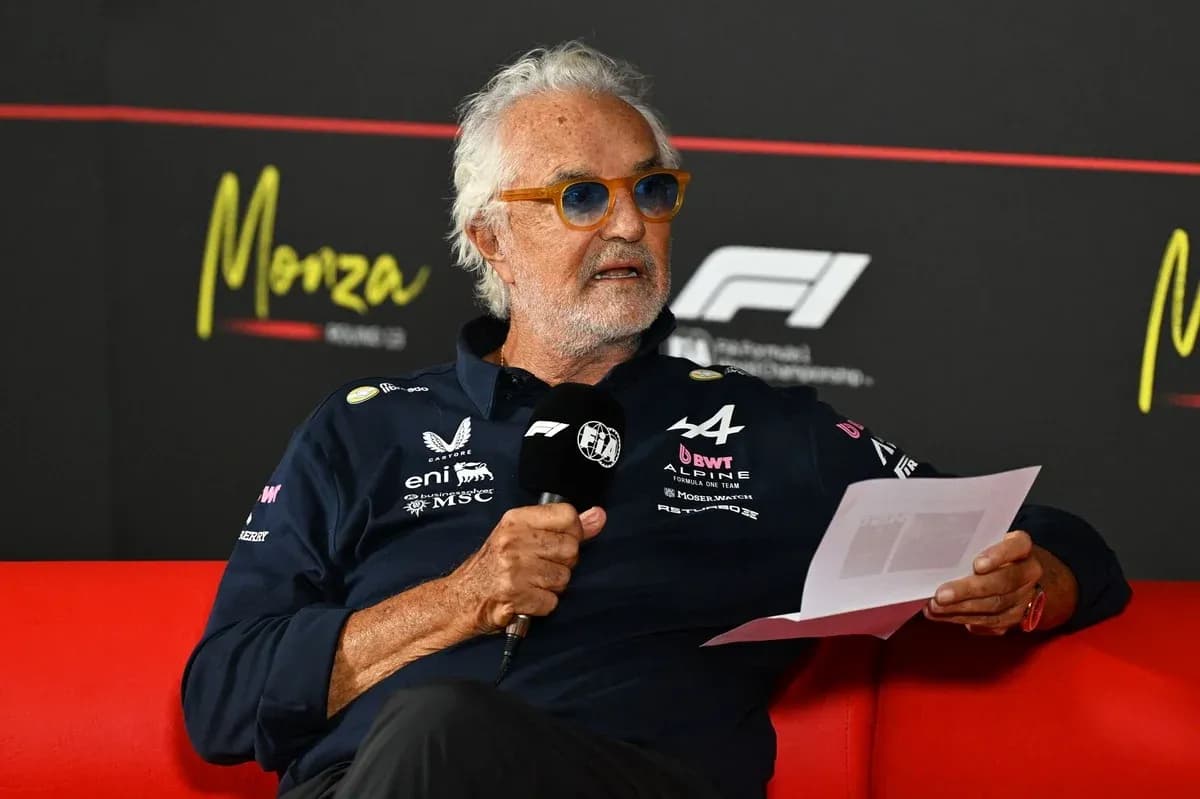
Briatore, never one to choose the quiet route, detonated during the Italian Grand Prix press conference. He openly questioned the integrity of the panel, pointing specifically to judge Filippo Marchino and alleging links to McLaren that, in his view, compromised the process.
Marchino’s history is not in Formula 1 garages but in philanthropy. He previously served as CEO of the One Drop Foundation, a charity created by Cirque du Soleil founder Guy Laliberte. During his time there, the organisation received several McLaren road cars from the late Mansour Ojjeh, then a McLaren shareholder, to be auctioned for fundraising. Briatore also cited a 2018 McLaren Special Operations event in Beverly Hills where Marchino appeared as a speaker, an engagement unrelated to the F1 team.
The ICA, stung by the public nature of the accusations, responded with a detailed defence of its procedures and its people.
“The FIA Courts are aware of public comments questioning the independence and impartiality of the judges of the panel that decided Case ICA-2026-06-07-08-09,” the court said in a statement, referencing the McLaren and Red Bull appeal.
It stressed that the panel was formed strictly in line with FIA judicial rules and what it called “usual practice”, pointing to guidelines modelled on the IBA standards for conflicts of interest in international arbitration. In short, this was the court insisting the system worked exactly as designed.
All ICA judges, the statement underlined, are elected by the FIA General Assemblies. Some arrive on the bench after being proposed by a group of at least five F1 teams, as permitted by the FIA statutes. Once in place, they are bound by independence and confidentiality rules, must file annual disclosures of interest to the FIA compliance officer, and sign a specific declaration of independence for every single case they hear.
That declaration is not a formality. It is served to the parties involved, placing the judges’ stated neutrality on the record before any argument begins.
The court also made it clear that no one raised any red flags when it mattered most.
“At both the beginning and conclusion of the hearing, the parties were invited to raise any issue concerning the proceedings or the composition of the court. None did so,” the statement continued. “No objection was raised during the hearing concerning the manner in which the court questioned the witness or conducted the proceedings.”
In other words: if there were doubts about who was sitting on the bench, they were not voiced in the room.
The ICA then broadened the lens. It defended its policy of building panels with judges from varied cultural and geographical backgrounds, arguing that this mix enriches deliberations with different legal traditions and perspectives. That diversity, the court said, strengthens fairness, independence, credibility, and access to a fair trial.
The message was clear. This was not just a defence of one judge, but of the court’s entire philosophy.
“A court’s decision can leave room for various interpretations and comments as for its legal merits; that is fair and accepted by all the judges,” the ICA added. It stood firmly behind “the soundness of the proceedings and the integrity of the judges,” and underlined that the FIA courts “remain committed to the independence and impartiality of their judges and to the integrity of the judicial process.”
Briatore’s blast has dragged the usually discreet ICA into the centre of the paddock’s political storm. The court, for its part, has chosen to answer not with counter-accusations, but with the rulebook it believes will have to carry the sport through the next controversy.