.svg&w=384&q=75 "logo")
Germany Secures Quarter-Final Spot with Victory Over Mali
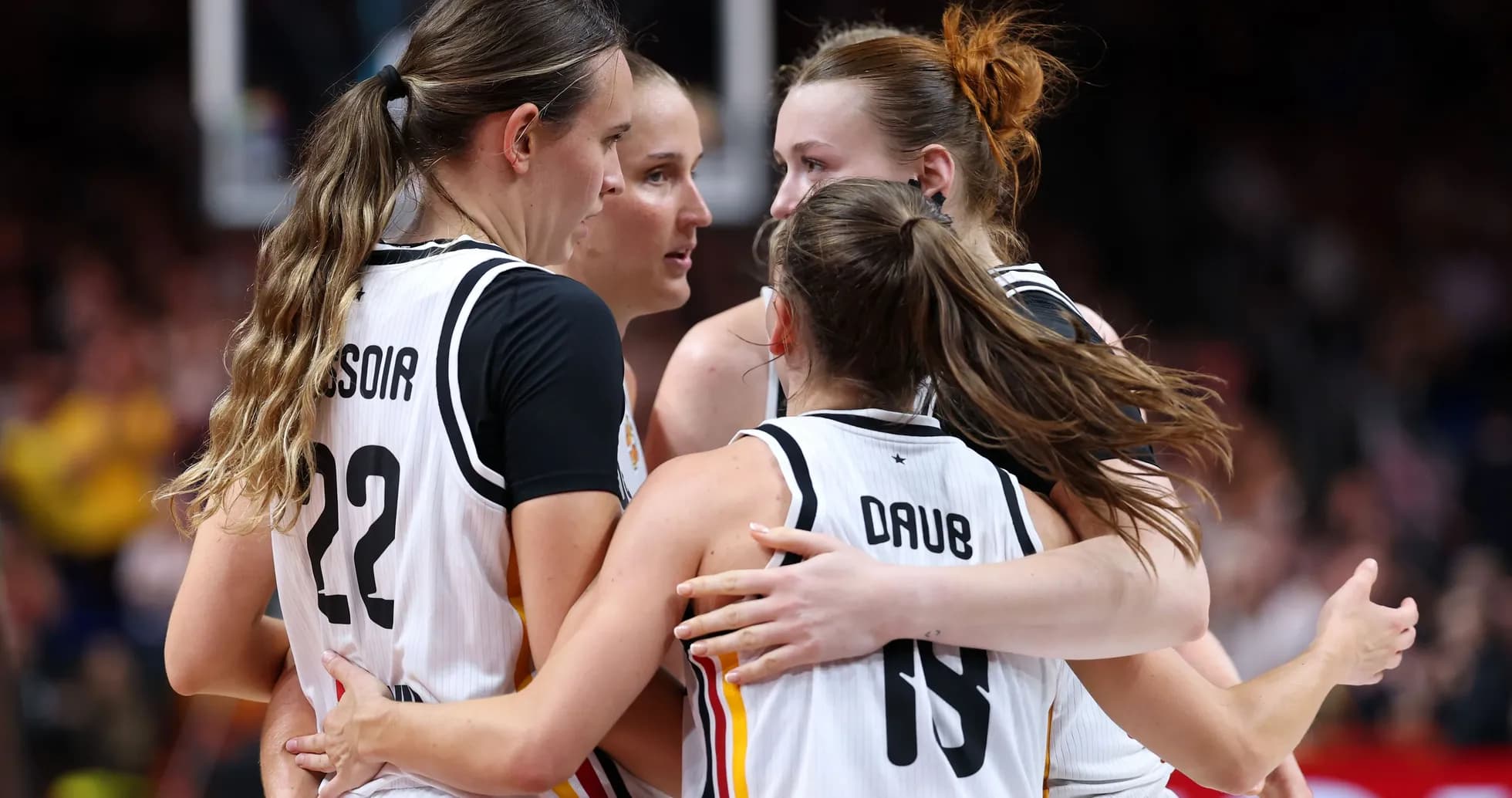
The lights dimmed, the first chords of "Through the Monsoon" hit, and 12,550 fans inside Berlin’s Uber Arena rose to their feet. The German women bounced onto the floor to their team song, grinning, clapping, feeding off the noise. By the end of the night, they had turned that energy into a statement.
Germany 83, Mali 58. Job done. Second place in Group A secured. And a clear path laid out: South Korea next, the quarter-finals in sight.
From group chaos to clarity
This was a group that started the day on a knife-edge. Four teams, three points each, one win and one defeat apiece. Germany could finish top. They could crash to fourth. Everything was in play.
Spain’s 79-59 win over Japan in the parallel game killed off any hope of first place, but by then Olaf Lange’s team had already taken control of their own fate. They didn’t just survive the pressure. They embraced it.
"I'm very happy with how we have developed. Now the success is there too," Lange said on MagentaTV, the satisfaction clear, before he cut straight to the chase: "Now we have to reorganise again. South Korea are a good team."
No basking. No lingering. Just the next challenge.
A response after Spain, a statement after Mali
The tournament had not started gently. A heavy 53-83 loss to Spain exposed the gap to the favourites. The answer came quickly: a sharp, aggressive 74-58 win over Japan. That reset the tone.
To lock in the best possible position, Germany needed a second victory. Frieda Bühner, who had led the scoring against Japan, summed up the plan: "We have to be the aggressor from the start."
They were.
With world champion and national team captain Dennis Schröder courtside, leaning in, clapping, talking to players during breaks, Germany came out with purpose. The defence bit early, closing driving lanes, contesting everything. Leonie Fiebich buried an early three, and by the sixth minute Germany were 15-7 up.
Then came the wobble.
A scrappy spell, loose handling, rushed decisions. Alexis Peterson, back in the lineup after missing the second half against Japan due to an infection, twice turned the ball over in quick succession. The rhythm stalled, the game threatened to open up.
It didn’t. Germany refused to let it.
Geiselsöder arrives, Bühner shines
The turning point came from a player who had been searching for her tournament moment. Luisa Geiselsöder, quiet in the earlier games, suddenly lit up the floor. She didn’t miss a shot in the first half, finishing everything inside and stepping out with confidence.
Her surge unlocked the rest of the offense. Bühner, already brimming with belief, caught fire again. Her second straight three pushed Germany into double digits at 40-29 in the 16th minute. From that point, almost every German look seemed to drop.
Alexandra Wilke and Marie Gülich joined the outside barrage, stretching Mali’s defence beyond its limits. Bühner kept piling on the points, finishing the night as top scorer with 21, the kind of performance that anchors a team’s identity in a tournament.
On the sideline, Schröder liked what he saw.
"You want to get better in every game, and that's what they are doing," he said at half-time, praising the "brilliant atmosphere" in the arena. The crowd responded, louder, sharper, sensing this team growing with every possession.
No repeat of Spain’s fate
This was only Germany’s second meeting with Mali, the first coming way back in 2007 in Saarlouis. The Africans arrived in Berlin with serious credibility, having stunned Spain 82-73 on the second matchday. Their athleticism and fearlessness had rattled the group favourites.
Lange’s side never allowed a repeat.
After the break, Germany stayed locked in. The defence stayed tight, the rotations stayed sharp, and Mali’s confidence began to drain. Every run they tried to build met a wall of white jerseys and a wave of noise from the stands.
The pressure finally told in the 25th minute. Geiselsöder stepped out again, calmly set her feet and drilled a three for 56-37. It felt like a hammer blow.
"It felt great. It was really good basketball," said the WNBA player afterwards, and it sounded less like a boast than a quiet relief that her tournament had finally caught fire.
From there, Germany controlled the game with authority. No late drama. No cracks. Just a professional close-out from a team starting to trust itself on this stage.
South Korea next, Belgium looming
The equation is now brutally simple. Beat South Korea, third in Group B, in Tuesday’s qualification round (8.45pm, MagentaTV), and Germany are into the quarter-finals. Waiting there: Belgium.
The European champions of 2023 and 2025 swept through Group C without a single defeat. They are the standard. They are also the kind of opponent Germany now look eager to test themselves against.
For that to happen, they must first handle South Korea. Another reset, another reinvention, as Lange demanded.
The music, the crowd, the confidence – all of that will be back in Berlin. The question now is whether this German team can ride that wave one more time and turn a rousing group performance into a genuine knockout run.