.svg&w=384&q=75 "logo")
Everton's Transfer Window Fiasco: A Public Collapse
Everton’s transfer window did not simply end badly. It collapsed in public, under floodlights, with the fanbase in open revolt and the club’s hierarchy squarely in the firing line.
The Friedkin Group and chief executive Angus Kinnear now find themselves cast as the architects of a shambles that has left David Moyes with a threadbare squad and supporters demanding answers, not platitudes.
A fiasco in real time
The breaking point came at the end of a window already poisoned by the proposed sale of Harrison Armstrong, the gifted academy forward many see as Everton’s brightest home-grown talent since Wayne Rooney.
The plan to send the 19-year-old to Nottingham Forest sparked fury. The backlash was instant and ferocious, forcing the board to block the move. A PR disaster was narrowly avoided. The relief barely lasted days.
Then came deadline day.
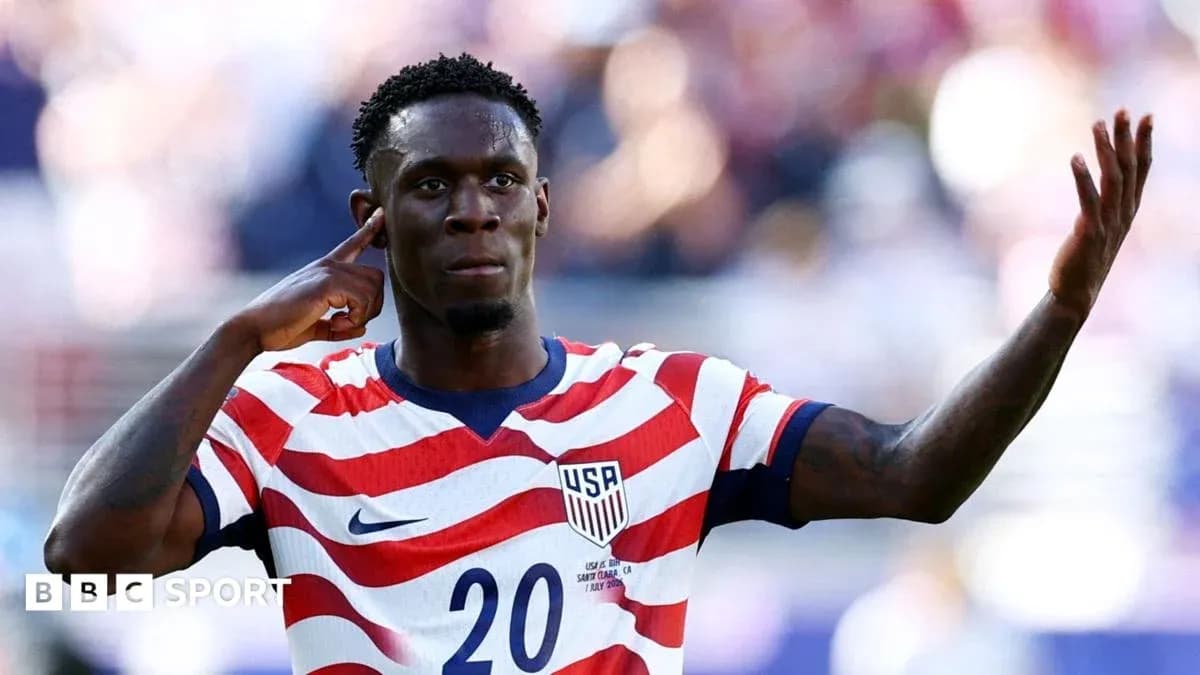
Everton believed they had their striker: Folarin Balogun, a £40m deal agreed with AS Monaco, the United States international ready to lead the line. The deal sheet went in before the 23:00 BST deadline on Tuesday. Both clubs signed. Balogun signed. All that remained were the formalities.
They even had an 8am flight lined up to bring him to Merseyside. It never went quite to plan. Balogun arrived later than expected. Documents from Monaco took longer than Everton wanted. The clock ticked, but the deal still looked alive.
Until the medical.
Issues flagged during the checks forced a renegotiation: a smaller up-front fee, performance-related add-ons, the same personal terms. On paper, a compromise that kept the transfer alive. In reality, it triggered a chain reaction Everton could not control.
As doubts grew, Everton scrambled. They turned to Manchester United’s Joshua Zirkzee on loan. The forward was ready to come. United were not ready to let him leave. Attention moved to Aston Villa’s Tammy Abraham. He chose to stay at Villa Park.
The pressure finally told. With minutes left before the deadline, Everton and Monaco agreed the revised structure for Balogun. The path seemed clear again.
Then the striker walked.
Balogun left Finch Farm without signing, Monaco sporting director Thiago Scuro later telling journalists the player was “not comfortable” with how Everton had treated him during his medical. For a club already under suspicion from its own fans, it was a brutal public verdict.
Everton insist they supported Balogun throughout, were transparent about the medical findings, and were prepared to work with Monaco on a solution that could still deliver the transfer. None of that changes the image: a marquee deal collapsing in the final act, with the player turning away from the club’s training ground.
And all this unfolded just hours after Everton had sanctioned Beto’s £15.5m move to Fiorentina. One striker out, none in. Chaos, live.
“A good place” exposed
Kinnear had walked into this window with bullish words. In a recent interview with BBC Radio Merseyside, he declared Everton’s squad “in a good place” and set a clear bar: “Our metric is that by the close of the transfer window we have achieved that.”
He also relayed the message from Everton’s American owners that missing out on Europe last season was viewed as “failure”. Moyes admitted those comments came as a “surprise”.
Now that word has turned back on the hierarchy. Failure is no longer a theoretical standard. It is the charge sheet.
The “good place” has materialised as a squad with one senior striker in the raw Thierno Barry and only 18 senior outfield players. For a 63-year-old manager who has already hinted at his unease over the summer’s business, it is a precarious situation.
Everton did manage some important work. Jack Grealish returned on loan. Ashley Maitland-Niles arrived from Lyon for £3m, finally addressing a right-back problem that has lingered for years.
Even that solution came with drama. A £9.4m deal for Fulham’s Kenny Tete was shelved late when the London club could not secure a replacement, leaving Everton to announce Maitland-Niles just after midnight.
The squad balance remains alarming. One recognised right-back in Maitland-Niles. One left-back in Vitaliy Mykolenko after youngster Adam Aznou was allowed to join Malaga on loan. One striker. For a club with European ambitions, it is a fragile, almost reckless gamble.
Signings lost in the storm
Strip away the noise and there were signings that, in another context, might have drawn praise.
PFA Championship Player of the Year Hayden Hackney arrived from Middlesbrough, a midfielder with energy and upside. Christian Norgaard came from Arsenal as the experienced replacement for Idrissa Gueye, though the 32-year-old is currently injured with no return date set.
Young German Merlin Rohl was added, and Tyrique George’s loan from last season was turned into a permanent deal. Brennan Johnson joined from Crystal Palace in a straight swap with Dwight McNeil, a bold, like-for-like reshaping of the attack.
On paper, there is logic in several of these moves. On the pitch, Moyes must knit them together with a squad that has fewer bodies and fewer options than when the window opened.
That is the damning reality: Everton end this transfer period weaker, not stronger.
Supporters turn up the heat
The mood outside the boardroom is toxic.
Fan groups have moved quickly and decisively. A petition calling for Kinnear’s resignation is already circulating. “The Everton Fans’ Forum” released a detailed statement accusing the club of leaving the squad “dangerously short” in key areas and questioning the club’s “planning, recruitment and decision-making”.
Their words cut through the usual noise: “This is not about demanding that Everton spend recklessly. Supporters understand the financial restrictions the club operates under. We are not demanding marquee signings simply for the sake of it.
“We are demanding competence, preparation and accountability.”
The 1878s, the volunteer group whose flags, banners and tifos have transformed atmospheres at the new Hill Dickinson Stadium, have taken an even more symbolic step. In a statement, they announced they are “standing down for the foreseeable future” in protest.
“Like the rest of our fanbase, we are utterly disappointed and disgusted with how this transfer window has gone, especially the end of it,” they said, before explaining that regulations prevent them from displaying flags that would fully express their anger.
When the club’s most creative atmosphere-builders withdraw their backing, the message is unmistakable. This is not a grumble. It is a boycott of belief.
Moyes left exposed
On the pitch, Moyes has tried to keep his focus narrow. After the Carabao Cup second-round win at Preston North End, he did not sugar-coat the situation.
“I still think we have got a lot of work to do,” he said. “We need more players. Our squad is not big enough and we need to get more quality in some areas if we can do.”
He did not get them.
Everton can argue that Balogun made a personal decision they could not control. They can point to financial constraints, to market realities, to late collapses out of their hands. None of it changes the central question that now hangs over Kinnear and TFG:
Why did a club with glaring, long-term weaknesses wait until the final day to address them?
Everton have yet to issue any public statement on the Balogun debacle, the Armstrong U-turn, or the fan backlash. Silence, in this climate, only amplifies the anger.
There are bridges to rebuild in the dressing room, in the stands, and across a fanbase that feels insulted, not just ignored. The owners have called missing out on Europe “failure”.
After this window, how do they define what comes next?