Elena Rybakina Turns the Tide to Reach US Open Final
Elena Rybakina walked out for her first US Open semi-final looking as if she had left part of her game in the locker room. One set later, under the lights of Arthur Ashe Stadium and the full force of a partisan crowd roaring for Coco Gauff, it still hadn’t arrived.
Gauff flew through the opening set, 6-3, a blur of speed and intent, hunting down every ball on the blue acrylic as 22,000 voices rose behind her. Rybakina, usually so clean and composed, sprayed errors from the baseline. Her serve, one of the most feared in the sport, barely made a cameo. The night threatened to run away from her.
It didn’t. It never does easily at this level.
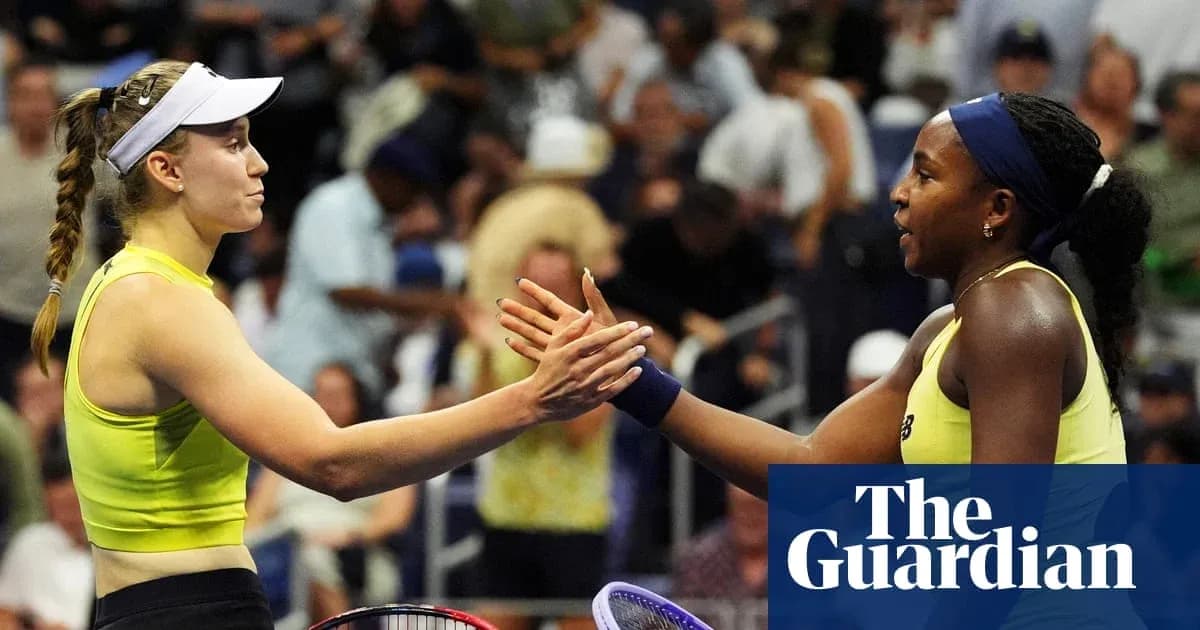
Rybakina steadied, problem-solved and then imposed. From a set down and out of rhythm, the Wimbledon champion turned the match on its head, muscling past Gauff 3-6, 6-4, 6-4 to reach her first US Open final and a fourth major final of her career.
She has not dazzled in New York. Not once across six rounds has Rybakina produced her purest, most fluid tennis. Yet she keeps moving, keeps surviving, keeps winning. That, more than any highlight reel, tells the story of where she is now. Since lifting her first slam at Wimbledon in 2022, all three of her subsequent major finals have come on hard courts. After waiting four years to add a second slam title, she now stands one match away from taking two in the same season.
This fortnight already carried enormous weight for the 25-year-old. She arrived in New York with the chance to scale one of the sport’s great peaks: world No 1. The build-up had been clouded by an Achilles problem and a poor record at Flushing Meadows, but she played through the pain and the doubts. A tense quarter-final win over Zheng Qinwen sealed the ranking breakthrough. It did not sate her.
Rybakina made it clear that the ranking was only a checkpoint. The title was the destination. Now she will chase it in a final that rekindles the defining rivalry of the year, facing the outgoing No 1 Aryna Sabalenka in a rematch of the Australian Open final she won in January.
Across the net, this semi-final cut deep for Gauff for different reasons. Her rise over the past 12 months has been powered by a transformation in the shot that once betrayed her most brutally: the serve. It reduced her to tears on this very court a year ago. This time, it held up. The damage came from elsewhere.
The forehand, long under scrutiny, collapsed under the weight of Rybakina’s power. Fifteen unforced errors spilled from that wing, many of them at critical moments, as Gauff tried to repel one of the heaviest hitters in the game.
The occasion itself carried its own layer of history. For the first time in 51 years, all four top seeds reached the US Open women’s singles semi-finals. Not since Wimbledon 2009 had any major produced that kind of chalk in a women’s draw. It spoke to the strength and stability at the top of the sport that the line-up felt almost inevitable rather than extraordinary.
These players know each other’s games inside out by now, but Gauff and Rybakina have somehow skirted around one another. Their meeting in Canada last month, another three-set win for Rybakina from a set down, was only their second encounter. This was their third. It already feels like a pattern.
Gauff came into the semi-final with scars to treat. Her serve had wobbled badly in her dramatic comeback against Mirra Andreeva, a match in which she saved two match points but coughed up 12 double faults. Under the Ashe lights, the first serve nerves vanished. In the opening set she landed big deliveries when she needed them, backed them up with scrambling defence and watched Rybakina implode.
The American took the first set on the back of that blend: bold serving, tireless coverage, and a stream of errors from the other side. The crowd sensed blood. So did Gauff.
Rybakina’s response was swift and cold. She walked to her chair, reset, and came out for the second set with a different plan. She stopped trying to hit through Gauff and started hitting around her. Angled backhands dragged the American wide, opening up the court and exposing space. The depth returned. The timing sharpened.
Within minutes, Rybakina was up 4-1. The set itself was ragged, both players misfiring in bursts, but the key pattern had flipped. Gauff’s forehand, compact but still technically fragile under pressure, began to hitch and unravel. Down 4-5, serving to stay in the set, she played her worst game of the night: three forehand errors and a double fault handed Rybakina the set and a lifeline.
The decider belonged to the serve. It had to, at some point.
Rybakina’s biggest weapon finally roared. At 1-1, she slammed down two huge aces to close a hold for 2-1, the kind of statement game that changes the air in a stadium. From there, her service games turned brisk and businesslike. Short points. Clean winners. No daylight for Gauff.
The pressure shifted squarely onto the American. Serving at 2-3, she faced two break points, clinging on as Rybakina hammered returns at her feet. Gauff escaped with a couple of bold first serves for 3-3, but the reprieve was brief. At 3-4, the dam finally burst. Rybakina broke, stepped up to the line at 5-3 and looked ready to close.
Gauff, as she so often does, refused to go quietly. She scraped and sprinted, then at 3-5, 30-30, carved one of the shots of the match: a laser backhand passing shot that ripped past Rybakina and lit up Ashe. That surge carried her to a break back for 4-5, the stadium erupting as the comeback narrative flickered into view.
Rybakina shut it down.
She shrugged off the missed opportunity, stalked forward inside the baseline in the next return game and went after Gauff’s serve with ruthless intent. Returns flew deep and flat, pinning Gauff behind the baseline. The American’s forehand cracked again. One final flurry from Rybakina, one last forehand error from Gauff, and the match was gone.
From a set down and out of sorts to a place in the final between two world No 1s, Rybakina had navigated the hard way. Now, with the ranking secured and the crowd turned, she walks into a title match that could reshape the balance of power at the top of the women’s game.