.svg&w=384&q=75 "logo")
Eala’s Impact: Filipino Fans Transform Tennis Culture
They have been called loud. Rowdy. Out of step with tennis’ hushed codes.
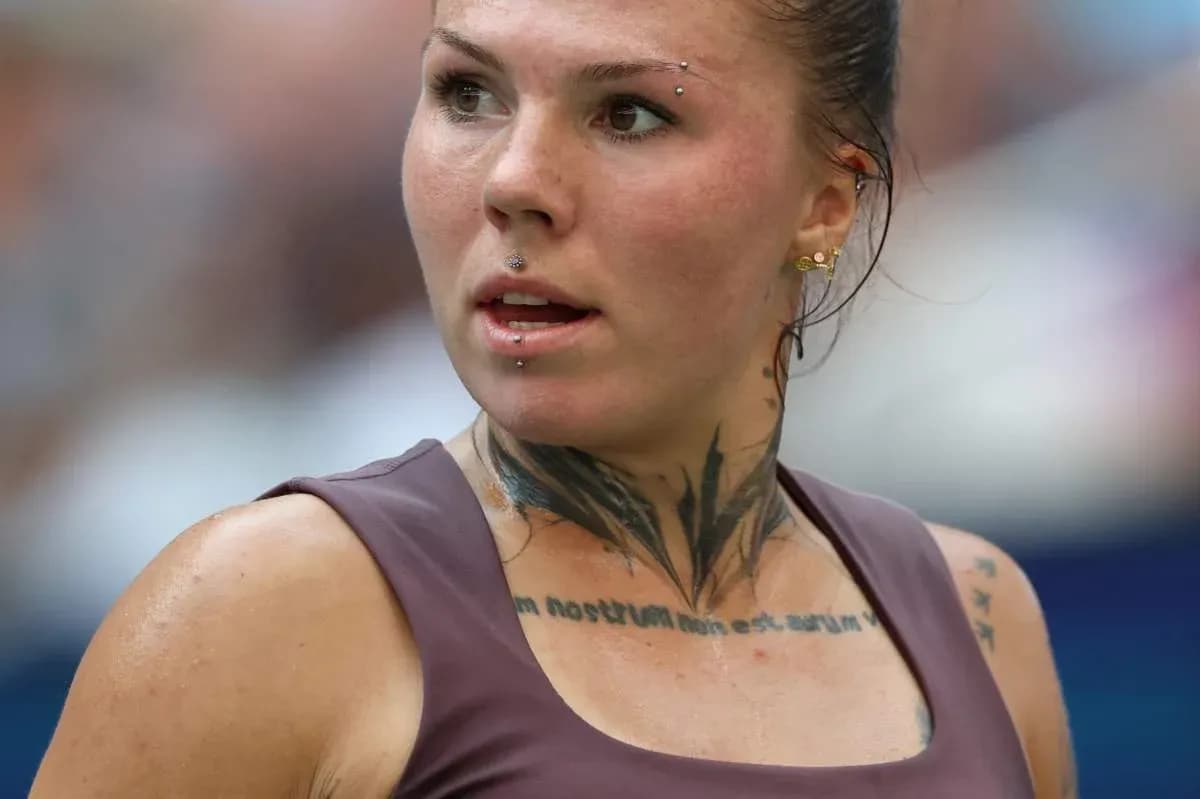
On Thursday night inside Louis Armstrong Stadium, Oleksandra Oliynykova met Alex Eala’s Filipino fans from the harshest vantage point possible — on the other side of the net.
She lost 6-1, 6-4. She walked off to the sound of a partisan roar that had ridden every Eala point, every error, every momentum swing.
Hours later, there was no complaint. No lecture on etiquette.
There was gratitude. And it came, pointedly, in Filipino.
“Mahigpit na yakap sa aking mga tagahanga sa Pilipinas!” Oliynykova wrote on Instagram. “Napakainit ng inyong pagmamahal, napakatapat, at talagang kahanga-hanga kayo!”
A big hug to her supporters in the Philippines, she explained, praising their warmth, loyalty and kindness. From the player who had just been on the receiving end of their noise.
That small gesture cut straight into a bigger story following Eala’s rapid rise.
A New Soundtrack for an Old Sport
Tennis has long prided itself on decorum: silence on the toss, murmurs between points, applause delivered with restraint.
Eala’s crowds do not always fit neatly into that frame.
The Washington Post detailed the growing tension this week. Some of Eala’s newer followers have cheered double faults. Some have shouted during points. Ushers and officials have had to remind pockets of fans when quiet is required. One sign at this year’s US Open captured the culture clash in seven words: “Sorry we’re loud. We’re Filipino.”
To traditionalists, it has felt like an invasion of basketball noise into a sport that still polices whispers. Philippine outlets have responded by publishing primers on tennis’ unwritten rules, an attempt to teach a fan base that has grown up on raucous arenas, not reverent courts.
There is a clear line. Players deserve silence during serves and rallies. Anything that disrupts play is not passion; it is interference.
But to stop the conversation there is to miss what is happening in front of everyone’s eyes.
Eala is dragging a different world into tennis.
At this US Open, that has meant families arriving draped in Philippine flags, children in Eala shirts, fans streaming in from Filipino communities in Queens and New Jersey. Louis Armstrong turned into a sea of red, blue, yellow and white for her second-round match, the tournament itself labeling the scene a “Filipino party.”
One woman told USOpen.org that her granddaughter picked up a racket because of Eala.
That is not a nuisance. That is growth.
The Opponent Who Felt the Love
Oliynykova saw it up close, then felt it again when the match was over.
“I went for a little walk around the US Open grounds, and it was incredibly heartwarming to see how many people came up to me with kind words,” she wrote on Instagram.
She spoke of an “incredible number” of messages and comments. She thanked fans for making her feel supported.
This from the player the crowd had spent the evening roaring against.
The same voices that had exploded for Eala’s winners and Oliynykova’s errors were, hours later, stopping her around the grounds to offer encouragement. Enough of them, with enough sincerity, that she chose to acknowledge them publicly — and in three languages, including Filipino.
It was a snapshot of something deeply familiar in Filipino sporting culture: fierce, almost tribal loyalty during the contest, followed by an instinctive warmth once the battle ends.
On Thursday, that duality spilled into one of tennis’ biggest stadiums.
Eala’s Crowd, Tennis’ Question
Eala’s rise has exposed a fault line not just about noise, but about who tennis is for.
Her following does not always resemble the sport’s traditional audience. They are younger. More diverse. Less versed in when to clap and when to hold their breath.
They will need to learn some of those customs. Respect for the players demands it. There is no reason a fan can’t understand “quiet on the serve” and still sing, chant or drum between games.
But to dismiss Eala’s supporters simply as unruly is to ignore their impact.
Her second-round match turned Armstrong into one of the loudest courts on the grounds. Reuters described Eala as being fueled by a crowd packed with Philippine flags and Tagalog signs, a player feeding off the sound of a community that sees itself in her.
The ripple effect stretches far beyond New York. The Wall Street Journal has detailed how Eala has sparked fresh interest in tennis across the Philippines, a country of more than 100 million where basketball and boxing usually claim the spotlight. Courts that once sat empty now host children who know one name: Eala.
For years, tennis has talked about reaching new, younger, more global audiences. It has experimented with formats, tinkered with schedules, pushed social media.
Here, in one 19-year-old and the noise that follows her, is the very thing the sport says it wants.
Her fans are still learning tennis.
Oliynykova’s message suggested something else: tennis might have a few things to learn from them, too.