.svg&w=384&q=75 "logo")
Dane Sweeny’s US Open Journey: Pain and Promise
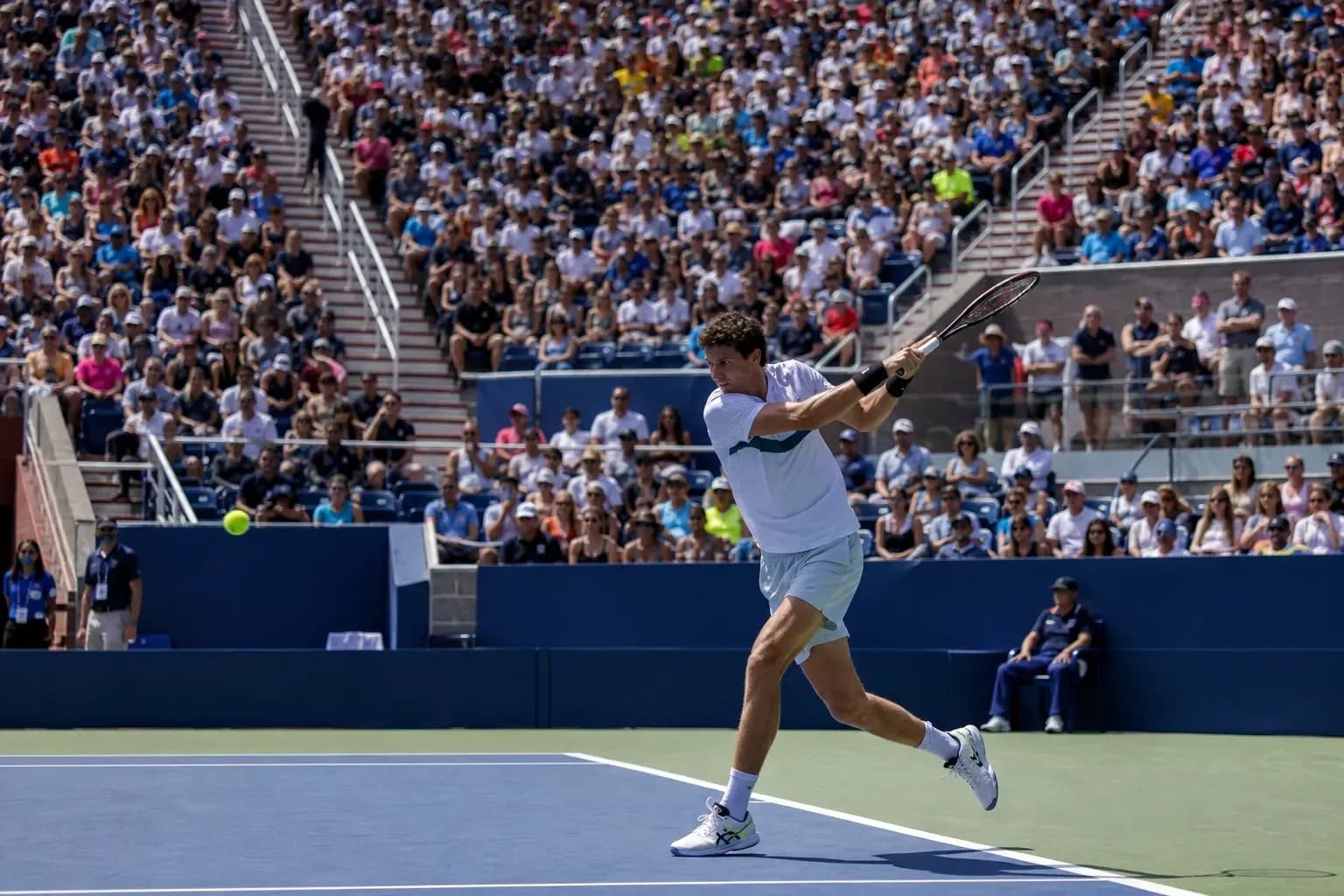
Dane Sweeny walked off Louis Armstrong Court with a limp, a straight-sets defeat on the scoreboard and, somehow, the best week of his career in his back pocket.
The 25-year-old Australian, a late arrival to the US Open main draw, saw his singles run end in the third round with a 4-6, 3-6, 3-6 loss to 21st seed Luciano Darderi. It was a clean, controlled performance from the Italian; it was a grind, physically and mentally, for Sweeny.
He had been Australia’s last survivor in the singles draws. By the end of the afternoon, that thread had snapped too.
From last-minute call-up to last Aussie standing
Sweeny began this tournament as a name on the margins. Ranked 123rd in the world, he only made it into the main draw when two late withdrawals opened the door. Tennis Australia shifted a reciprocal wild card originally earmarked for Alexei Popyrin and handed Sweeny his shot.
He ran with it.
The Queenslander fought his way into the round of 32 at a Grand Slam for the first time, navigating the chaos of qualifying-level nerves in a main-draw setting and the noise of New York. For a player who has spent most of his career working away on the Challenger circuit, this was a different world.
But against Darderi, the body started to betray him. During the match, Sweeny complained of a hip problem, an issue that clearly hampered his movement and robbed him of the explosiveness that had carried him through the first week.
The numbers told the story. His usual tempo deserted him, his timing went with it, and the unforced errors piled up. Darderi didn’t need a spectacular day; he just needed to be solid and relentless. He was both.
A career-changing week, even in defeat
Afterwards, Sweeny called the week in New York “career-changing” while admitting his own level had not matched the stage in the third round. The frustration was obvious: he never quite found his rhythm, never quite located the pace that had made him dangerous in earlier rounds.
Yet the bigger picture is impossible to ignore.
By reaching the last 32, Sweeny secures $402,500 in prize money and, by early calculations, a rise to No. 109 in the world rankings — the highest mark of his career. One more push, one more jump into the top 100 before season’s end, and the next door opens: direct entry into the Australian Open main draw for the first time.
From a late wild card at Flushing Meadows to a potential automatic place at his home Slam. That’s the scale of the shift this week has delivered.
Big American names fall on bruising day in New York
Sweeny’s exit came on a day when the US Open also turned brutally on some of its own recent finalists.
Ninth seed Taylor Fritz, the 2024 runner-up, crashed out in a five-set scrap against Francisco Cerundolo. Fritz led by two sets but the Argentine surged back, winning 3-6, 4-6, 6-3, 6-4, 6-4 to reach the fourth round here for the first time. For Fritz, this marked his earliest New York departure in four years.
On the women’s side, Madison Keys suffered a collapse that will sting for a long time. She raced through the opening set against Zheng Qinwen 6-1 and, even after dropping a tight second-set tiebreak 7-6 (7-3), seemed to have the match under control. In the deciding set, she led 5-0.
Then it all slipped.
Zheng mounted a remarkable comeback, reeling off seven of the next eight games to steal the set 7-5 and the match with it. Her reward is a showdown with world No. 1 Iga Swiatek, who survived two tense tiebreaks to get past Marie Bouzkova.
American hopes took another hit when 10th seed Amanda Anisimova fell 2-6, 5-7 to Anastasia Potapova, a straight-sets defeat that never really felt like turning. Coco Gauff, at least, steadied the home narrative, handling Cristina Bucsa 6-3, 6-4 to move on with minimal fuss.
A line in the sand for Sweeny
For Sweeny, the scoreboard in New York will show a straight-sets loss in the third round. That’s the cold record.
The reality is richer. A late call-up, a first taste of the second week’s edge, a ranking surge, and a clear target: crack the top 100 and walk into Melbourne next January as a fully-fledged main-draw player, not a hopeful waiting on a phone call.
His US Open is over. His season, and perhaps his career trajectory, has only just shifted into a new gear.