.svg&w=384&q=75 "logo")
Coco Gauff's Serve Transformation at US Open
Twelve months ago, Coco Gauff was alone in the rain, serving through frustration on the outer courts at Flushing Meadows. Head down, shoulders tight, searching for a motion that no longer felt like hers. The yips had crept in, and with them came doubt, double faults and the sense that one of the sport’s brightest talents was being dragged down by the most basic shot in tennis.
On Tuesday in New York, the picture could not have been more different.
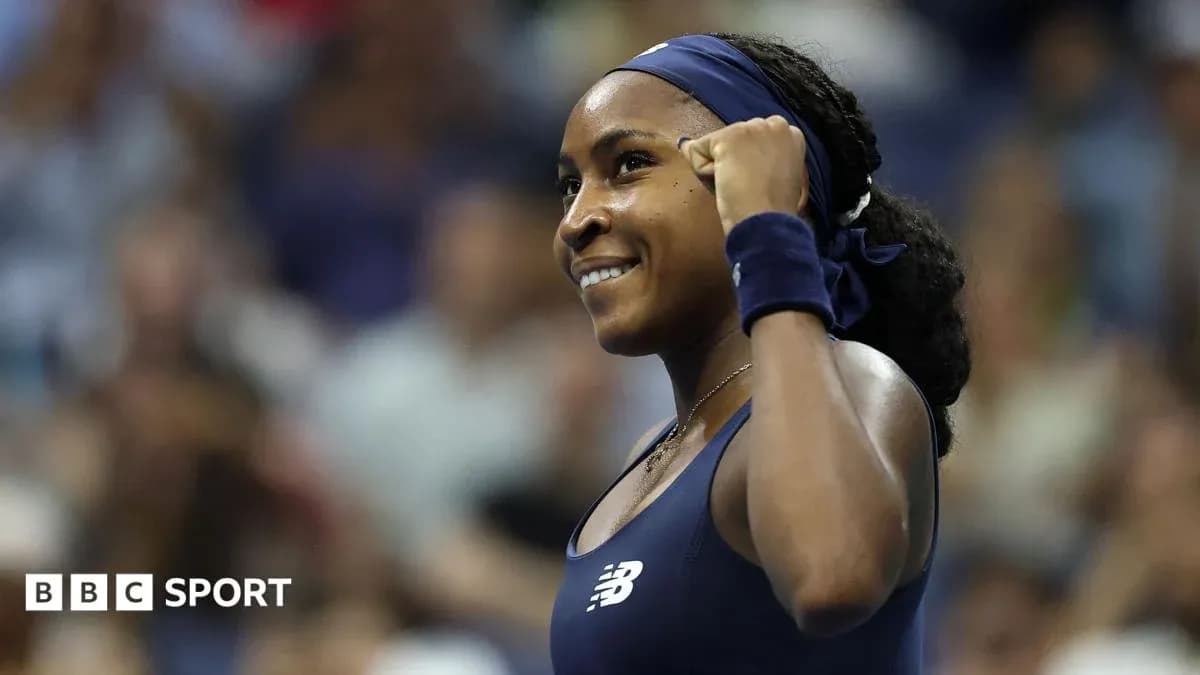
Gauff walked into the US Open first round with a rebuilt serve and walked out with a straight-sets win, 6-3 6-4 over Turkey’s Zeynep Sonmez, built on that very foundation. The serve that once betrayed her now led the way.
She opened the match with a statement. A 112mph ace down the middle. Then a first serve that never came back. Then another ace. A hold to love in under 90 seconds, the kind of start that announces not just form, but conviction. From there, the first set felt like a procession whenever she landed the first delivery.
Seeded fourth this year, the 22-year-old American won a staggering 93% of points behind her first serve in that opening set. Sonmez, ranked far below but game enough from the baseline, simply could not get a foothold when Gauff hit her spots. The rallies that had once exposed Gauff’s nerves on serve were replaced by clean, heavy strikes that either clipped the lines or forced short replies.
That didn’t happen by accident.
On the eve of this tournament last year, Gauff took a gamble. She reshuffled her coaching setup and brought in biomechanics specialist Gavin MacMillan, the same expert who had previously helped Aryna Sabalenka turn a shaky serve into a major-winning weapon. It was a drastic call, made after an ugly run of double faults in Cincinnati had pushed the issue to breaking point.
To overhaul technique right before a home Slam, with all the scrutiny and noise that comes with being the face of American tennis, was always going to be fraught. It showed. Gauff never looked comfortable at last year’s US Open, bowed out in the fourth round, and at times was reduced to tears on court as the serve buckled under pressure.
“Obviously last year I knew all the eyes were going to be on the serve,” she said. With MacMillan in her corner, she admitted she felt pressure to justify the change immediately. The transformation did not come in those first two weeks. It rarely does.
But it has now.
MacMillan’s work has been specific and technical: a more consistent toss, no longer drifting too far in front; a straighter wrist; a motion that lets her swing freely while still holding her pace. The recent title run in Cincinnati underlined how far she has come. Data from that event showed Gauff hitting closer to the lines while keeping her speed, a clear sign that accuracy has caught up with power.
The numbers are only part of the story. The intent tells the rest.
“Psychologically, I'm now going to go for the ace,” she said. “Or I know I can hit the serve and the return is probably not going to come back. Last year I literally was like I hope I make it in.”
Against Sonmez, that shift in mindset appeared in the moments that mattered. After cruising through the first set and breaking for 1-0 in the second, Gauff’s rhythm dipped. Sonmez began to read a few second serves, lengthened the rallies and clawed her way back to 2-2. When the Turk earned three break points for a 4-2 lead, the match hung briefly in the balance.
A year ago, this is where the panic might have set in. Tosses would tighten, double faults would creep in, shoulders would slump.
Instead, Gauff reached for the new version of her serve. A precise ace out wide. A 115mph first serve that Sonmez could not touch. The danger passed, the game held. It felt like a hinge point – the kind of gutsy hold that used to go the other way when her motion deserted her.
The pressure immediately flipped. In the very next game, Gauff broke for 4-3, and from there she didn’t let go. Serving for the match, she again leaned on her biggest improvement. Three unreturned first serves, all just under 120mph, teed up three match points. Sonmez faltered on the first after a short exchange, and Gauff walked to the net with the calm of someone who now trusts her most scrutinised shot.
There are still double faults. The serve is not flawless, and Gauff admits as much. But the difference lies in what she’s trying to do. She is no longer guiding the ball in and hoping. She is aiming for 110, 115, 120mph whenever she can, backing the work she has put in and the mechanics she has rebuilt.
“Now it's like I can look back a year on and think, ‘Oh, wow, it's a big difference,’” she said. “It feels good to come into a tournament feeling confident on that shot finally.”
From tears and rain-soaked practice courts to opening-night authority at Flushing Meadows, the arc is clear. The serve that once exposed her is now the shot that can carry her deep into her home Slam.
Next up is Spain’s Paula Badosa or Australia’s Daria Kasatkina. Both are crafty, both can extend rallies, both will test her patience. But if this version of Gauff keeps stepping to the line and swinging freely, the question shifts from whether her serve will hold up to how far it can take her in New York.