.svg&w=384&q=75 "logo")
Carlos Alcaraz's Strong Return at the U.S. Open
NEW YORK — Carlos Alcaraz walked back into Arthur Ashe Stadium with nerves jangling, adrenaline surging — and, crucially, no pain.
Three sets later, the defending U.S. Open champion walked out with exactly what he needed: clarity.
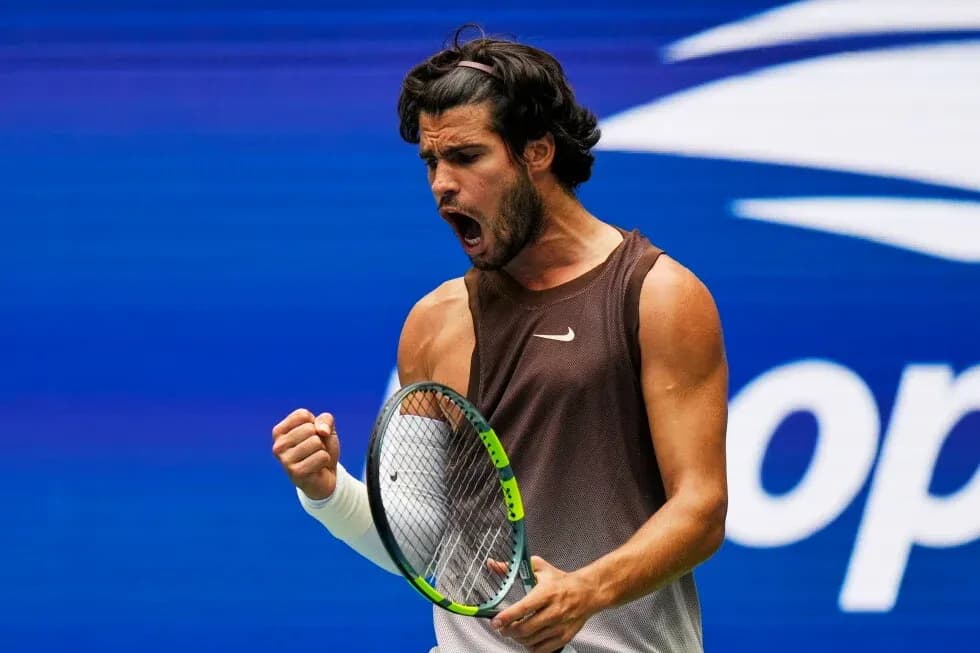
Alcaraz brushed aside Roman Safiullin 6-4, 6-4, 6-4 on Monday, his right wrist holding up after four months on the sidelines and no warmup tournaments. No tape, no grimaces, no compromises. Just the familiar, elastic aggression that has made the 23-year-old one of New York’s favorite showmen.
“I was playing pretty normal, playing my style, and yeah, the arm, the wrist, everything felt great,” he said.
From the outside, it looked like a routine opening win. From his side of the net, it was something closer to a test flight. Early on, the ball sat a little shorter, the swings a touch more careful. Then the shoulders loosened. The forehand started cracking through the court. The footwork sharpened.
By the third set, Alcaraz was cupping his hand to his ear, demanding more noise, and punching the air after a feathered volley winner in the final game. The showman was back, and he knew it.
A draw blown wide open
He returns to a tournament that has been flipped on its head in 24 chaotic hours.
No. 1 Jannik Sinner is out of the event entirely with a knee injury. No. 4 Novak Djokovic, unbeaten in 19 previous first-round matches at Flushing Meadows and owner of four U.S. Open titles among his men’s-record 24 majors, crashed out on Sunday in one of the most jarring opening blows this event has seen.
Suddenly, the path looks very different.
No man has defended the U.S. Open since Roger Federer’s five-title run from 2004 to 2008. With Sinner absent and Djokovic gone on day one, the seven-time Grand Slam champion Alcaraz could quickly become the man everyone else has to chase — if that wrist continues to behave.
He is not talking like a prohibitive favorite. Not yet.
“I had more nerves than usual,” he admitted. “I don’t know how far I’m going to go in the tournament. I didn’t know if I was going to lose this one, if I’m going to make the second round, final. I don’t know how far I’m going to go. But what I just really want to do is enjoy every time that I’m going to walk into the court feeling the energy from the people, feel the competition.”
Forced to miss Roland Garros and Wimbledon, Alcaraz gambled on using the U.S. Open as his return stage. No best-of-three easing-in, no smaller stage to test the wrist. Straight into Arthur Ashe, the biggest court in tennis, right after another two-time champion.
If Monday is any indication, the bet might pay off.
Sabalenka back in her element
Before Alcaraz, Aryna Sabalenka had already restored a little order to a shaken tournament.
While Djokovic’s exit sent shockwaves through the men’s draw, the two-time U.S. Open champion opened her campaign with the kind of measured authority that has defined her relationship with this court. Sabalenka defeated Camila Osorio 6-4, 6-4, beginning her bid to become the first player since Serena Williams (2012–14) to win three straight U.S. Open titles.
She has now reached the last three finals here. The arc is clear: heartbreak against Coco Gauff in 2023, redemption with the title in 2024, and a successful defense last year over Amanda Anisimova. This time, the target is history.
“I feel like this is one of my favorite stadiums,” she told the crowd. “I really experienced the best emotions here in this stadium.”
Sabalenka also arrived with a new look. Gone was the black mesh that sparked social media chatter during her mixed doubles run with Djokovic last week. In its place, an orange Nike dress under orange mesh, a day-session twist on the same theme.
The explanation was pure logistics, not a response to criticism.
“To be honest, I didn’t know that I have a day dress,” she said. “I thought I have a black dress with orange underneath. I figured (out) when I went to Nike that I actually have day session and night session, which is just like black and orange for the day.”
What mattered more was that her tennis finally matched the stage again. Sabalenka had stumbled into New York after fourth-round exits in Toronto, Cincinnati, and at Wimbledon. Those results have left her ranking vulnerable: even if she wins the title again, she needs help to stay No. 1.
Elena Rybakina, the No. 2 seed, will overtake her by simply reaching the semifinals. If Sabalenka fails to lift the trophy, Rybakina doesn’t even need a win to move past her.
On Monday, Sabalenka looked less like a player clinging to the top and more like one intent on dictating terms again.
Farewell to Wawrinka, a spark from Tsitsipas
The day also carried a goodbye.
Stan Wawrinka, the 2016 champion and one of the great disruptors of the Big Three era, played the final Grand Slam match of his career. The 41-year-old Swiss fell to Matteo Berrettini, closing a major chapter that includes three Slam titles and a brand of bruising, fearless ball-striking that left a mark on every era he touched.
“I’m going to miss it for sure. I’m going to miss it big time,” Wawrinka said.
Elsewhere, Stefanos Tsitsipas offered a reminder that his story at the top level might not be finished yet. Unseeded in New York for the first time, the former world No. 3 took out No. 10 seed Arthur Fils 4-6, 7-6 (3), 6-1, 6-4. Fils arrived off a career-best week, fresh from the Cincinnati title; Tsitsipas sent him home with a sharp, rising performance.
Asked if he can recapture the level that once carried him to two Grand Slam finals — both losses to Djokovic — the Greek didn’t hesitate.
“Why not?” he said.
No. 8 Ben Shelton also had to climb out of an early hole. Broken three times in a brutal 28-minute opening set, he flipped the match on its head to beat Tallon Griekspoor 1-6, 6-1, 7-6 (3), 6-2, riding his serve and swagger back into control.
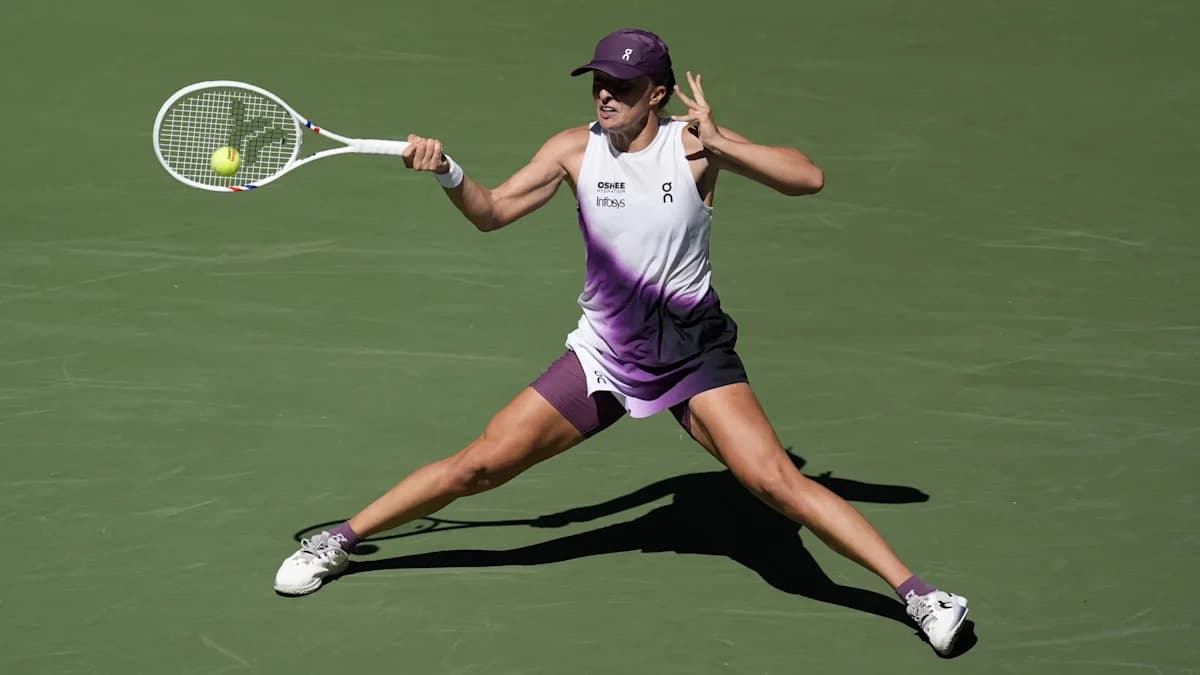
On the women’s side, the roll call of winners carried a familiar weight. No. 8 Iga Swiatek and 2017 champion Sloane Stephens both advanced, with two-time champion Naomi Osaka scheduled under the lights. No. 6 Linda Noskova, the reigning Wimbledon champion, moved through, as did No. 7 Karolina Muchova — beaten by Noskova in that All England Club final — and No. 10 Amanda Anisimova.
Sara Bejlek, the No. 28 seed who stunned Sabalenka in Cincinnati, couldn’t recreate the upset magic, losing in three sets to Cristina Bucsa.
Navarro holds firm as Boisson boils over
Not every match finished with a handshake and a quiet exit.
No. 26 seed Emma Navarro finally closed out Lois Boisson 7-6 (6), 6-7 (1), 6-3 in a first-round duel that stretched across two days after rain halted play Sunday. It was a grind, full of momentum swings and tight margins, the kind of match that can either drain a player or harden them for the days ahead.
An ESPN camera caught the aftermath in a single, brutal frame. Navarro, fist clenched, turned to salute the crowd. Behind her, Boisson smashed her racket over and over into the court, the frustration spilling out as Navarro’s tournament moved on.
On a day when legends bowed out, contenders found their rhythm, and the men’s draw lost its most familiar force, Alcaraz’s clean bill of health might have been the most important development of all.
If his wrist really is back — and Monday suggested it is — the defending champion suddenly has a wide-open stage and a city ready to roar with him again.