.svg&w=384&q=75 "logo")
Carlos Alcaraz and Serena Williams Shine at US Open
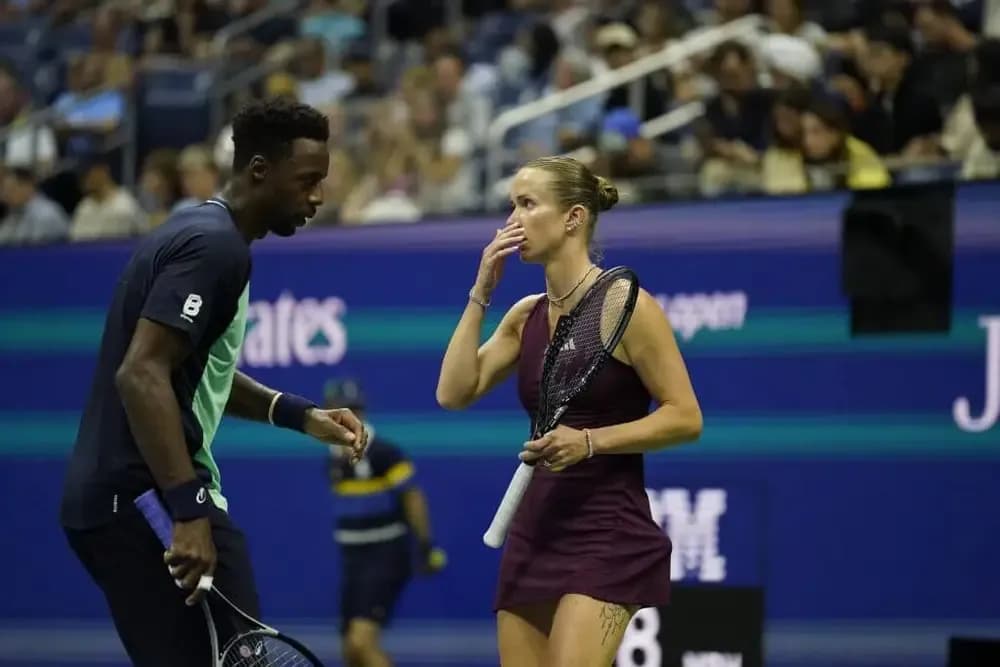
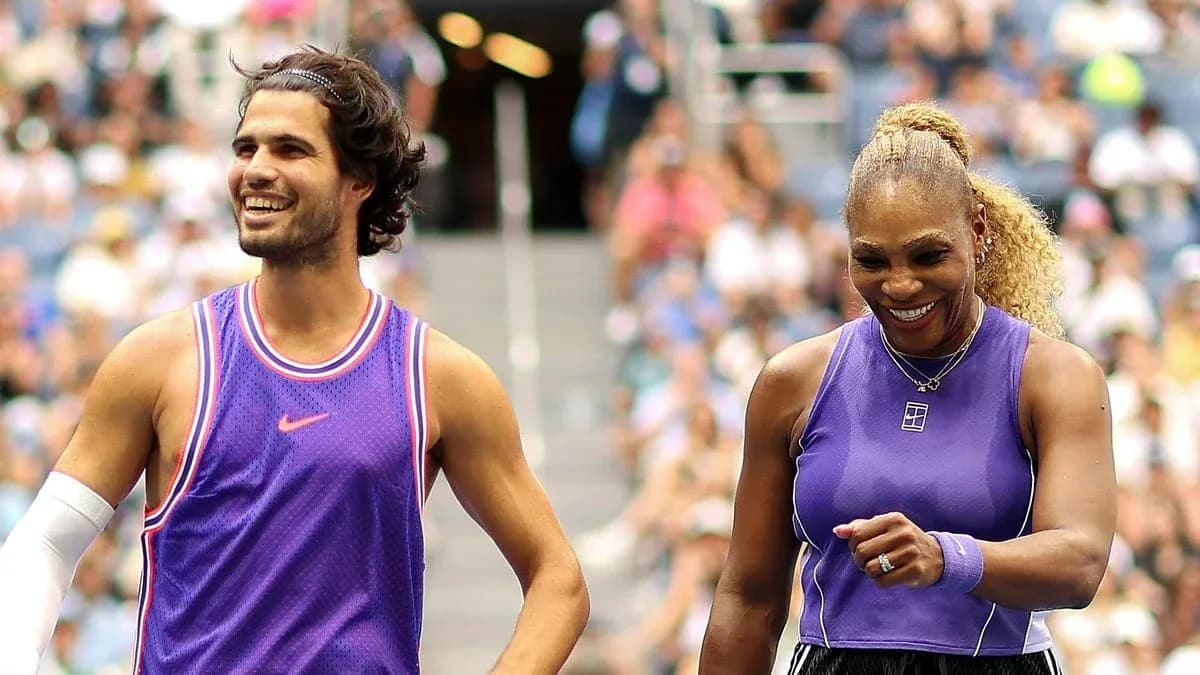
On a humid New York evening, under the hard lights of Flushing Meadows, two eras of tennis shared the same side of the net. Carlos Alcaraz, the sport’s electric present, and Serena Williams, its enduring icon, stepped out in matching purple and turned an exhibition into an event.
They didn’t just draw a crowd. They owned it.
Facing Erin Routliffe and Lloyd Glasspool, Alcaraz and Williams formed the kind of pairing fans dream up but rarely see. The result went their way, but the score felt secondary. This was about presence, not numbers.
“I’m playing next to the one and only Serena Williams, so what else could you do? Just enjoy... Trying to do the things she told me to do,” Alcaraz said afterward, still buzzing from the experience.
Did he actually follow her advice? He didn’t hesitate. “Obviously.”
The question swung across the net to Williams. She laughed, the kind of laugh that says she’s seen every stage, every spotlight, and still finds joy in moments like this. “Yes, he does,” she confirmed.
A Shared Stage, Two Very Different Comebacks
For Alcaraz, this US Open is more than another Slam run. It’s a restart. The New York fortnight marks his first tournament in months after a wrist injury pushed him to the sidelines and away from the roar that usually trails him around the tour.
“Absolutely, after a couple of months recovering from my injury, I miss everything. I miss this place, I miss the crowd, I miss the ball kids,” he admitted after a training session, the words spilling out like someone who’d been kept away from his favorite place for too long.
He didn’t hide the nerves either. Playing alongside Williams, even for a player already used to big stages, hit differently.
“I think everybody could see... I double-faulted the first point, so yeah, I was really, really nervous,” he said. The confession fit the moment: a 21-year-old star, already a major champion, still feeling the weight of sharing the court with someone whose name defines an era.
“I was out four months and a half, almost five months, I almost forget how it feels stepping onto the court once again.” The rust, the adrenaline, the noise — all of it came flooding back at once.
Williams’ story this week carries a different tone. This is not a full-scale comeback, not a return to the grind of singles. It is, instead, a rare reappearance at a place that helped build her legend.
For the first time in four years, she walked back into the US Open as more than a memory on the video boards.
“It’s always an amazing place to be here,” she said. “I never expected to be back on this court, so it’s just a really cool moment. I never thought this would happen.”
No declarations. No big announcements. Just a champion soaking in a night she didn’t think she’d have again.
Nerves, Noise, and What Comes Next
The chemistry between them was obvious: Alcaraz grinning, sprinting, feeding off the crowd; Williams leaning into the occasion, still commanding attention with a glance or a gesture. The purple kits made them look like a team. The tennis made them feel like one.
The pressure finally told on Routliffe and Glasspool, and the Alcaraz–Williams pairing closed the door with the authority you’d expect from two players who have spent their lives winning on this stage.
For Williams, the night may stand alone — a one-off appearance, a celebration rather than a campaign. She is not entered in the singles draw, and there will be no late-night charge through the rounds this year.
For Alcaraz, it’s just the beginning. The exhibition glow now gives way to the grind. His singles campaign continues this weekend, with Roman Safiulin waiting across the net.
The wrist has been tested. The nerves have been aired out under the lights. The crowd is back on his side.
Now the real questions start: how far can he go, and how loudly will New York roar for him this time?