.svg&w=384&q=75 "logo")
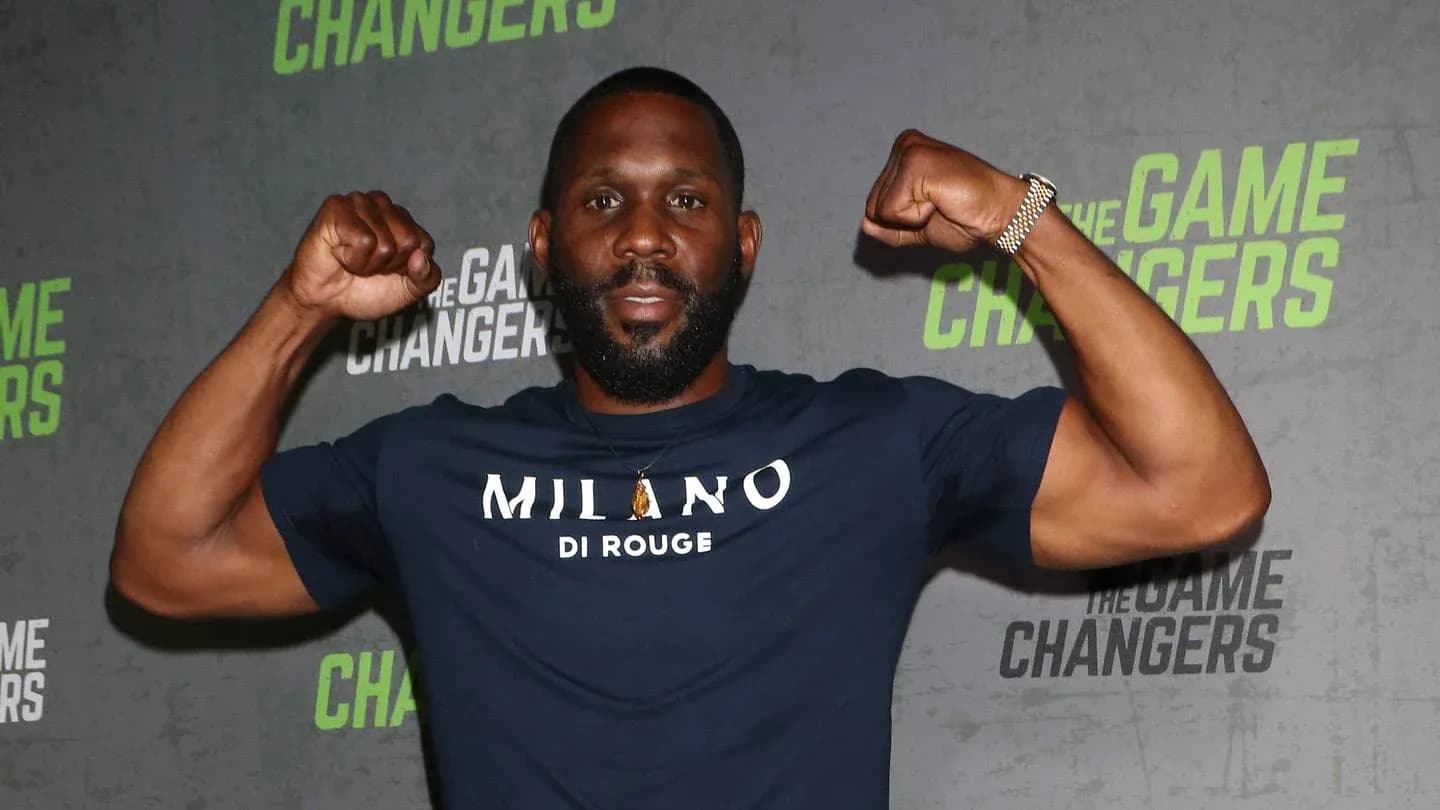
Bryant Jennings: Win-or-Go-Home Fight Against Brandon Moore
Bryant Jennings has called this one simple: “win-or-go-home.”
On Saturday night at the Fox Theatre in Detroit, the 41-year-old Philadelphian walks into a ten-round main event against fellow American heavyweight Brandon Moore on Salita Promotions’ “Big Time Boxing” series, broadcast on Wynn Records Network. For Jennings, it’s not nostalgia. It’s survival.
One last push from Philly
Jennings is one of the last active standard-bearers of Philadelphia’s storied fighting tradition, even if he insists the “Philly scene” doesn’t really exist anymore. He came to the sport late, clocking in at 7:30 a.m. at the Federal Reserve Bank of Philadelphia before heading to the gym, then somehow punched his way to a heavyweight title shot against Wladimir Klitschko in 2015.
From bank maintenance to boxing’s summit in six years. That climb alone would have been enough for most careers.
“It’s not necessarily the end goal, but I am definitely looking to extend my legacy. I would definitely love to fight for a heavyweight world title, but this fight is a win-or-go-home situation,” he told KO On SI. There’s no soft landing in that sentence. He knows exactly where he stands.
Jennings is now older than Klitschko was the night they met at Madison Square Garden. The Ukrainian great was 39 and nearing the end. Jennings, at 41, is trying to force one more chapter out of a body that’s already gone through two title shots and a five-year exile.
The Klitschko and Ortiz years
Jennings still refuses to label the Klitschko fight as a missed chance.
“I don’t think anything went wrong that night with Klitschko. I think it was a good opportunity for me, I had only started boxing in 2009, and in 2015, to be in a position to face Klitschko was a great opportunity. If I hadn’t taken that opportunity, who knows if I would have got a chance to face him with the time remaining in his career.”
He lost, but he belonged. That mattered.
He went straight back into the fire, facing Luis Ortiz for the WBA title later that same year. Another defeat, another lesson. The margins at the top of the heavyweight division are unforgiving, and Jennings found himself on the wrong side of them twice.
Then came the 2019 bout with Joe Joyce. Jennings pushed the highly touted Brit hard and left with a disputed loss on his record and a sour taste in his mouth. That was it. He walked away and stayed away for five years.
Those years, he says, were about learning who he was without the gloves. When he came back in 2024, it wasn’t on a whim. It was a decision to see if the fighter still lived inside the man.
What Philly really means
To understand why he’s still here, you have to understand where he’s from.
Philadelphia has produced a roll call of hard men and craftsmen: Bernard Hopkins, Bennie Briscoe, Matthew Saad Muhammad, Dwight Muhammad Qawi, Joe Frazier, Jersey Joe Walcott, Danny Garcia, Julian “J-Rock” Williams. Today, the city’s brightest star is Jaron “Boots” Ennis, a welterweight phenom who carries that lineage into a new era.
The “Philly shell” defense, popularized in the mainstream by Floyd Mayweather Jr., is often treated as the city’s signature—lead hand low, rear hand tight to the chin behind a raised shoulder. But Jennings bristles at the idea that a stance defines an entire boxing culture.
“I wouldn’t say that a certain style defines Philly boxing anymore; maybe a demeanor or attitude or some other attribute you can’t exactly put your finger on,” he said.
He’s right. Philly boxing is less about posture and more about posture under fire. It’s being technically sharp enough to outbox an opponent, but mean enough to beat him up if that’s what the night demands. It’s the willingness to run through blue-collar, unorthodox training methods if that’s what gets you ready.
The most famous “Philadelphia fighter” of all, of course, never existed. Rocky Balboa belongs to film, not BoxRec. But the imagery from those movies—Sylvester Stallone pounding sides of beef in a meat locker—came from something real. Joe Frazier did that. The city’s mythology grew out of its reality.
One detail ties the generations together: the habit of standing between rounds. Old-time Philly fighters did it as a show of toughness and readiness. Jaron “Boots” Ennis does it now. Jennings knows that code. You don’t sit unless you have to.
Bad blood in Detroit
Across the ring in Detroit stands Brandon Moore, younger, fresher, and carrying his own ambitions. The two men share more than a fight date; they share a history. Their rivalry goes back to a training camp in Dubai, where the tension started and never really cooled.
Since the bout was announced, they’ve traded barbs and needled each other in public. There’s genuine edge here, not manufactured animosity for a press conference soundbite.
Jennings, though, is not the type to keep in touch with past opponents. Once the final bell rings, the relationship usually ends right there. If he wins on Saturday, Moore is unlikely to become an exception.
There’s a certain coldness to that. Or maybe it’s just a Philly thing.
For Jennings, this isn’t about friendship, or even revenge. It’s about a 41-year-old heavyweight standing on the edge of the sport, trying to decide whether his story stretches to one more world title run—or stops under the bright lights in Detroit.