.svg&w=384&q=75 "logo")
Brighton & Hove Albion: From Survival to European Ambition
There was a time when Brighton & Hove Albion were not dreaming of Europe. They were wondering if they would exist at all.
Around the turn of the century, the club staggered away from the Goldstone Ground and into exile. Gillingham first, then the makeshift, rain-lashed bowl of the Withdean Stadium, an athletics track dressed up as a football ground. They were scratching around for transfer funds and planning permission, not plotting routes to Athens or Madrid.
From those days of marches and petitions to the Conference League. The arc is staggering.
From marches on the seafront to a seat at the top table
Mark McGhee saw the foundations being laid from the inside. The Scot, back in the city for the opening of the “Brighton & Hove Albion: Stand or Fall” gallery marking the club’s 125-year story, remembers the fight just to be allowed a home.
“We got the permission,” he told GOAL, recalling the battle for a new stadium. “Dick Knight and his campaign, marching up and down the seafront, and I was talking at lectures and preaching that we should have a stadium and they should give us permission.”
Permission came. Money did not.
“We got the permission, but then had no prospect of building it. And then Tony stepped in, of course.”
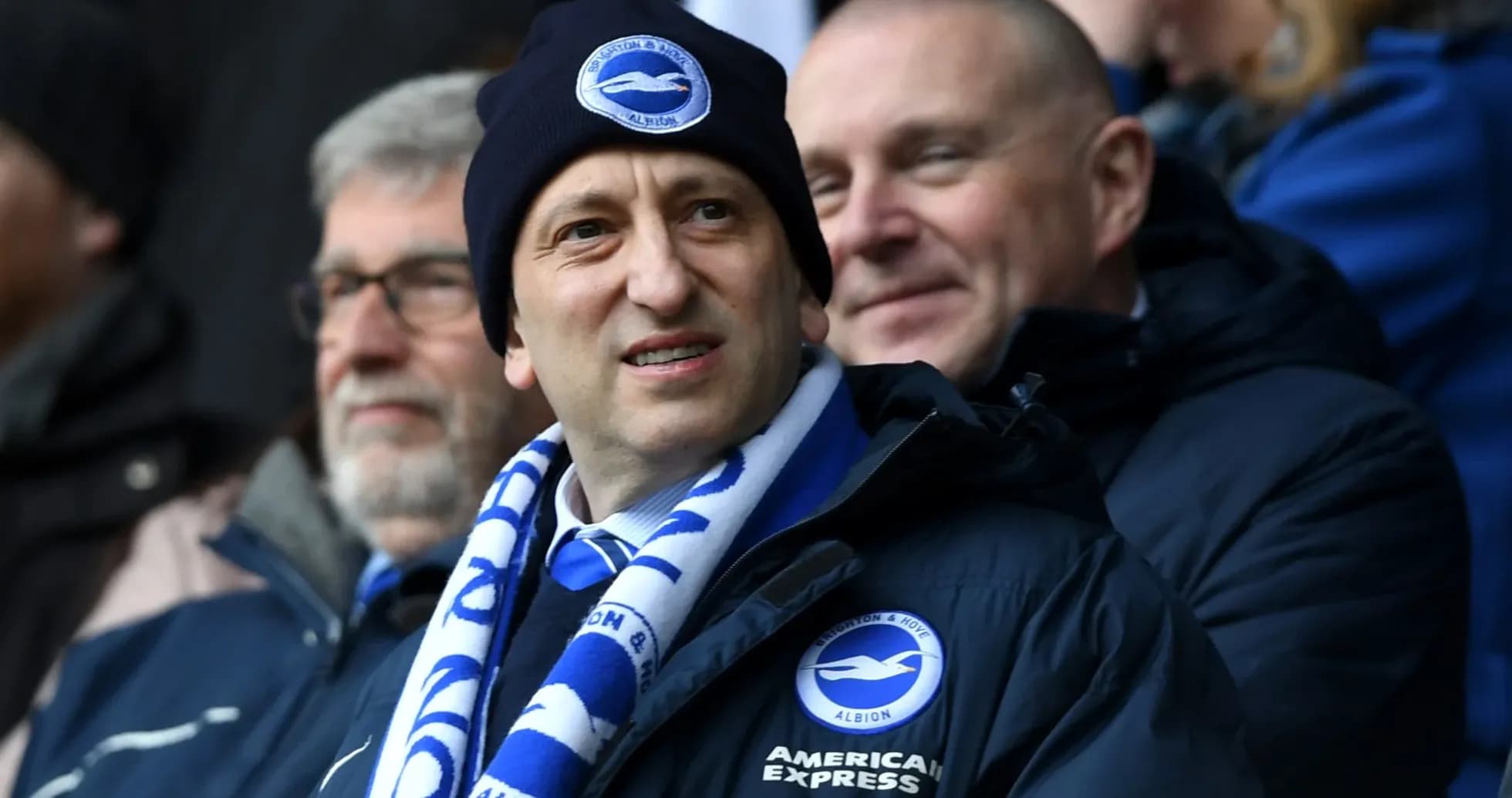
Tony Bloom’s arrival in 2009 changed everything. A lifelong supporter, he pushed through what became the Amex Stadium and then bankrolled a controlled, relentless rise from League One to the Premier League in seven seasons. Brighton have now spent nine straight years in the top flight, no longer nomads but hosts in one of the country’s most admired modern grounds.
At first, even those inside the club misread the scale of what Bloom intended.
“At that point, I think that people only thought that Tony – I say only – would only pay for the building of a stadium,” McGhee said. “They didn't realise what he was bringing with him, in terms of his ambition and his vision, that was beyond a new stadium, was the training ground and the infrastructure and the level he's taken it to now. So, they didn't quite understand what they were getting, even when Tony stepped up.”
The stadium was the symbol. The real revolution came in the detail: the training ground, the data-led recruitment, the infrastructure that now underpins a club capable of qualifying for Europe and selling players to the elite without losing its identity.
The Bloom family and a club rebuilt
Bloom is not some distant billionaire parachuted into a project. His roots run through the place.
McGhee’s memories of the Bloom family stretch back to his own time in the dugout. “I regularly see Ray Bloom, his uncle, who was a director when I was a manager, and he used to regularly meet with Dick Knight and I for lunch on a Friday and at Topolino's in Brighton, and he was always telling me about this genius young nephew of his who was a mathematical wizard.
“So I'd heard of Tony as a kid, long before I realised what he'd become. So, they've got a great association.”
The lineage is literally written on the walls. “I was at lunch at the game against Villa in a lounge, it's the Harry Bloom lounge,” McGhee added. “So his family go back a long time with the club, as directors and as supporters. So, he's as much, I'm sure, done this for his family as he has for the Brighton public.”
That blend of personal pride and professional ruthlessness has driven Brighton’s transformation. The former professional gambler and poker player has turned his club into one of English football’s sharpest operators, all while living the same dream as the supporters on the terraces.
From survival to silverware
Brighton’s honours list remains modest: titles in the third and fourth tiers, a Community Shield, runners-up in the 1983 FA Cup. Respectable, but not reflective of the club they have become.
They want more. So does Bloom.
“I think that Tony's not in this to be a generous benefactor,” McGhee said. “I think he wants to win stuff, and he's putting things in place to create a team that can. They have a chance this year in Europe, they have a chance every year now in one of the domestic trophies.
“I don't think they have a chance of winning the Premier League, but I think they could easily, with a fair wind and a good draw, find themselves in the final of the FA Cup. They've come close. Or the League Cup. I think that is the inevitable progression.”
That word – inevitable – would have sounded fanciful when Brighton were rattling around at Withdean, surrounded by tarpaulin and temporary seating. Now it feels like a logical next step.
A club that stands, falls, and stands again
The story is being told properly at last. On August 15, a new permanent gallery opened at Brighton Museum & Art Gallery, dedicated to the Seagulls’ 125 years.
“Brighton & Hove Albion: Stand or Fall” is more than a nostalgia trip. It pulls together iconic objects, treasured memorabilia, archive material, film and personal stories. Visitors walk through the triumphs, the crises, the defining moments that have shaped BHAFC and embedded the club in the fabric of the city.
It is a reminder that this is one of English football’s most resilient institutions. A club that almost lost everything, then used that trauma as fuel.
Now, the tests come on a very different stage.
Manchester United await in the Carabao Cup third round, a serious early examination of Brighton’s depth and nerve. In Europe, they have been paired with Panathinaikos and Getafe in the Conference League, a competition West Ham, Chelsea and even arch-rivals Crystal Palace have recently shown can deliver real glory and unforgettable nights.
From marches on the seafront to away days across the continent, Brighton’s journey under Tony Bloom has already torn up every old ceiling. The question now is no longer whether they belong at this level.
It is how far this club, built on survival and sharpened by ambition, can push the story next.