Ben Shelton Calls for Second-Serve Clock After US Open Final
Ben Shelton had just walked off the biggest stage of his career, beaten but unbowed, when he turned his attention not to Alexander Zverev’s firepower, but to the ticking that everyone in tennis could hear and nobody could control.
The clock.
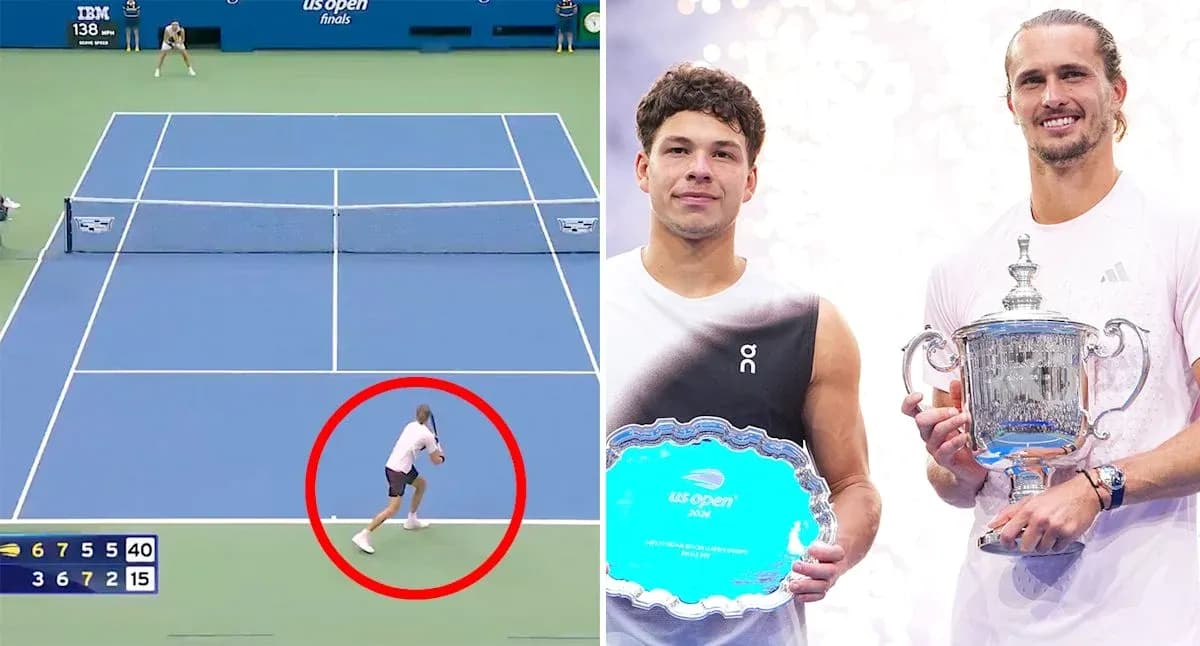
Not the one on the scoreboard that confirmed Zverev’s 6-3 7-6 (7-2) 5-7 6-2 win and a second straight grand slam title. The other one. The 25-second service clock that dominated the US Open final almost as much as the German’s serve, and left fans, commentators and opponents simmering as Zverev repeatedly stretched the limits of patience between points.
By the end, the complaints were no longer just mutters from the stands. They were coming from the locker room, the commentary booth and some of the sport’s biggest names.
Shelton pushes for a second-serve clock
Shelton, still only 21 but already emerging as one of the more forthright voices on tour, didn’t dance around the subject in his post-match press conference. He went straight at the rulebook.
“For a first serve you should be able to do whatever you want and use the full 25 seconds every time,” he said, accepting the existing framework. Then he drew a hard line. “There should be some sort of rule limiting time on second serves. There shouldn't be unlimited time. It's tough to be sitting there for that long for the next action to happen.”
That “unlimited time” is the loophole that has suddenly become the centre of a sport-wide debate.
Right now, the 25-second shot clock only governs the start of the point. Players must begin their service motion within that window after the previous point ends. Once the first serve is struck, the rule dissolves into a vague instruction that the second serve must be delivered “without delay”, leaving enforcement to the umpire’s discretion.
For someone like Zverev, who already pushes the clock on his first serve and then settles into long, repetitive ball-bouncing rituals before the second, that grey area is a gift. Across the semi-final and final, he collected multiple time violations, yet still managed to slow the tempo to a crawl between first and second serves, with umpires effectively powerless once the first ball had gone in — or out.
The crowd saw it. The broadcasters saw it. Players felt it.
Roddick: “The rules should change”
Andy Roddick, never shy with an opinion and one of the biggest servers of his era, has been banging this particular drum already. On his “Served” podcast, the former US Open champion laid out the problem in blunt terms.
“The rules should change,” he said. “As long as he's doing it within the 25-second shot clock, yeah, what are you going to say? There needs to be a shot clock for the second serve.
“You cannot bounce the ball 20-something times between first and second serve. And then act shocked when we finish at 3 in the morning. Like, we just can't do it.”
Roddick’s point cuts deeper than simple irritation. This is about match length, broadcast windows, player fatigue and the basic rhythm of the sport. A serve that never comes kills tension as surely as a double fault.
Shelton’s comments gave that argument a fresh, current face. This isn’t a retired champion pining for a different era; it’s a player who just lost a major final asking for a clearer, tighter framework.
McEnroe wants the toss to cost you
In the ESPN booth, John McEnroe took aim at another habit that has become more common: the aborted ball toss.
Zverev, under pressure and under the clock, repeatedly tossed the ball, didn’t like it, and reset. Each time, the clock kept ticking, but the rulebook again left room for interpretation. McEnroe had seen enough.
“This should be over the serve clock. It was at two (seconds left) when he tossed it. Should be a fault,” he said on air, arguing that a player shouldn’t be able to escape the countdown by simply refusing to hit the ball.
His brother, Patrick McEnroe, looked at it from the other side of the net. If a server drags out the routine with endless bouncing, he argued, the returner needs some agency too.
“As a returner, when a guy's doing this (bouncing the ball so many times) you should be able to step away, just before he serves,” he said, suggesting a form of tactical reset to break the server’s rhythm when the routine becomes excessive.
Different solutions, same frustration: the current rules don’t match the modern game’s pace or the expectations of a global audience used to visible, enforceable timing in other sports.
Khachanov: “It takes so much time”
Zverev’s opponents have been living with this for longer than the casual fan. Karen Khachanov, beaten by the German in the semi-final, didn’t hide how draining it can be.
“His bouncing annoys not only me but other players on tour,” the Russian said. “It takes so much time.”
Then came the caveat that underlines the entire debate.
“At the end of the day, if it's within the rules with the time between points, I cannot say anything against that. If he extends the time, then he gets a time violation, so it's as simple as that.”
And there is the crux. Zverev is operating inside a system that allows him to push the boundaries. Umpires can hand out violations, but once the first serve is struck, their authority is blurred. The player who stretches every second available to him is not breaking the game’s laws. He is exposing them.
Shelton, Roddick, the McEnroes and Khachanov are not accusing Zverev of cheating. They are accusing the rulebook of lagging behind reality.
The sport has already accepted technology and visible timing for first serves. The question now is whether tennis is ready to let that same clock govern the second ball, the toss, and the rituals that threaten to turn a point into a pause.
The US Open final might have handed Zverev another grand slam trophy. It may also have handed the sport its next big rule change.