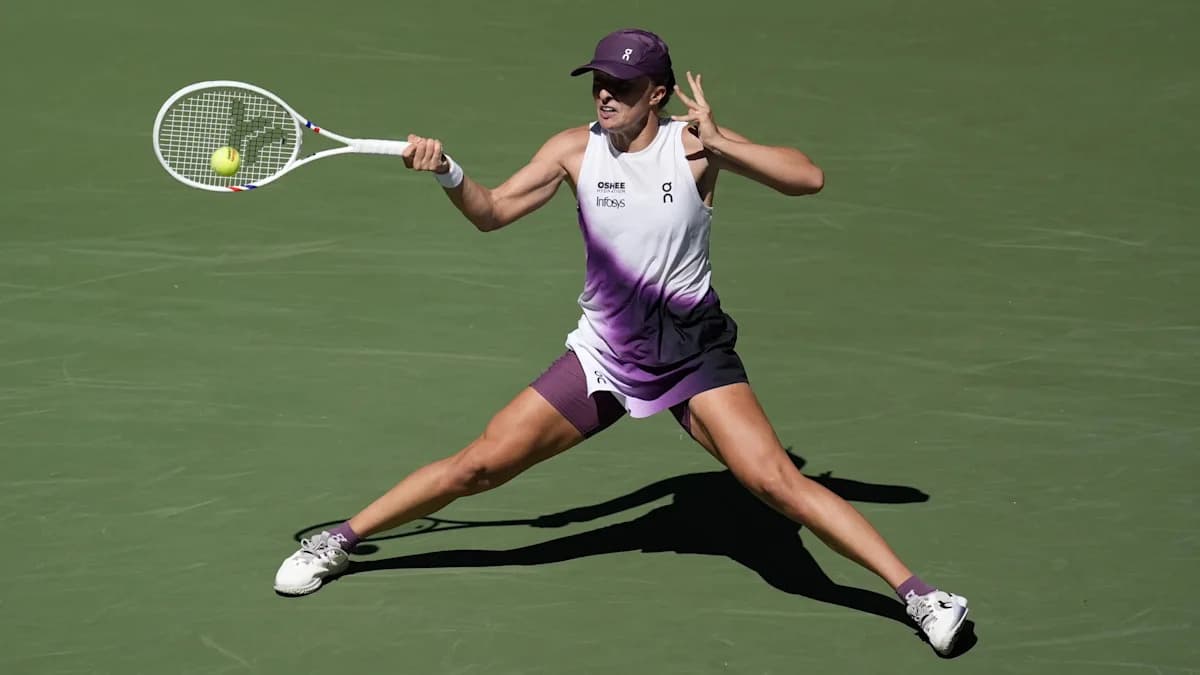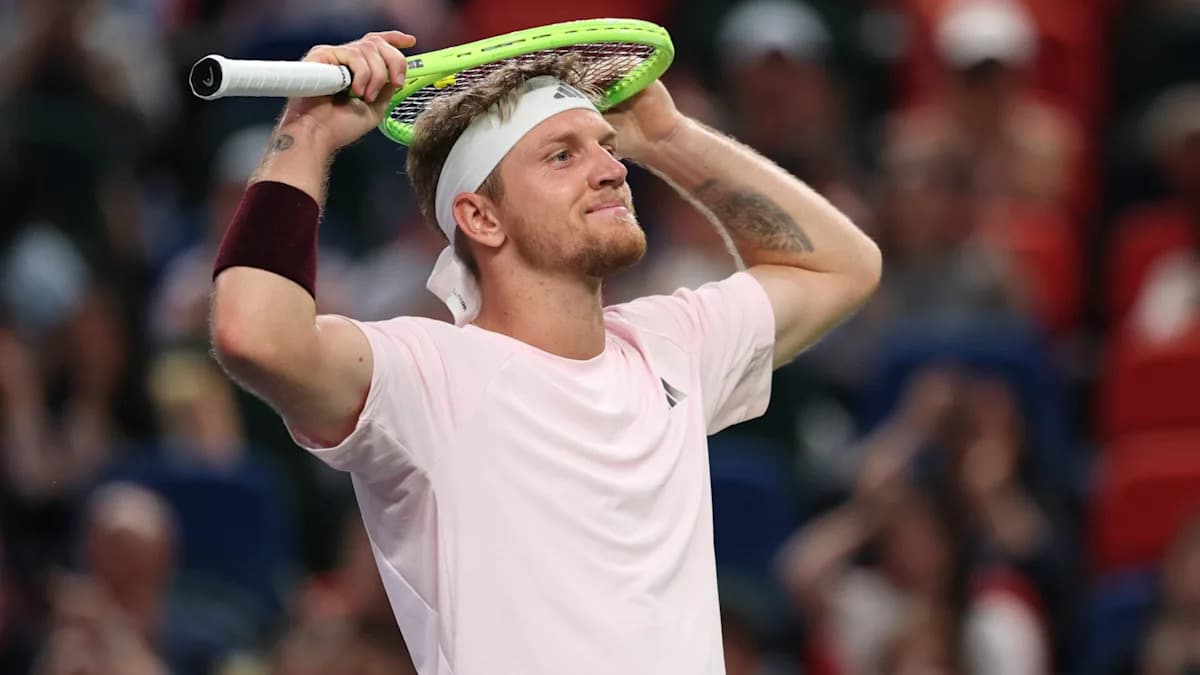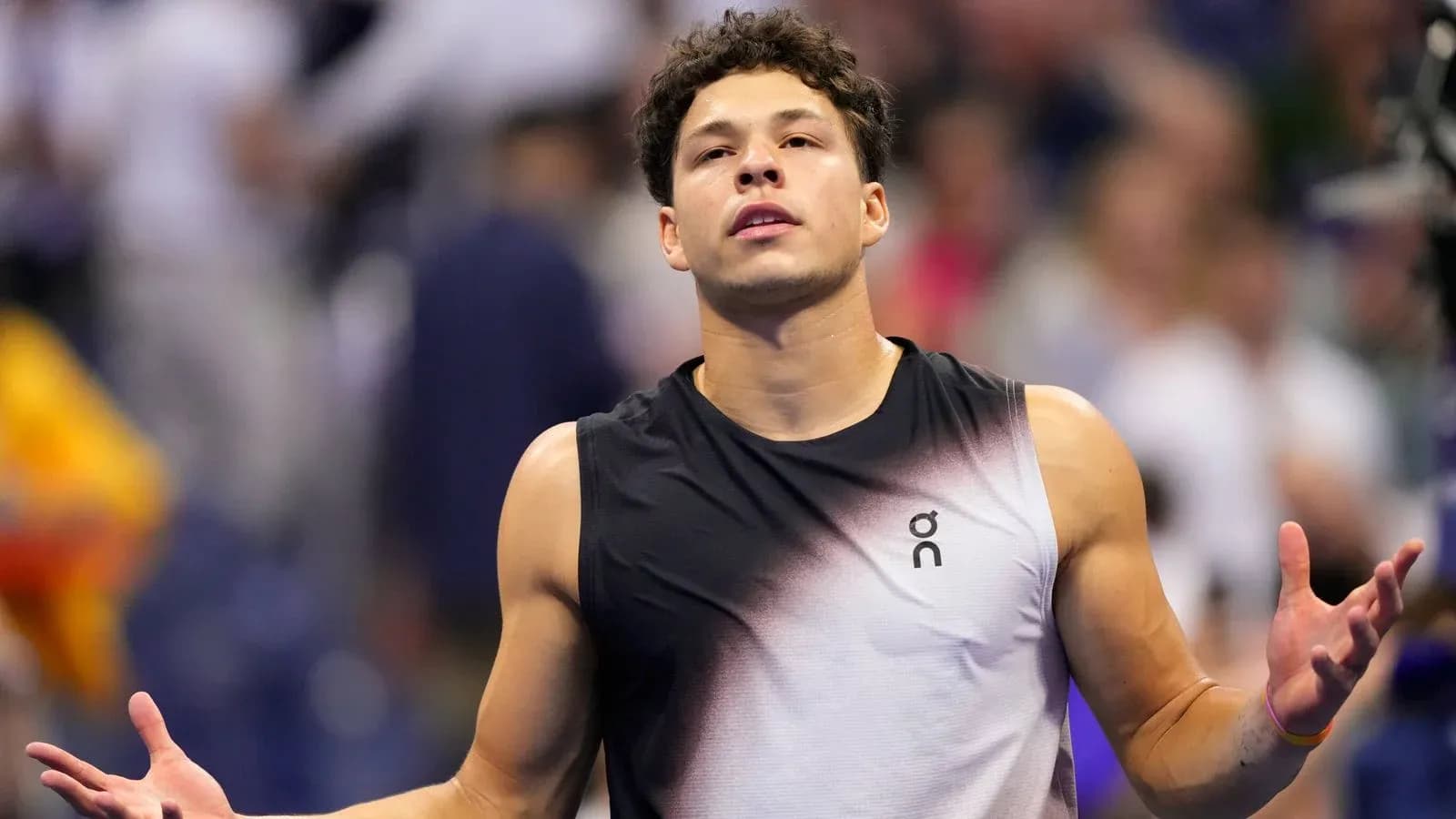
Ben Shelton Reaches First US Open Final, Defeating Frances Tiafoe
Ben Shelton walked into Arthur Ashe Stadium on a night heavy with memory and walked out carrying the weight of a nation’s tennis hopes.
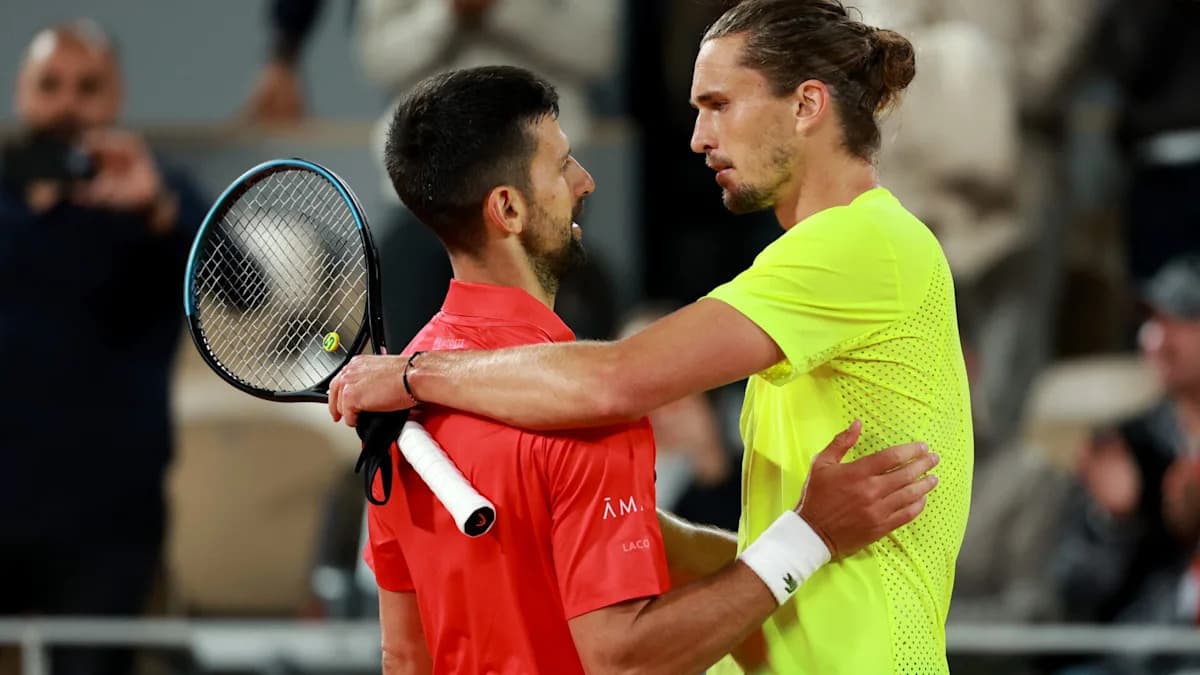
On an evening that began with a solemn tribute to the 25th anniversary of the September 11 attacks, the 23-year-old American ripped through the noise, the nerves and a slow start to beat close friend and compatriot Frances Tiafoe 4-6 6-3 6-3 7-5 and reach his first Grand Slam final at the US Open.
The wait has been long. No American man has lifted a major singles trophy since Andy Roddick in New York in 2003. Shelton is now one win away from ending a 23-year drought, and he will have to take down Alexander Zverev to do it.
A brother across the net, a nation in the stands
The occasion was emotional before a ball was struck. The stadium fell quiet for the 9/11 commemorations, then roared back to life for two of the most charismatic American players of their generation. For Shelton, there was the added complication that the man across the net is someone he calls “like a big brother”.
“This is where we want to be, at the tail end of this tournament,” Shelton told the crowd after. “I know what my goal is, what my job is. I'm going for it here. Let's do this for the USA! One more thing. It's a difficult day to be out here playing. My thoughts and prayers go to all the families who were impacted by 9/11.”
Early on, though, it was Tiafoe who looked ready to own the stage.
Shelton’s serve misfired at 4-5 in the opening set, a double fault handing Tiafoe the chance he had been hunting. The 26-year-old seized it, held to love, and whipped the crowd into a frenzy as he closed out the set. He had the scoreboard, the rhythm, and a clear plan: pound Shelton’s backhand, drag him wide, make the left-hander hit on the stretch.
For a while, it worked.
The serve that flipped the night
At 3-3 in the second set, serving with new balls, Shelton finally detonated.
He opened the game with a 125 mph serve that Tiafoe could barely see, let alone return, the force of the ball knocking him backwards to the court. Then came 144 mph. Then 139. Then 140. The radar gun lit up, the crowd gasped, and Tiafoe suddenly found himself defending like a man trying to hold back a storm with an umbrella.
The pressure told. Shelton held with authority, then broke in the very next game and never looked back in the set. From that moment, the match felt different. The American No 8 seed was no longer chasing; he was dictating.
He carried that surge into the third set, breaking in the fifth game to seize control of the contest. The left-handed cannon out wide, the slider into the body, the heavy kick to Tiafoe’s backhand – the serve became a weapon with layers, not just raw power.
Behind it, his defence stiffened. Tiafoe, usually the showman, found himself doing more running than entertaining.
Shelton closed the third set with a champion’s composure and walked to his chair with a clenched fist and a glare that said he knew exactly what was at stake.
A fourth set on the edge
The fourth set was a street fight.
Tiafoe refused to go quietly, leaning again on the tactic that had worked early: hammer the Shelton backhand, try to drag errors out of the younger man. But Shelton’s movement and resilience turned points that should have been Tiafoe’s into 20- and 25-shot exchanges that ended with the 23-year-old on top.
The serve never left him. He kept hitting his spots, kept finding free points when he needed them most, and he kept Tiafoe guessing. The eighth seed’s booming delivery and athletic defence slowly squeezed the oxygen out of Tiafoe’s game.
Shelton tightened the screws late, applying relentless pressure in the closing games. He finally cracked Tiafoe’s resistance and served out an emotional victory, finishing with 47 winners, including 20 aces, to book his place in Sunday’s title match.
Arthur Ashe rose for him. An American man, in a US Open final again, with a Grand Slam on the line.
Zverev’s ruthless march
Waiting for Shelton is a man who has quietly turned this season into the most complete of his career.
Alexander Zverev, the reigning French Open champion, beat Karen Khachanov 6-3 7-6 (9-7) 7-6 (8-6) earlier in the day to reach his third consecutive Grand Slam final and his second at Flushing Meadows, four years after he lost a five-set heartbreaker to Dominic Thiem.
The German’s start to the fortnight was anything but smooth. He needed five sets in each of his opening two rounds and looked miles away from the level that carried him to the Roland Garros title. Yet something shifted.
“After the second round at 3am, me and my team were in the dressing room actually laughing at how bad I was playing. That sense of humour helped me,” Zverev said on court. “I have improved a little bit, otherwise I wouldn't be in the US Open final.”
Since that grim early-morning debrief, he has not dropped a set in four matches.
Zverev has navigated a draw that opened up around him, capitalising on the absence of Jannik Sinner and early exits for Carlos Alcaraz and Novak Djokovic. At 29, he has used the night sessions, the late finishes, and the rhythm of this tournament to his advantage, emerging from that “perpetual loop of darkness” with a clarity that shows in his tennis.
Edges seized, margins survived
Against Khachanov, Zverev did not dominate the scoreboard, but he dominated the moments.
A single break of serve decided the first set. Early in the second, another break seemed to have him cruising, only for a double fault to drag Khachanov back into the contest. Suddenly, Zverev was staring down a tie-break, trailing 5-3, and being pushed into rallies that tested his lungs and his legs.
He survived. A brutal 35-shot exchange, the kind of point that can tilt a match, went his way, and with it the tie-break, 9-7.
The third set followed a similar script. No breaks, tension rising, Khachanov swinging freely. The Russian earned two set points at 6-4 in the tie-break, but two forehands flew off target and Zverev pounced. An ace brought up match point; he took it at the first opportunity.
Efficient? Not exactly. Clinical when it mattered? Absolutely.
His run has impressed those who know what it takes to keep backing up at the majors. Martina Navratilova, speaking on Sky Sports Tennis, underlined the scale of his season.
“What a year Zverev has had at the majors. It's been outstanding stuff,” she said. “Okay, Sinner lost early at the French Open and Alcaraz didn't play, but there are no asterisks, he still had to get through even as a favourite.
“And that has given the confidence to play better tennis after that. I think he played better at Wimbledon than he did at Roland Garros, and now he started off badly here by his own admission, but he hasn't lost a set the last four matches. He's cooking now.”
A final built for noise
On Sunday, Zverev will walk into Arthur Ashe Stadium for a US Open final once more, but this time he will not be facing an empty arena as he did in the Covid-affected 2020 edition. He will face a sold-out, partisan crowd roaring for the young American on the other side of the net.
He cannot wait.
“I think it's going to be a fantastic feeling playing a final in a sold-out Arthur Ashe and not in an empty one,” he said. “For me, a loud and energetic crowd is always great, as long as they're fair.”
Shelton will have the nation at his back, the history books in front of him, and one of the game’s most in-form players across the net.
Zverev is chasing a second major, and the validation that comes with turning one breakthrough into a pattern. Shelton is chasing a first, and the chance to drag American men’s tennis into a new era in one fearless swing.
On a court that has seen so many defining nights, only one of them will leave with the story they came here to write.