Ben Shelton Makes History at US Open Semifinal
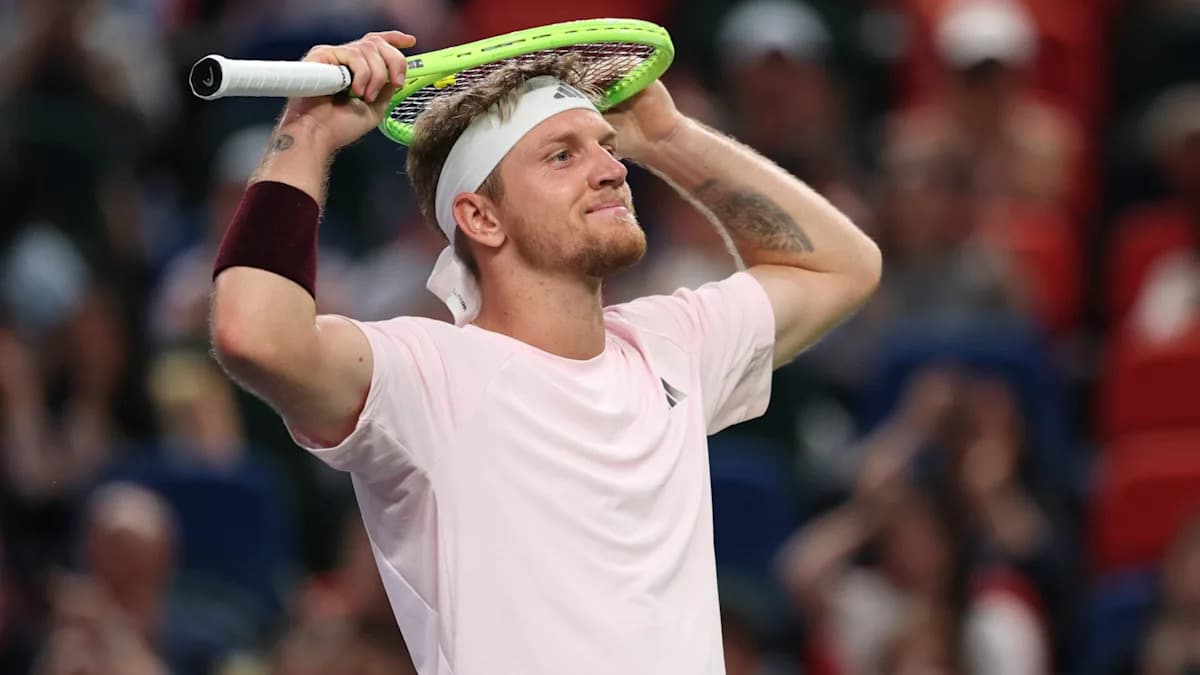
NEW YORK — On a night heavy with memory and noise, Ben Shelton walked into Arthur Ashe Stadium as the heir to a promise. He walked out as history.
The 23-year-old American overpowered Frances Tiafoe 4-6, 6-3, 6-3, 7-5 in a bruising, three-hour, 17-minute semifinal, earning a place in the US Open final and dragging a generation of American men’s tennis with him.
He did it with that left arm of his — the one that turns a serve into a weapon and a rally into a fistfight.
A match wrapped in history
The backdrop was unmistakable. Tributes and ceremonies honoring the victims of the Sept. 11 attacks framed the evening, 25 years on, giving the occasion a weight that went beyond sport. Inside Ashe, 24,000 fans from every corner of the country watched two Black American men, born decades after Arthur Ashe’s own breakthrough, fight for a place in a Grand Slam final.
Shelton is now the first Black American man to reach a US Open singles final since Ashe in 1972, and the first Black American man to reach any Grand Slam singles final since MaliVai Washington at Wimbledon in 1996. Those aren’t just numbers. They’re fault lines in the history of the sport.
Across the net stood Tiafoe, the Maryland showman who has helped drag tennis into a new, louder, more expressive era. For long stretches, it felt less like a semifinal and more like a shared performance, two men who know each other well trading haymakers and highlight reels, and yes, their share of errors.
It was entertaining. It was messy. It was exactly what the crowd came to see.
Tiafoe strikes first
Shelton opened with an ace, a taste of what was coming, but it was Tiafoe who settled first.
Break chances were rare in the opening set. The tension built point by point, game by game, until the ninth. Serving at 4-4, Shelton blinked. Two backhand errors, then a double fault. Three straight points lost, and with them, his serve. Tiafoe stepped to the line and slammed the door with a flawless hold, 6-4, the first set in his pocket.
The older man, the “big brother,” had drawn first blood.
The serve that changed everything
Shelton didn’t flinch. He reloaded.
His left-handed serve began to roar, regularly blasting past 150 mph. It didn’t just win him free points; it bent the match to his rhythm. Tiafoe, who thrives on chaos and creativity, suddenly found himself reacting, not dictating.
Shelton hammered 20 aces in all, using the serve to open the court and lean into those heavy, lethal forehands. The second set swung his way, 6-3, and the energy inside Ashe shifted with it. The crowd could feel it. So could Tiafoe.
The third set became a grind. Long rallies, bold shotmaking, and just enough sloppiness from both men to keep coaches wincing. The pivotal moment came in the final game of the set, a marathon that stretched beyond 15 minutes. Shelton earned chance after chance, only to see them slip. On his fourth set point, he finally broke through when Tiafoe’s forehand volley died in the net.
Shelton roared. Tiafoe stared at the strings of his racquet. The momentum had turned for good.
No dial tone, just resolve
Shelton is known for his “dialed-in” celebration on match point — the imaginary phone to his ear, then the hang-up. This time, there was no call.
The finish came on a double fault from Tiafoe, the No. 11 seed, his serve tumbling into the net to end a draining contest. Shelton didn’t need choreography. The moment spoke loud enough.
On court, he turned immediately to the man he had just beaten.
“First on Foe, he’s like a big brother to me, to be honest,” Shelton said. “Every time we get to take this court together, Arthur Ashe, and play each other is super special. This is where we want to be at the end of this tournament. This is both of our favorite tournament in the world, favorite court in the world. And to be able to light it up in front of you guys is the best feeling that there is.”
The respect was real. So was the edge.
A brutal road, a bigger stage
Both men arrived at this semifinal carrying the weight of epic quarterfinals, but not the fatigue you might expect.
Shelton had survived a wild, five-set thriller against No. 2 seed Carlos Alcaraz, a match that didn’t end until 3:33 a.m. on Wednesday. Tiafoe had clawed back from two sets down to beat Alex Michelsen earlier that same day. If there were heavy legs on Friday night, they hid them well.
Shelton, the No. 8 seed and now the highest-ranked American, leaves New York with more than just a final to play. He is projected to rise to No. 4 in the world rankings. Tiafoe’s run, meanwhile, will push him to a career-high No. 8. Two American men, both inside the top 10, both deep in the second week of a Slam. For a country starved of men’s champions, it feels like a shift.
But Shelton’s eyes are on something bigger.
Zverev again — and a drought on the line
On Sunday, Shelton will face top seed Alexander Zverev, who handled Karen Khachanov 6-3, 7-6 (7), 7-6 (6) in a straight-sets semifinal. The stakes are blunt: Shelton is one win away from becoming the first American man to lift a Grand Slam singles trophy since Andy Roddick won this very tournament in 2003.
There is a catch. He has never beaten Zverev. Not once in five attempts. Their most recent meeting, at the ATP Finals in November, ended in straight sets for the German.
So Shelton walks into the biggest match of his life carrying two long streaks: a national drought that stretches back more than two decades, and a personal one that has yet to be broken.
One of them has to end.