Ben Shelton Advances to First Grand Slam Final: A New Era for American Tennis
For 23 years, American men’s tennis has lived on stories of near-misses. Andy Roddick kept coming back. Andre Agassi made one last charge. James Blake, Mardy Fish, Sam Querrey, John Isner, Tommy Paul, Taylor Fritz – all of them pushed into the second week of majors, all of them ran into the same wall of European dominance.
On Friday night in New York, under the hard white glare of Arthur Ashe Stadium, Ben Shelton kicked at that wall again. This time, it moved.
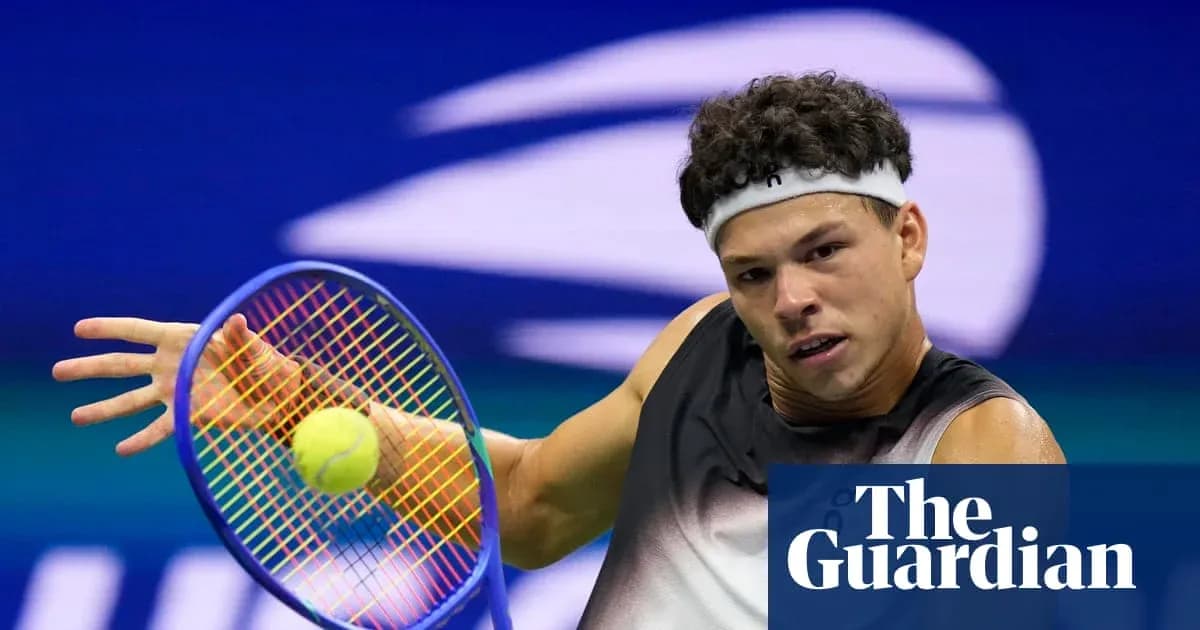
The 23-year-old from Atlanta stormed into his first grand slam final with a 4-6, 6-3, 6-3, 7-5 win over Frances Tiafoe in a ferocious all-American semi-final that never once dipped below boiling point. One more win, and he will become the first US man to win a major since Roddick here in 2003.
A night that felt different
From the opening ball, Ashe did not sound like Ashe. The usual murmur – the bars, the phones, the casual drop-ins – vanished. Nearly 24,000 people locked in on every point, riding every swing, splitting their roar between two men who have come to embody the new face of American tennis.
Tiafoe drew first blood. At 4-4 in the first set, Shelton held a 30-love lead on serve and looked comfortable. In four points, that comfort disappeared. His timing went, his radar flickered, and a double fault on break point handed Tiafoe the opening. The 11th seed walked calmly to the line and served out the set to love in 45 minutes, as if he had been planning it all along.
Shelton’s answer was brutal and immediate. He broke at love for 2-0 in the second set, only for Tiafoe to break straight back. The exchange lit the fuse. Shelton then leaned fully into the weapon that has dragged him into the sport’s top tier: that monstrous first serve.
At 3-all, he delivered a sequence that felt like a statement of intent: 125mph, 144mph, 139mph, 140mph, the last two unreturnable. In the very next game he broke Tiafoe, then closed the set with a 149mph first serve that looked closer to a baseball pitch than a tennis delivery.
The match had shifted. The stadium could feel it. So could Tiafoe.
The grind, then the break
The third set became something else entirely. The shot-making remained, but the rallies lengthened and the tension thickened. Tiafoe fought off break points at 1-all with gutsy, physical tennis, dragging the points out, daring Shelton to miss. At 2-all, the dare backfired.
Shelton unloaded from the back of the court, ripping a series of backhand winners and breaking at love. Then came the game that effectively decided the set – and perhaps the match.
Serving at 3-5, Tiafoe dug into an extraordinary 15-minute, 20-point service game. He saved three set points with the stubbornness that has defined his career, but on the fourth, his forehand finally cracked, dumped into the net. Shelton had a two-sets-to-one lead and the air in Ashe changed again.
“His game is starting to get more polished,” Tiafoe said later. “Instead of just being a shot maker, he’s actually staying tough in the rallies.”
That polish was tested immediately in the fourth set.
Shelton opened the set in trouble, down 15-40. It was the window Tiafoe needed. Shelton slammed it shut with a 140mph ace on one break point and a 144mph bomb on the other that Tiafoe could only flail at. The threat passed, the rhythm returned, and both men held serve through 5-5, their bodies tiring but their shot selection sharpening.
It felt destined for a tiebreak. Shelton had other ideas.
Pouncing at the wire
Serving at 5-5, Shelton held to 6-5, then suddenly raised the intensity on the return. Two long rallies, both his, dragged the score to love-30 on Tiafoe’s serve. One more point, and Shelton had three match points in his hand.
Tiafoe saved the first. The second never really started. A double fault cut through the noise and dropped a hush over Ashe. After 3 hours and 16 minutes, the contest was over. The curtain fell quickly, almost abruptly, on a night that had felt destined to go longer.
Shelton walked off not just as a grand slam finalist, but as a piece of history. He is the first black American man to reach the US Open singles final since Arthur Ashe in 1972, and the first black American man to contest a grand slam singles final since MaliVai Washington at Wimbledon in 1996.
He insisted the magnitude has not swallowed him.
“Yes, I can think about how cool this moment is and what I’m playing for,” he said. “At the end of the day, I’m here in New York, I’m hanging out with my team, I’m with my homies playing a little bit of tennis and I’ve been able to downplay the moment pretty well.”
What surprised him most was not the occasion, but his own mind.
“I was honestly shocked with how calm I was out there today, especially towards the end of the match,” he said. “Calm, confident, focused. I think that that’s what it takes to be in these positions and win at the highest level.”
No signs of wear, no fear of names
If fatigue was supposed to be a factor, it never showed. Shelton had come through a brutal, five-set quarter-final against defending champion Carlos Alcaraz that ended at 3.33am on Wednesday morning. That win – his first against a top-three opponent after 17 failed attempts – snapped Alcaraz’s 18-match winning streak at the majors and announced Shelton as something more than a big serve and a big personality.
Tiafoe had emptied his own tank to get here, rallying from two sets down and two points from defeat to beat Alex Michelsen in a deciding-set tiebreak. Once again, though, the semi-finals proved his ceiling. For the third time in five years, his US Open ended one step short of the final.
“That’s why I just want to win it, man,” he said, emotion close to the surface. “The love is incredible. It’s something that gives me definitely tears in my eyes from a kid starting how I did, and the love I have here is crazy.”
The love now extends to Shelton, who has not arrived out of nowhere, even if it feels that way to some. He won the NCAA singles title for the University of Florida in 2022, turned professional soon after, and was in the Australian Open quarter-finals four months later. By that same year’s US Open, he was in the last four.
Then came the hard part – the grind between promise and proof. Over the past seasons, he has rebuilt his game around more than just raw pace. Titles in Dallas, Munich, Stuttgart and Montreal in 2026 marked a leap, not a step.
He talks now about his return game, his baseline solidity, his focus, even his sleep, as the pillars of that transformation.
“I feel that I’m a different player. I feel like I have so many more tools,” he said. “I feel like I know my identity, am comfortable in my own skin, and I know what it takes for me to be playing top-level tennis.”
Zverev again, but on the biggest stage
Standing between Shelton and the end of a 23-year American wait is a familiar problem: Alexander Zverev. The top seed from Germany has beaten him five times in five meetings, all within a 16-month window across 2024 and 2025. Not once has Shelton solved him. Not yet.
Sunday will be their first clash at a grand slam. The stage changes. The history between them does not.
Shelton sounded anything but intimidated.
“Problem-solving has been the name of the game here,” he said. “I‘m looking forward to the challenge, being able to problem-solve on Sunday. I know what I’m up against, and I’m also the most confident I’ve ever been in my game.”
For two decades, American men have watched others lift the biggest trophies. On Sunday afternoon, a 23-year-old with a sledgehammer serve and a rapidly maturing game walks into Arthur Ashe Stadium with a chance to rewrite that story in one swing.