.svg&w=384&q=75 "logo")
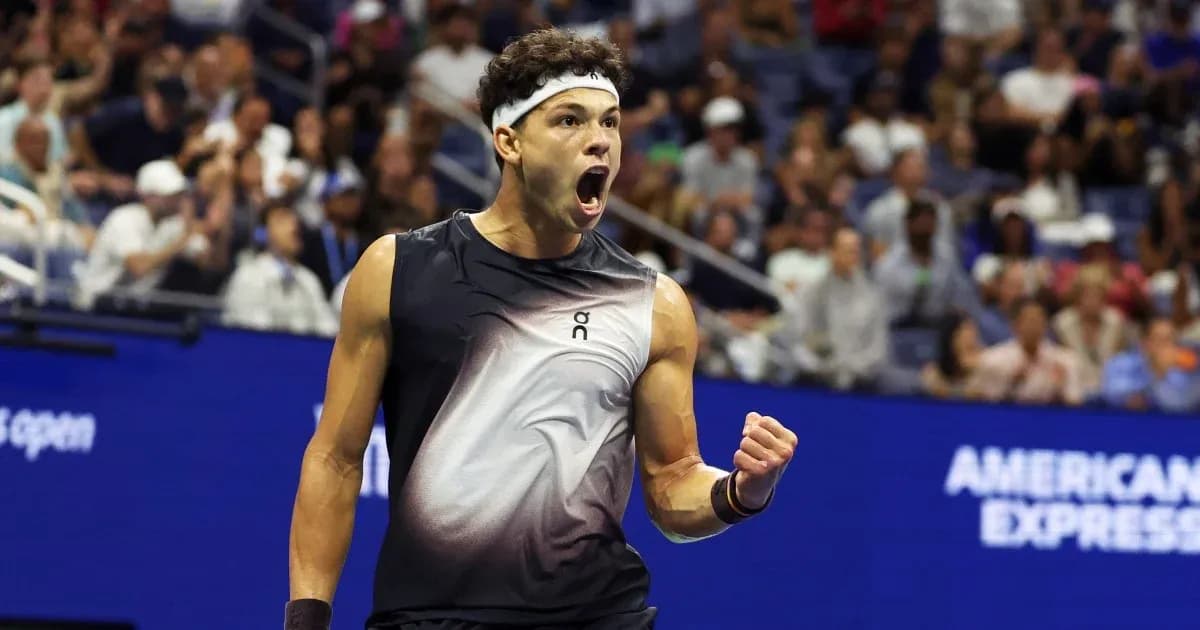
Ben Shelton Triumphs Over Carlos Alcaraz at U.S. Open
Ben Shelton didn’t just beat Carlos Alcaraz. He outlasted him, outgunned him and dragged the U.S. Open into a new frontier of late-night chaos.
At 3:33 a.m. in Arthur Ashe Stadium, with thousands still on their feet and the city that never sleeps proving its reputation once again, the 21-year-old American finally landed the last punch. A 10-7 deciding-set tiebreak sealed a five-set epic and ended the defending champion’s 18-match Grand Slam winning streak.
Four hours and 28 minutes. One broken streak. One broken champion.
And a new American star stepping into the glare of a home semifinal.
A Night That Refused to End
This was the U.S. Open at its most unhinged. Under the lights, with the clock hurtling toward dawn, Shelton and Alcaraz traded in power and nerve.
Alcaraz, the No. 2 seed and the sport’s electric frontman, edged the first set in a tiebreak, looking every bit the man who had once turned these same courts into his personal launchpad. Shelton, the No. 8 seed, didn’t blink. He surged through the second and third sets, riding the crowd, riding his serve, riding the moment.
The match became brutal. At one stage, Alcaraz bent over and vomited into a towel, the physical cost of a stop-start season and a punishing night laid bare. He has missed large chunks of the year with a wrist injury, and for long stretches this felt like a test of his body as much as his game.
Just when Shelton looked ready to run away with it, Alcaraz snapped back. The fourth set was a statement: 6-1, ruthless, efficient, the champion reminding everyone why he has already dominated this stage.
The fifth became a street fight.
Games traded. Momentum swinging. Neither man able to pull away. It had to be a tiebreak. It always felt like it would be settled on a knife edge, with the crowd roaring for both the local hope and the global superstar.
Shelton held his nerve first.
History in the Small Hours
By the time the final point landed, the match had taken a place in tournament history. This was the latest finish the U.S. Open has ever seen, pushing past the previous mark set by Alcaraz’s own classic against Jannik Sinner in the 2022 quarterfinals, which ended at 2:50 a.m.
Back then, a 19-year-old Alcaraz used that night as a springboard to his first U.S. Open title. This time, he walked off as the man dethroned, left to rebuild and chase again the form that once made him the sport’s leading light.
Shelton walked off as the man New York had adopted.
The American’s win guarantees a home player in Sunday’s final. He will face fellow American Frances Tiafoe in an all-U.S. semifinal, with both men carrying the weight of a drought that stretches back to Andy Roddick’s triumph in 2003.
For a nation that has waited more than two decades for a men’s Grand Slam singles champion, this is more than a storyline. It’s an opening.
A Day of Survival
Shelton’s drama capped a day at Flushing Meadows that seemed determined to test everyone’s endurance. Three of the four singles quarterfinals went to match tiebreaks, each one stretching nerves and schedules.
Aryna Sabalenka set the tone early, edging Wimbledon champion Linda Noskova and keeping alive her bid for a third straight U.S. Open crown. Tiafoe then clawed past fellow American Alex Michelsen, coming back again and again to earn his shot at Shelton.
By the time the last ball of the night was struck, it felt like the entire tournament had been squeezed into one endless, sleepless day.
Still, the crowd stayed. They roared for Alcaraz, the showman they have come to adore. They roared louder for Shelton, the new face of American hope, feeding off every fist pump and every booming serve.
“It’s incredible,” Shelton said on court, soaking in the noise. “I always say that this is the greatest sports city in the world, I say that this is the greatest stadium in the world. I’m just hoping that my best friend and my sister over there don’t have to be at work at 6 a.m. in three hours.”
They might be tired. New York will not complain.
The drought isn’t over yet. But for the first time in a long time, it feels like the wait might finally be running out of time.