.svg&w=384&q=75 "logo")
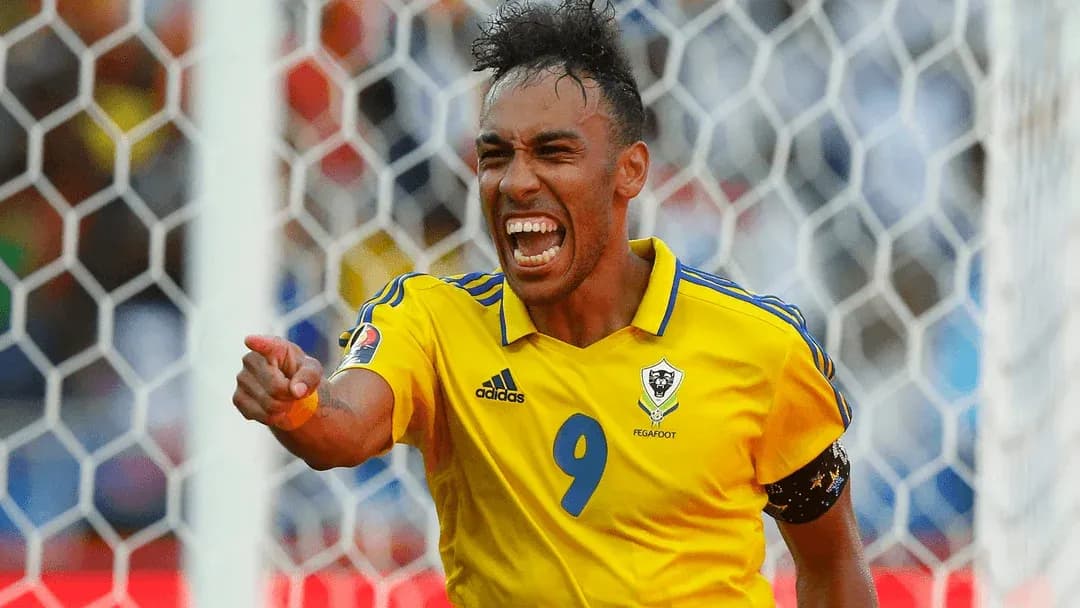
Aubameyang's Bitter Exit from Gabon National Team
Pierre-Emerick Aubameyang should have left the Gabon national team to a standing ovation, carried by applause and memories of his goals. Instead, at 37, the Panthers’ all-time leading scorer has walked away with a sense of betrayal.
“They humiliated me and tarnished my image,” he said on television, confirming his international retirement after a storm that followed Gabon’s disastrous 2025 Africa Cup of Nations campaign.
For a player who dragged Gabon onto the global stage, this is not a farewell. It is a rupture.
AFCON collapse that shook a nation
The breaking point traces back to Morocco. Gabon arrived at the Africa Cup of Nations with expectations, experience and their captain as the face of the project. They left after the group stage without a single point.
Three games, three defeats. The final blow: a 3-2 loss to Ivory Coast that sealed their exit and ignited anger back home.
The reaction inside Gabon was ferocious. President Brice Clotaire Oligui Nguema spoke of “a part of the national identity” being weakened. This was no routine football failure; it was framed as a national wound.
What followed was just as brutal. The coaching staff was dissolved. The national team itself was suspended until further notice. And, in the most controversial move, Aubameyang and veteran defender Bruno Ecuele Manga were dropped from the squad, singled out as symbols of the collapse.
The decision stunned many supporters. Two of the most experienced figures in Gabonese football, abruptly cast aside.
“It was the last straw”
For Aubameyang, the treatment cut deep. Not just because he was blamed, but because of what he says he put his body through to be there.
“They humiliated me and tarnished my image when I had played at AFCON while injured,” he revealed. He had pushed through pain for his country, only to find himself at the centre of a purge.
“It was the last straw and I’d rather leave it here,” he added, drawing a hard line under a decade-plus of service.
He refused to accept the narrative that he was one of the main culprits in a wider crisis.
“I think the national team’s problems run much deeper than the little part that I represent,” he said, pointing directly at structural issues beyond any single player’s influence.
The message was clear: this was not just about missed chances or a bad tournament. In his eyes, Gabon’s problems start far above the dressing room.
Reinstated too late
Under public pressure and growing criticism, the authorities rowed back. Aubameyang and Ecuele Manga were eventually reinstated to the national setup.
On paper, the punishment had been softened. In reality, the damage was permanent.
Trust had gone. Respect, in Aubameyang’s view, had been broken. The reinstatement arrived as a gesture, not a solution. He chose not to turn back.
So he has stepped away, not with a testimonial match or a lap of honour, but with a feeling of being scapegoated by those who once leaned on his star power.
A giant of Gabonese football exits
His departure drops a heavy weight on the shoulders of new head coach Sébastien Migné. The Frenchman must now build a new era without the forward who, for years, embodied Gabon’s ambitions and carried its name into the Champions League, the Premier League and beyond.
Aubameyang leaves as Gabon’s all-time leading scorer, the captain of a generation and the country’s most recognizable footballing figure on the world stage. For many, he was not just a striker; he was the face on the poster, the name that made the rest of the world pay attention to Gabonese football.
Yet the ending is anything but ceremonial. No packed stadium for a final cap, no carefully scripted goodbye. Instead, a legend walks away feeling humiliated, unfairly blamed and convinced that the real problems lie elsewhere.
Gabon must now move on without its greatest goalscorer. The question is whether the system that pushed him away is ready to change, or whether losing Aubameyang will simply be the first cost of a deeper, unresolved crisis.