.svg&w=384&q=75 "logo")
Aryna Sabalenka Advances at US Open Despite Cannabis Distraction
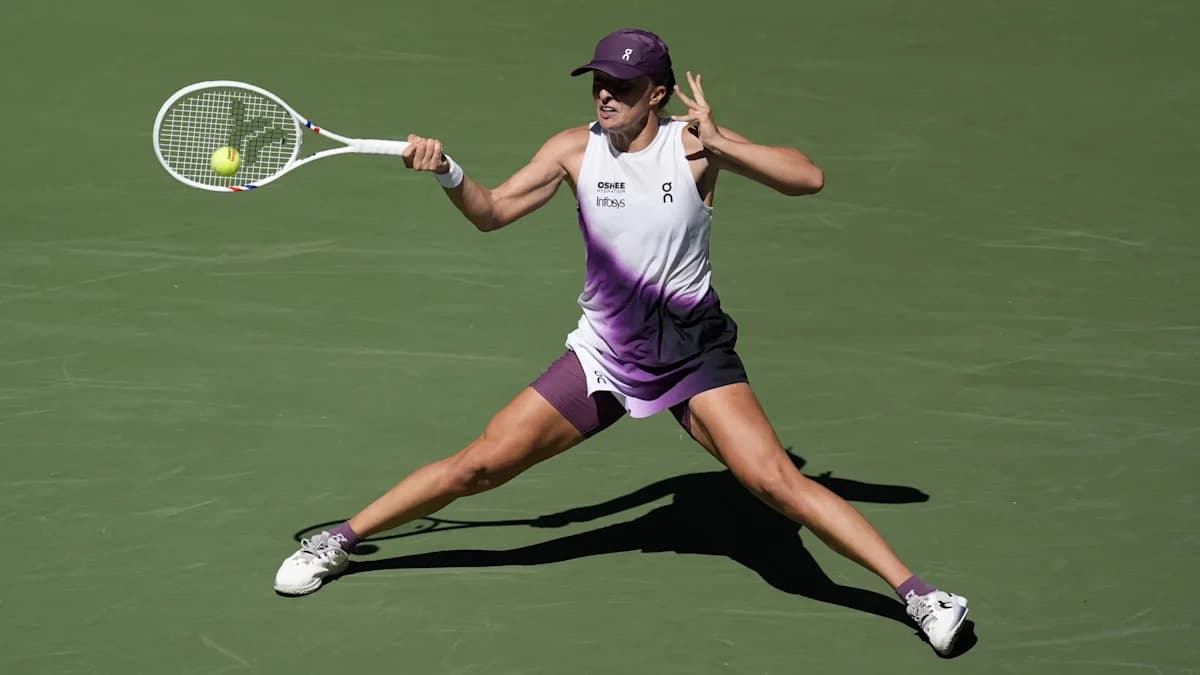
Aryna Sabalenka’s march through the US Open drew a little closer to the business end of the tournament, but on Louis Armstrong Stadium it wasn’t only Kamilla Rakhimova she had to deal with. It was the smell.
The top seed eased into the fourth round with a controlled 6-3, 6-4 win over the Uzbek player, never facing a single break point. Her serve held firm, her groundstrokes dictated, and the gap in class showed whenever the rallies stretched. Yet midway through the contest, Sabalenka stopped, turned to the chair umpire and complained about a strong cannabis smell drifting across the court.
She made her point clearly: she has no issue with people relaxing, but not so close to elite competition. The smell, she said, makes it harder to concentrate. On a night when her tennis looked locked in, the distraction came from the stands and, quite possibly, beyond.
Smoking is banned on the US Open grounds, but recreational cannabis is legal in New York, and the sprawling Flushing Meadows-Corona Park wraps around the tennis complex. Any smoke from the park can float over the fences and into the stadiums, and on this occasion it cut through a Grand Slam night session as sharply as any forehand.
Sabalenka, though, never allowed it to touch the scoreboard. She denied Rakhimova even a glimmer on return, controlled the tempo, and closed the match with the kind of authority expected from a top seed. Next up is American Taylor Townsend, who came through a three-set scrap against Diana Shnaider, 6-2, 6-7 (3-7), 6-3. That pairing promises a clash of styles: Sabalenka’s raw power against Townsend’s variety and net instincts, with the New York crowd certain to rally behind the home player.
Alcaraz returns from injury and reminds New York who he is
On the men’s side, Carlos Alcaraz arrived in New York with questions hanging over his wrist and his rhythm after more than four months out. He is answering them quickly.
The defending champion swept aside Wu Yibing 6-3, 6-4, 6-1, a scoreline that told the story of growing confidence. Early on, he played within himself, feeling out the rallies. Once he settled, the familiar patterns returned: the explosive acceleration into the court, the sudden change of pace, the audacious angles that drag opponents into places they do not want to go.
Alcaraz has said he feels better with every match and is surprised by the speed of his recovery. The evidence on court backs him up. The wrist held, the movement looked free, and Wu had no answer once the Spaniard found his range.
The test now sharpens. Next comes 20th seed Tommy Paul, a player with the legs and variety to stretch any opponent over five sets. Alcaraz knows this is the kind of match that can define a fortnight – not the final, but the kind of early showdown that shapes a title defence.
Medvedev in cruise control, Tiafoe and Shelton roll on
Daniil Medvedev, a former champion in New York, produced the kind of no-frills, no-mercy performance that has become his trademark on hard courts. He dismissed Arthur Rinderknech 6-4, 6-4, 6-4, a triple repeat that summed up his night: efficient, relentless, and utterly under control.
The Russian locked into his deep-court rhythm, absorbed pressure, and turned defence into attack with that flat, skidding backhand. Rinderknech swung hard, but Medvedev’s wall never cracked.
American hopes also stayed strong. Eleventh seed Frances Tiafoe delivered a confident 6-4, 6-2, 6-4 victory over Valentin Vacherot, feeding off the New York energy and never really loosening his grip once he broke early. His serve fired, his forehand dictated, and he kept the crowd involved with his usual swagger.
Ben Shelton, one of the most electric young players on the tour, needed more time but found his way through. He outlasted Denis Shapovalov 7-6 (7-3), 6-7 (5-7), 6-3, 6-4 in a match packed with big serves and big swings. After splitting two tight tiebreaks, Shelton raised his level, tightened his game, and used his left-handed delivery to carve out crucial holds. Shapovalov flashed brilliance in patches, but Shelton’s discipline in the final two sets made the difference.
Kostyuk surges, Svitolina bows out
For Ukraine, the day brought a mix of promise and disappointment.
Eleventh seed Marta Kostyuk produced one of the cleaner performances of her season, beating Ekaterina Alexandrova 6-3, 6-2. She struck early, broke serve, and never let Alexandrova settle into her aggressive rhythm. Kostyuk’s movement and timing on the return gave her constant looks, and she turned those chances into a straightforward passage to the next round.
Waiting for her is Wimbledon champion Linda Noskova, a matchup that instantly jumps off the schedule. Kostyuk’s speed and counterpunching against Noskova’s heavy, fearless ball-striking will offer a sharp contrast – and a real measure of where both stand on hard courts.
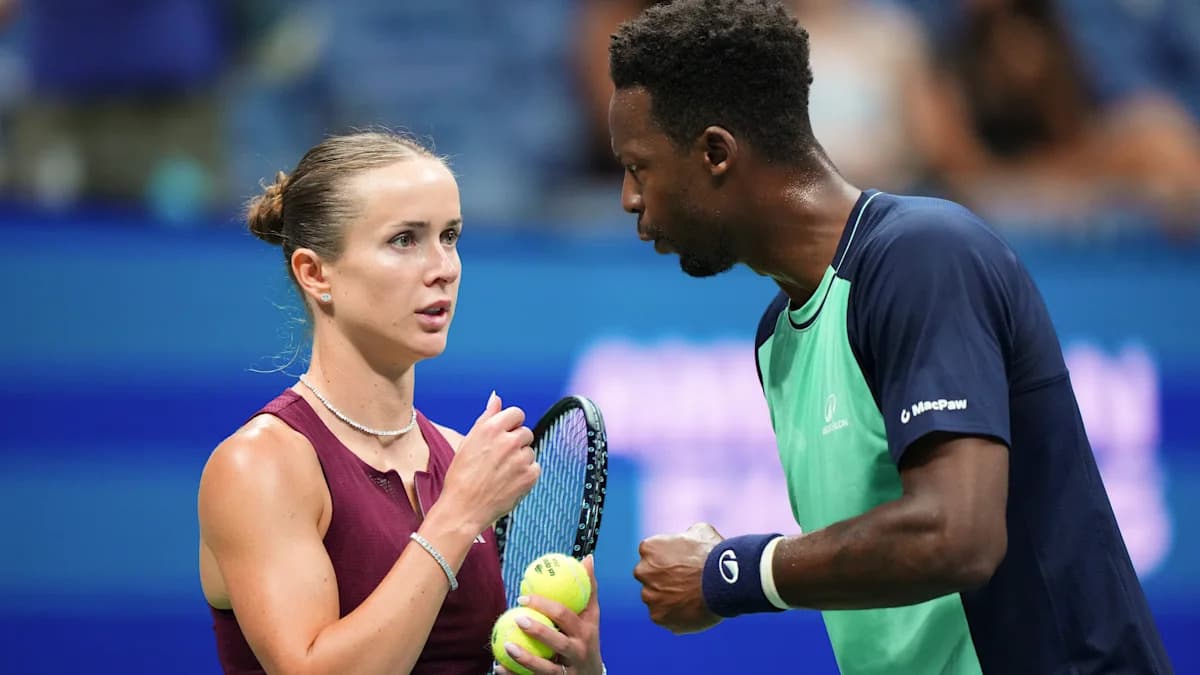
Elina Svitolina, though, saw her run end. She fell to Anna Kalinskaya 3-6, 6-2, 3-6 in a match that swung sharply back and forth. After Kalinskaya grabbed the opening set, Svitolina responded with a strong second, tightening her errors and stepping into the court. Just when it looked like she had wrestled control, Kalinskaya hit back, finding depth again in the decider and closing the door on one of the tour’s grittiest competitors.
As the second week looms, the picture in New York sharpens: Sabalenka imposing, Alcaraz accelerating, Medvedev lurking, the Americans roaring, and new contenders like Kostyuk and Noskova pushing hard. The question now is who can keep their nerve – and their focus – as the noise, and the stakes, rise around them.