.svg&w=384&q=75 "logo")
Aryna Sabalenka's Rollercoaster Season: From Glory to Criticism
NEW YORK — Scroll Aryna Sabalenka’s Instagram and you’d think this season has been one long holiday.
Sun-drenched beaches. Sharp designer looks. A bikini on a yacht here, a glamorous shoot there. The world No. 1 appears to be living the dream.
Step onto a tennis court with her right now, and the picture changes.
Sabalenka, the most powerful presence in the women’s game, hasn’t been past the fourth round at her recent events. For a player chasing a third straight U.S. Open crown — a feat not seen since Serena Williams ruled New York from 2012 to 2014 — that’s a jarring dip.
She’s not ducking the questions. She’s attacking them.
“Maybe there’s something wrong with people,” she snapped when asked what’s wrong with her game.
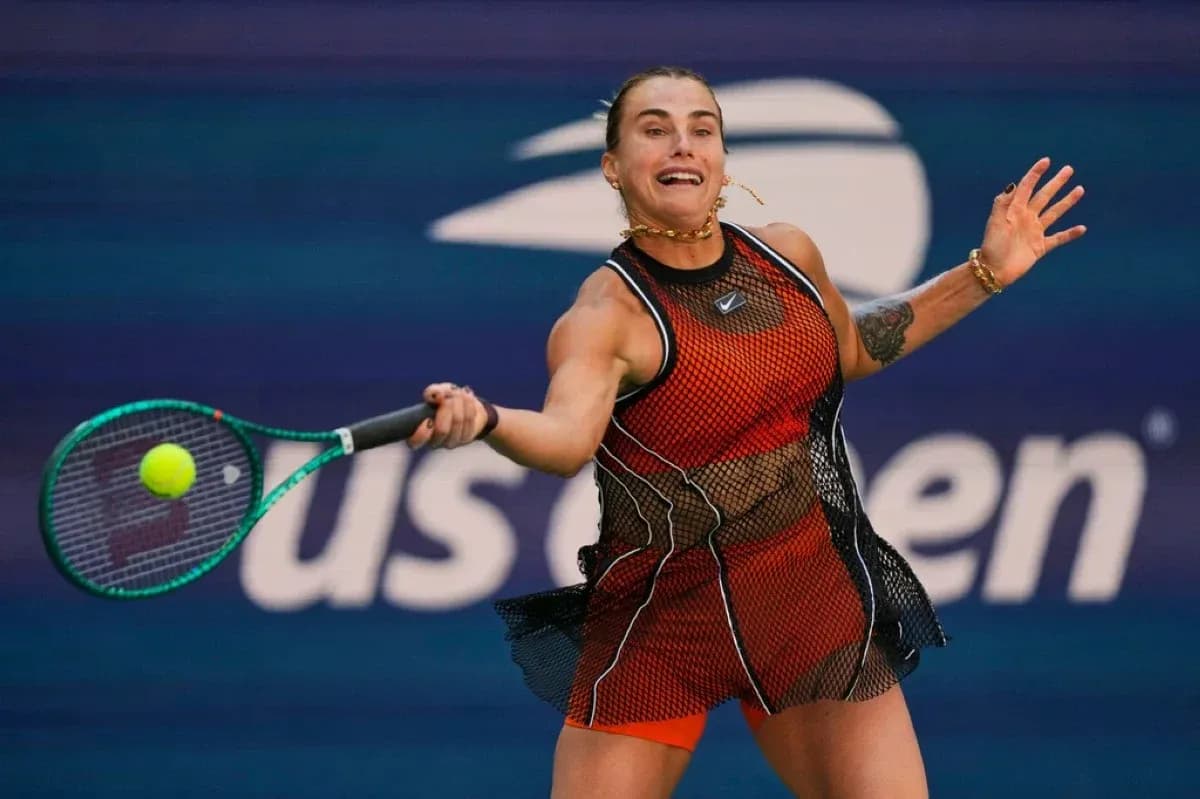
Criticism has followed her even to the locker room tunnel. Some don’t like the black, mesh-covered outfit she’s chosen for New York. Sabalenka’s answer lands just as flatly as one of her forehands.
“Who cares about people, right? All matters for me is that I love it.”
This is classic Sabalenka: blunt, confrontational, unapologetic. The edge that drove her to the top is still there. The results, lately, are not.
At the start of the year, she looked set for a monster season. She reached the Australian Open final, falling to Elena Rybakina, then roared through the hard-court swing with back-to-back titles at Indian Wells and Miami. The blueprint seemed familiar: big serve, bigger groundstrokes, relentless pressure.
Even when Naomi Osaka stopped her in the fourth round at Wimbledon, few doubted the reset would be quick once she hit North American hard courts again, where her power usually overwhelms opponents.
Instead, the slide began.
She fell in the fourth round in Toronto to Ekaterina Alexandrova. Then came Cincinnati, where she led in both sets against Sara Bejlek and still walked off beaten, her body language slipping back into the frustrated, muttering version of herself that once threatened to derail her career.
She won’t say exactly what’s been going on. But she doesn’t pretend it’s been normal.
“It wasn’t the best period. I don’t want to defend myself, but obviously I just don’t want to talk about that period. I’ve been dealing with several things,” Sabalenka said.
She pauses, then leans on the one message she clearly wants out there.
“But who cares, right? Yeah, I didn’t perform my best. These tough lessons are definitely going to make me way, way stronger and working even harder. I work on my mental side of the game. I was trying to reset my mind and to come back stronger, so it’s only going to make me stronger. It’s only a matter of time for me to come back.”
If history is any guide, New York is as good a place as any for that comeback.
Sabalenka broke through here in 2024, winning her first U.S. Open title by beating Jessica Pegula in the final. She backed it up a year later by defeating Amanda Anisimova to defend the crown. The noise, the night sessions, the chaos — they seem to fuel her.
Off the court, life at the top has brought a different kind of energy. Endorsement deals. Fashion shoots. Mid-season getaways to Greece with her fiancé. The curated snapshots of a star enjoying the spoils of her status.
For critics, it’s an easy narrative: too much lifestyle, not enough grind.
Paula Badosa, one of her closest friends on tour and a regular in those social media posts, isn’t buying it.
“She’s still No. 1 in the world. So I think the results are there,” Badosa said.
“Of course, everyone is going to expect for her to win every tournament. That’s very, very difficult. And at the moment, that one player is not winning what they expected. Of course, they’re saying that it’s because of the photo shoots or the TikToks and all this stuff, and I’m not going to lie, she’s been doing that since she was maybe out of the top 100. And when she was winning, nobody says anything, you know? And when she loses a couple of matches, it’s because of that. I think it’s none of it.”
What is real, though, is the math.
Sabalenka’s No. 1 ranking is under threat after her summer slump. Rybakina and Pegula are close enough to sense opportunity. A shallow run in New York could open the door; a deep one might slam it shut.
She has walked this line before. Peaks and crashes. Titles and early exits. Emotional storms and the slow work of rebuilding her mental game.
This time, she insists, the adversity is fuel.
“Well, that’s the beauty of the sport,” she said. “Throw tough challenges at me, I will come back only stronger.”
The lights of Arthur Ashe Stadium are waiting to test whether that promise still holds.