Aryna Sabalenka Faces Elena Rybakina in US Open Final Showdown
Aryna Sabalenka knew the deal before a ball was struck in New York.
Win the US Open, keep a faint pulse in the race to stay world number one. Lose early, and Elena Rybakina would sweep past her. Even triumph in Flushing Meadows might not have been enough.
Now, on the eve of Saturday’s final, the equation is brutally simple: Sabalenka’s 99-week reign at the top is over. Rybakina, already guaranteed the No.1 ranking after reaching the semi-finals, walks into Arthur Ashe Stadium as the new ruler of the women’s game. She also walks in with the chance to twist the knife.
A rivalry with the ranking on the line
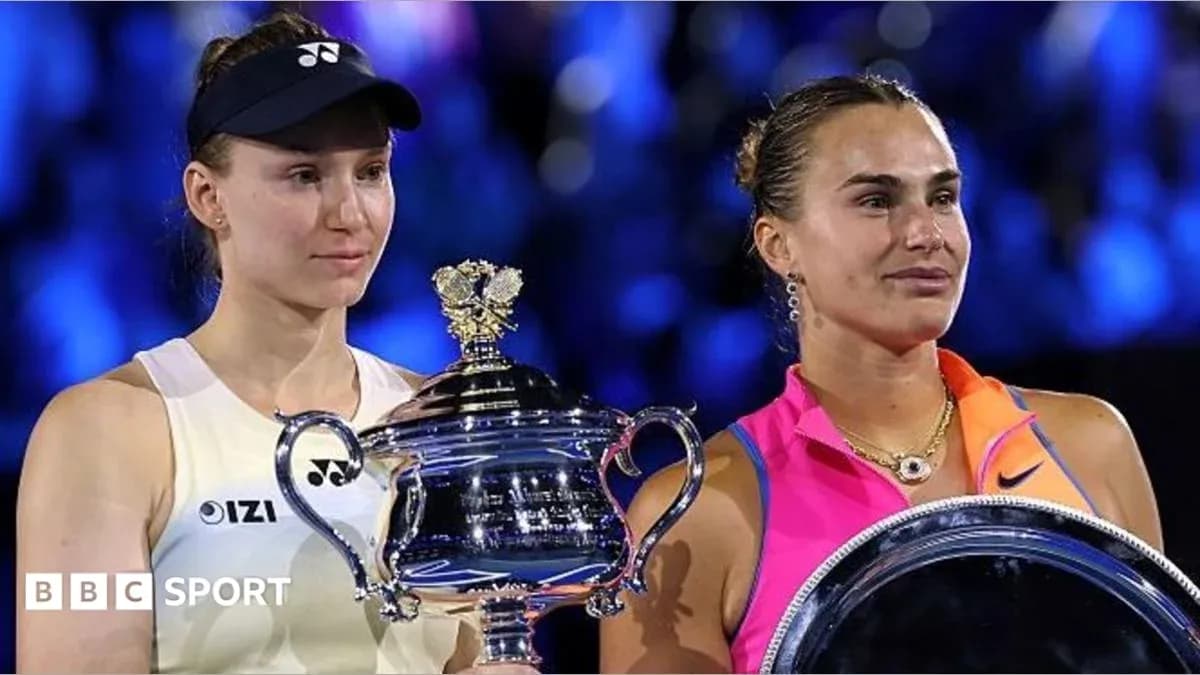
Rybakina has already landed one heavy blow this season, beating Sabalenka to win the Australian Open title in January. That victory set the tone: the Kazakh, long touted as a future world number one, now has the ranking to match her reputation.
Now she has the chance to do more than just take Sabalenka’s crown. She can deny her a slice of history and leave New York with both the trophy and the top spot.
That prospect, though, cuts both ways.
"It is going to be red rag to a bull for her – she is not going to be happy," former British number one Annabel Croft said on BBC Radio 5 Live. "Now she has the opportunity to end this year on a high."
Sabalenka has already hit back twice since Melbourne, beating Rybakina at Indian Wells and Miami. This final will be their fourth meeting of the year, a season-long tug-of-war now distilled into one night under the lights.
Chasing history as the ranking slips away
For Sabalenka, the ranking is gone, but the stage is enormous. She stands one win away from becoming only the third woman in the Open era to win the US Open singles title three years in a row. That is legacy territory.
Her performance in the semi-finals against American third seed Jessica Pegula suggested a player reconnecting with that sense of purpose. It was her sharpest, most complete display in months – heavy hitting without the wild streak, aggression laced with clarity. She played with a fire and freedom that had been conspicuously absent through a turbulent stretch of the season.
Afterwards, Sabalenka tried to shrug off the significance of losing the number one ranking, joking that she did not care. Her camp tells a different story.
Her coach Anton Dubrov admitted the looming change had been weighing on her.
"I actually like this [losing the ranking] happened. It's ended and it's extra fuel," he said. "There is no more extra draining [of mental energy] or thinking about it.
"There's a next chapter right now. You have to chase again. It's extra motivation for you. Just go and get it."
The message is clear: the burden of defending has gone. The hunt begins again.
Cracks, collapses and a fragile summer
Sabalenka arrived in New York as a two-time defending champion, but not as an untouchable force. The past five months have been littered with collapses from winning positions, the kind of defeats that gnaw at confidence and invite questions.
The most glaring came at Roland Garros. Facing 25th seed Diana Shnaider in the French Open quarter-finals, Sabalenka led by a set and a double break. She was cruising, then crumbled, losing 3-6 7-5 6-0 in a stunning reversal that exposed a mental frailty rarely seen from her in recent years on the WTA Tour.
The clay swing had already offered warning signs. In Madrid, she squandered six match points against Hailey Baptiste. In Rome, she let a first-set lead slip against Sorana Cirstea. Each time, the same pattern: control, then confusion; dominance, then doubt.
The wobble followed her onto the North American hard courts. At the Cincinnati Open, she built clear advantages against 20-year-old Czech Sara Bejlek, only to lose in straight sets. The vulnerability was no longer a blip. It was a theme.
Yet inside Team Sabalenka, there was no rush to tear everything up.
"We all understand that this is just part of the thing," said her high performance coach Jason Stacy. "We just give her space to be herself, help her figure out what might work for her right now.
"Giving her that freedom, but also knowing that she has the guidance of all of us, I think that just gives her a power that few are lucky enough to have."
Space, support, and a reset. The approach has carried her back to another US Open final, even as the ranking slipped through her fingers.
The new queen, and the one who refuses to bow
Rybakina arrives with the calm of a player whose ascent has finally been recognised by the numbers. She has already secured what Sabalenka is losing. She has already beaten her on one of the sport’s grandest stages this year.
Sabalenka walks into the final stripped of her status but armed with something more volatile: a bruised ego, a shot at history, and the chance to derail the coronation party of the woman replacing her at the summit.
She cannot stop Rybakina becoming world number one. That battle is done.
What she can do, under the New York lights, is remind everyone that the ranking may be changing – but the fight at the top of the women’s game is only just beginning.