Alfie Hewett Denies Tokito Oda Historic Grand Slam Sweep
Alfie Hewett arrived in New York with scars. A 6-1 6-1 humiliation at Wimbledon. A French Open final lost to the same opponent. A season in which Tokito Oda had turned Grand Slams into his own private collection.
He leaves with something far more valuable than revenge: a statement.
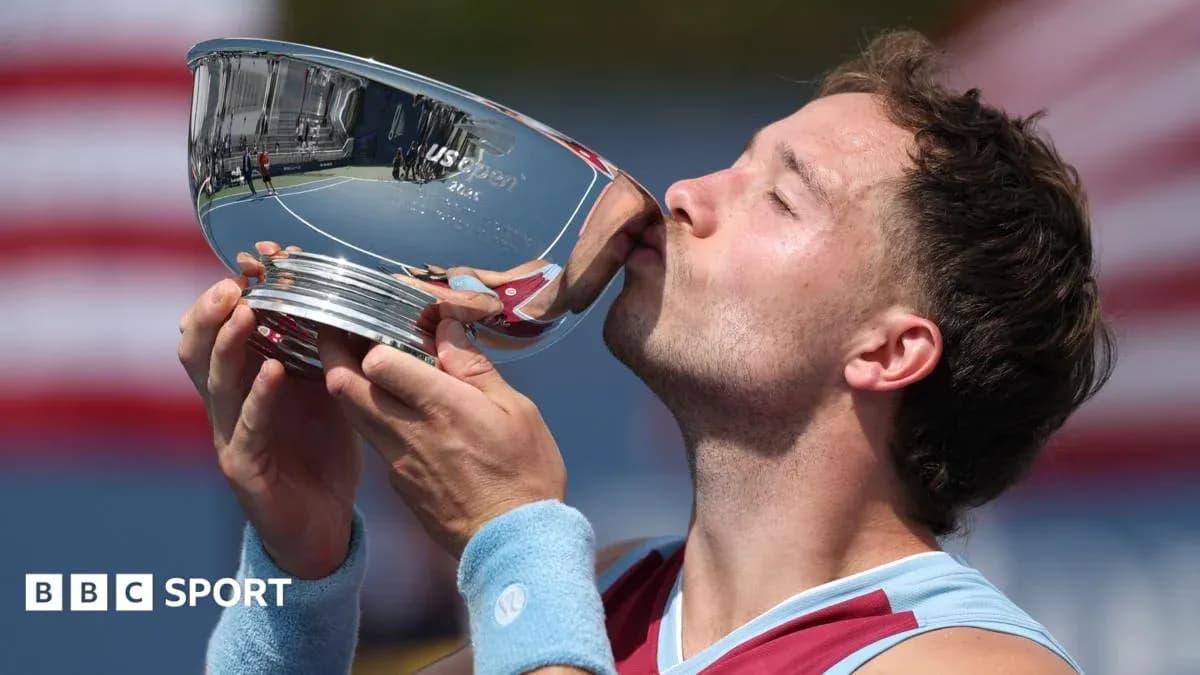
The 28-year-old Briton dismantled the Japanese world number one 6-0 7-6 (7-5) to claim a fifth US Open men’s wheelchair singles title, adding it to the doubles crown he won on Friday with Gordon Reid. In doing so, he stopped Oda from completing a clean sweep of all four majors in 2026 and snapped the teenager’s run of six consecutive Grand Slam singles titles.
This was not just a win. It was a reclamation of self.
From “a shell of myself” to possessed
Hewett had been brutally honest about what happened at Wimbledon. Beaten by Oda in the final, winning only two games, he admitted he had not recognised the player on court.
“I was quiet, I was timid, I was a shell of myself,” he told BBC Sport, reflecting on that loss. It forced him into what he called a “look in the mirror” moment, a six-week stretch of reflection and reset as he chased an 11th Grand Slam singles title.
He wanted to “be a little bit more like me” again. The version of Alfie Hewett known for being fearless, brave, courageous when it matters most.
In the first set in New York, that version roared back.
After saving a break point in the opening game, Hewett flipped the match on its head and never let Oda breathe. He described the level he found as “possessed” and it showed: aggressive returns, clean ball-striking, relentless pressure. Every rally felt like a statement that the Wimbledon capitulation belonged to another lifetime.
He sealed the bagel set with a superb backhand return winner, the kind of shot that doesn’t just win a game, it sends a message. Oda, who had swept through the season and the draw with ruthless efficiency, suddenly looked human.
Oda pushed back – and Hewett refused to fold
The second set told a different story. Oda, chasing the calendar-year Grand Slam, finally found the weight and accuracy that had carried him through Australia, Paris and London. The top seed surged ahead, twice breaking Hewett and edging towards a decider.
The pressure, this time, sat squarely on the Briton’s shoulders.
Hewett responded by digging into exactly what he said he had been missing at Wimbledon. He fought back from a double break down, refused to accept the set was gone, and began to claw his way into Oda’s service games. The rallies stretched, the tension rose, and the quality soared.
Oda had three set points to level the match. Hewett saved them all.
The set bled into a tie-break, nerves jangling around the court. This was the kind of moment Hewett had built his reputation on, the big stage, the thin line between control and chaos. This time he owned it.
He edged the breaker 7-5, closing out the match and the title with the authority of a man who had spent six weeks “champing at the bit” to prove something not to the crowd, not to his opponent, but to himself.
A historic sweep denied
For Oda, this defeat cut deep. The 18-year-old had arrived in New York with three majors already in his pocket this year – Australian Open, French Open, Wimbledon – and the chance to complete a rare calendar-year Grand Slam.
“Definitely I was trying to get the calendar year [Grand Slam] this year,” he said on court. “This was the last part of it so it's really tough for me, but I think Alfie deserved it today.”
There was no argument. Hewett had out-hit him early, out-fought him late, and outlasted him in the biggest moments.
The Briton’s win not only halted Oda’s streak but also rebalanced a rivalry that had begun to tilt heavily in the Japanese player’s favour. Oda had beaten Hewett in back-to-back major finals this season; in New York, Hewett answered with the most emphatic response possible.
Hewett’s New York, again
The US Open has always felt like Hewett’s territory, but this one carries a different weight. Title number five in singles. Another doubles triumph with Gordon Reid. A dominant first set against the best player in the world, followed by a comeback from a double break down and the saving of three set points.
This was not a routine defence of a favourite tournament. It was a career recalibration.
Hewett had talked about wanting to be “more like that person” again – the fearless competitor who embraces the storm rather than hides from it. On Arthur Ashe’s wheelchair stage, he found him.
The question now is not whether Alfie Hewett can still live with Tokito Oda at the very top of the sport. It’s how this jolt in New York will shape the balance of power for the rest of their era.