.svg&w=384&q=75 "logo")
Alex Eala Takes Center Stage at the 2026 US Open
Alex Eala walks into the 2026 US Open on Tuesday night not as a curiosity, not as a promising junior, but as a headliner. Louis Armstrong Stadium, 14,000 seats and a low ceiling for noise, is about to find out what the rest of the tennis world has been learning all year: this is no slow burn. This is a phenomenon.
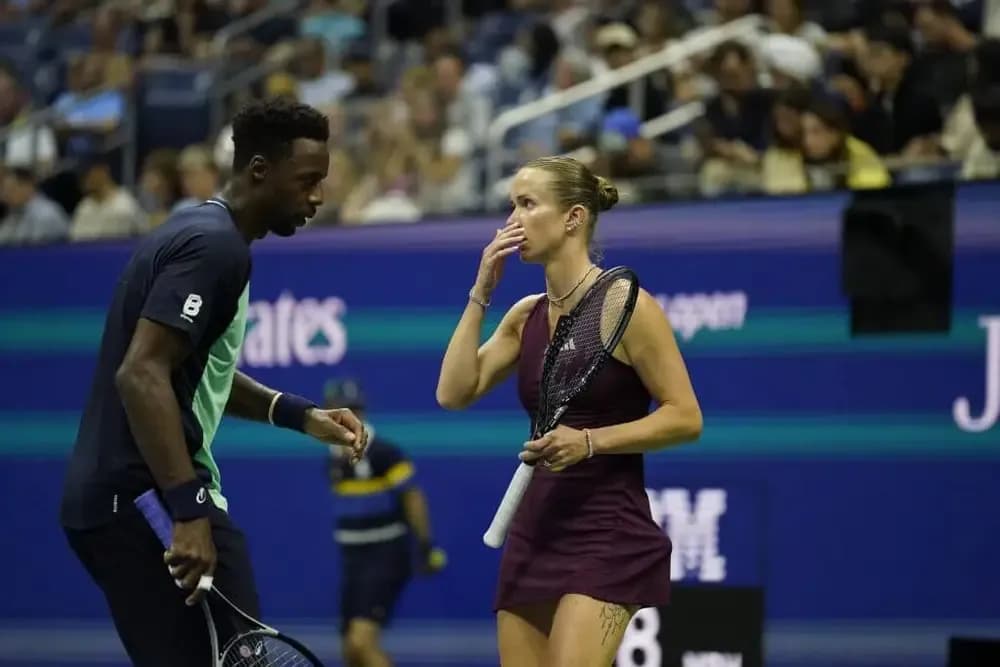
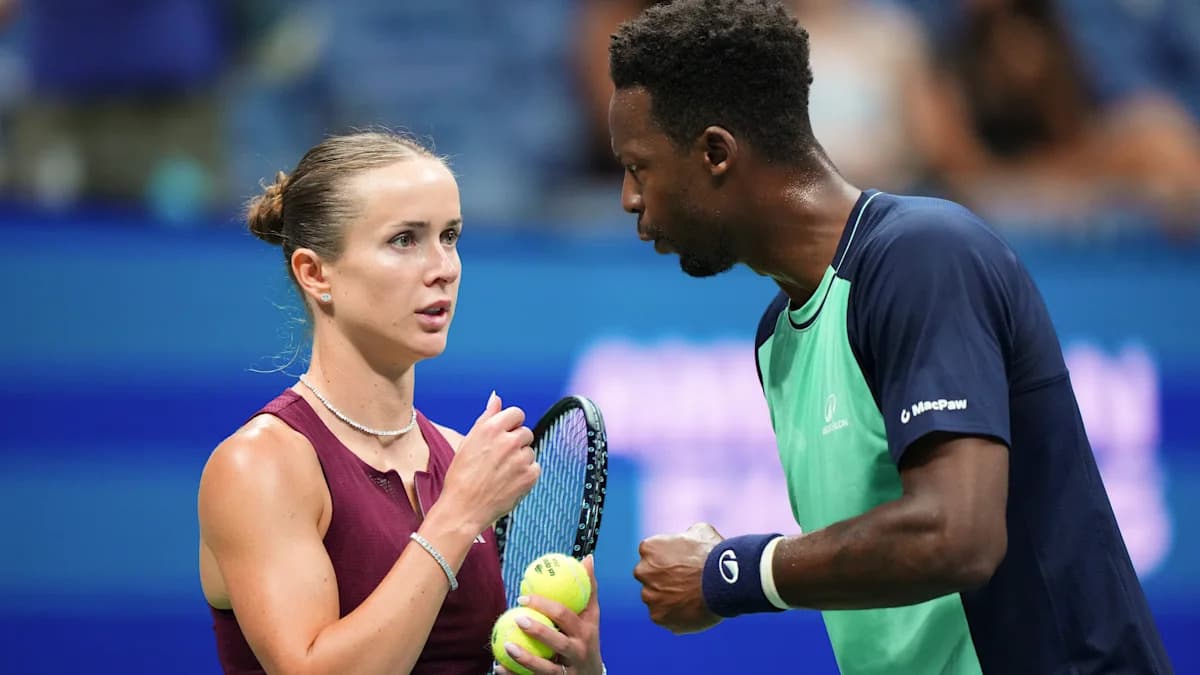
The 17th-seeded Filipina makes her singles main-draw debut in New York against American qualifier Mary Stoiana in the second match of the night session on Armstrong at the USTA Billie Jean King National Tennis Center. Adolfo Daniel Vallejo and Gael Monfils open at 7 p.m. ET; Eala and Stoiana follow once that best-of-five match wraps.
So pencil in around 8:40 p.m. ET. Then erase it. The official order of play offers only placement, not precision, and tennis has never cared much for clocks. For fans in the Philippines, the projected start lands around 8:40 a.m. on Wednesday, Sept. 2, but the timing could swing earlier or later with the length of the Monfils match.
What is fixed is the stage. Armstrong is the tournament’s second-biggest arena, just behind Arthur Ashe Stadium’s 23,771 seats. For a 19-year-old whose practices now draw crowds that look like match days, this is less a courtesy than crowd management.
A Seeded Star, Not a Sideshow
Eala arrives in Queens at a career-high world No. 18, armed with the kind of summer resume that forces organizers to rethink their court assignments. She captured her first WTA Tour singles title in Washington, D.C., slicing through a draw that read like a second-week Grand Slam lineup: Zheng Qinwen, Leylah Fernandez, Elina Svitolina, Naomi Osaka, Jessica Pegula. One after another, all in the same week.
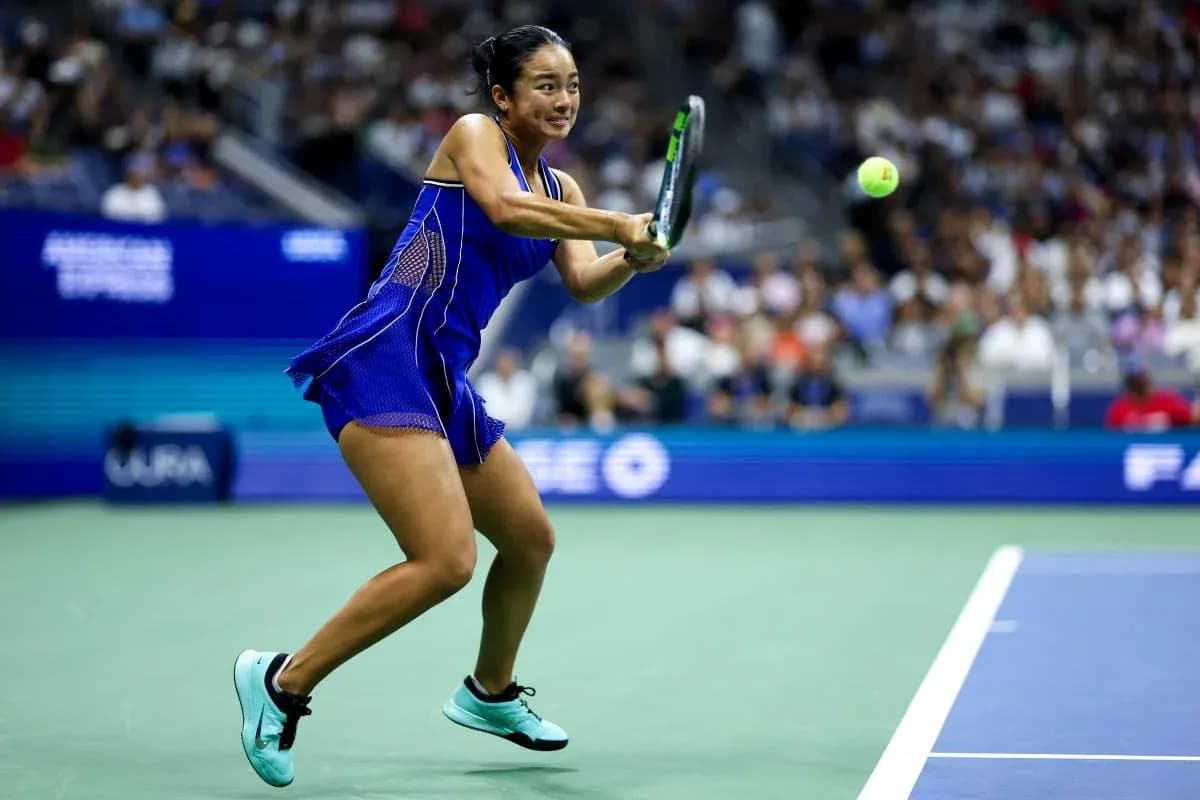
Stoiana, ranked No. 122, took the long road in. The American earned her place through qualifying, winning three matches and closing out Yuan Yue 6-3, 4-6, 6-4 in the final round. She knows what she’s walking into; the two met once before, at the 2024 ITF Landisville event, where Eala prevailed 7-5, 6-2. That result belongs to another time. Both players arrive in New York stronger, sharper, and with far more on the line.
The rest of Tuesday’s schedule underlines where Eala now sits in the sport’s hierarchy. Arthur Ashe opens at 11:30 a.m. with Madison Keys against Alina Korneeva, followed by Taylor Fritz versus 18-year-old American wild card Darwin Blanch. The night session belongs to world No. 4 Coco Gauff against Zeynep Sonmez at 7 p.m., then top seed Alexander Zverev against Lorenzo Sonego.
On Armstrong, fifth seed Flavio Cobolli faces Francisco Comesana at 11 a.m., followed by Mirra Andreeva against Indonesian qualifier Janice Tjen. Then Vallejo–Monfils. Then Stoiana–Eala. A prime slot on a court built for noise.
“Put Her on Big Courts”
That placement didn’t happen by accident. It answered a public nudge from Patrick McEnroe before the schedule dropped.
“The USTA better make sure they put her on big courts,” the ESPN analyst said on the network’s US Open preview call, warning against hiding Eala on an outer court and predicting New York would be “wild for her.”
Mary Joe Fernandez has already seen the evidence. The former world No. 4 called Eala’s following “off the charts,” pointing out that fans now show up not just for her matches, but for her practice sessions.
Fan Week turned that into a daily reality. Spectators crowded around her training blocks, turning warm-ups into events. Then came the ticketed Stars of the Open exhibition inside Arthur Ashe Stadium, where Eala faced close friend Iva Jovic in front of a packed house dotted with Philippine flags and a restless hum that felt more like a second-week night session than a preseason hit.
Jovic won the one-set exhibition 6-3, but the result faded the moment Eala and Jovic waved their fathers onto the court for a playful doubles cameo. It was a family skit on one of tennis’s grandest stages, and the crowd responded with another standing ovation.
New York already knew her. Last year, more than 8,000 fans jammed Grandstand to watch Eala claw back from 5-1 down in the third set to beat Clara Tauson, making her the first Filipino in the Open Era to win a Grand Slam singles main-draw match. That comeback felt like a breakthrough.
Twelve months later, it looks more like a prologue.
From Prospect to Cover Star
The media landscape around Eala’s arrival this year tells the story as bluntly as any ranking. She landed on the Forbes Daily Cover, which dissected her rising fame and commercial pull. Sports Illustrated splashed her across its digital cover with the headline “Pinoy Power,” calling her “tennis’s next great superstar.”
The New Yorker went deeper, tracing how Eala has become a symbol of the Philippines itself, tying her ascent to cultural identity and national pride. ESPN built its US Open narrative around her too, with “Inside the Raucous and Rapid Rise of Alex Eala,” a piece that framed her as part Manny Pacquiao, part Maria Sharapova, and fully capable of a deep run in New York.
Players without a single Grand Slam quarterfinal rarely receive that kind of cross-platform treatment—Forbes, Sports Illustrated, The New Yorker and ESPN all at once. Combined with her packed practices, Fan Week cameos and enormous digital following, the message is clear: Eala has surged past “promising prospect” status. She now sits among the sport’s most marketable young stars.
Her off-court presence matched the hype. She worked the US Open Media Day gauntlet, filmed tournament promos, and popped up in interviews across the grounds. A meeting with New York Knicks guard Jordan Clarkson, another high-profile Filipino athlete, produced a fresh round of widely shared clips and photos, reinforcing the sense that this is more than a tennis story. It’s a global one.
Queens as a Second Home
If Eala could have drawn up a map for her rise, it might have looked a lot like Queens.
An Asian American Federation study estimated that about 94,000 Filipinos lived in New York City as of 2023. Roughly 49,500 of them were in Queens—more than any other borough. Just a few miles west of the National Tennis Center sits Woodside’s Little Manila, a dense stretch of Roosevelt Avenue near 69th and 70th streets lined with Filipino restaurants, bakeries, groceries, remittance centers and small businesses.
A New York City neighborhood study suggests Filipinos make up around 16% of Woodside’s population. In 2022, the city formally recognized that presence by co-naming the intersection of 70th Street and Roosevelt Avenue “Little Manila Avenue.”
Those numbers don’t account for the fans crossing bridges and tunnels from New Jersey, Long Island and Connecticut, or the supporters flying in from Pennsylvania and the Philippines itself. Eala’s crowd in Queens is local and global at once—a home game in a foreign city.
The Biggest Party in Queens
ESPN’s coverage on Tuesday begins at 11:30 a.m. ET and runs through 6 p.m., followed by “US Open Match Point” from 6 to 7 p.m. Primetime coverage kicks off at 7 p.m. on ESPN and ESPN2, with every court streaming on the ESPN App for ESPN Unlimited subscribers.
Gauff and Zverev will command Arthur Ashe. Their names sit on the marquee of the sport’s largest regular arena.
Eala won’t walk onto Ashe on Tuesday night. She doesn’t need to. Louis Armstrong, with its 14,000 seats, retractable roof and reputation for rowdy, partisan crowds, is perfectly built for the kind of noise she now generates.
If New York is ready to crown its next cult hero, the answer won’t come from the biggest stadium. It may come from the court next door, when a 19-year-old from the Philippines steps under the lights and finds out just how loud Queens can sound when it decides one of its own has arrived.