.svg&w=384&q=75 "logo")
Alex Eala's Serve: From Viral Joke to Powerful Weapon
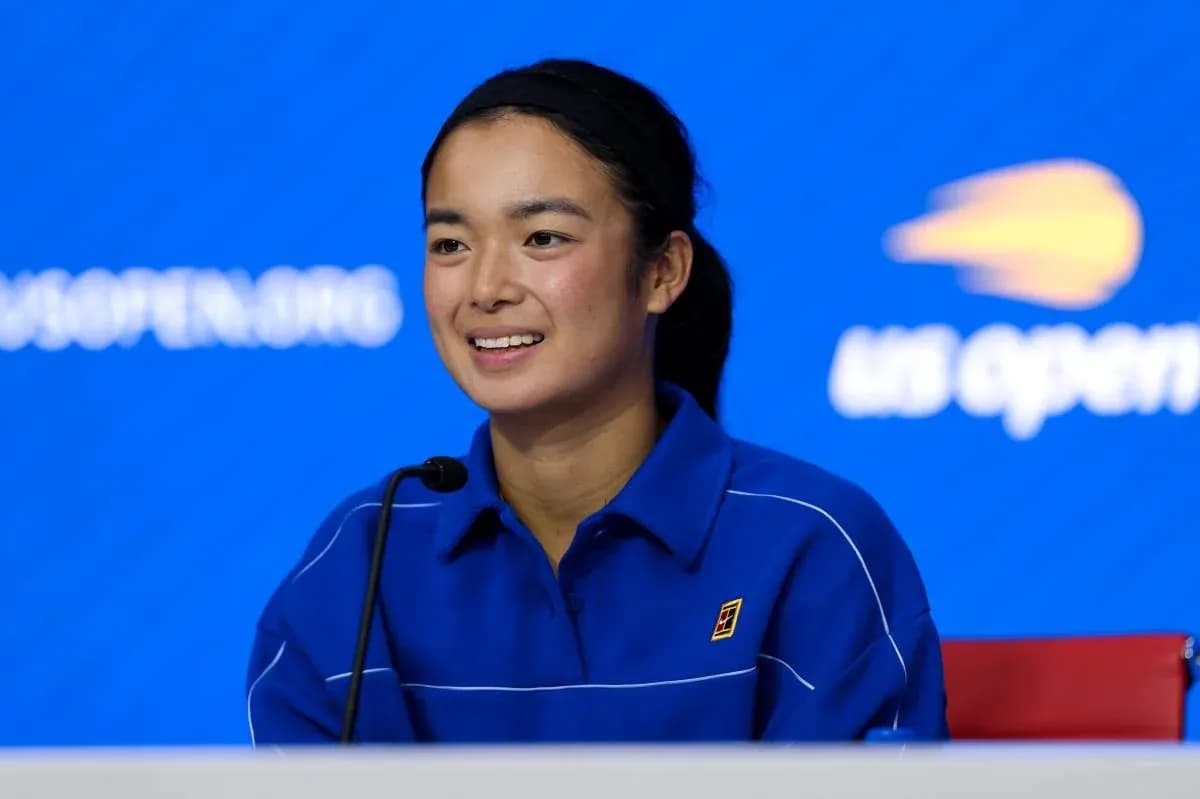
Alex Eala has heard the joke. She just doesn’t think her serve is one.
In front of the New York media at the US Open, the 19-year-old Filipino star was asked about “Fookelya,” the viral, irreverent nickname her country’s fans have given her slower second serve. The term, rooted in Filipino gay slang, carries a vulgar reference to female genitalia. Online, though, it has been twisted into something else: a meme, a battle cry, a supposed “secret weapon” that fools elite returners without ever threatening the speed gun.
Eala laughed at first. Then she asked for a translation.
“Hindi siya masyadong positibong salita ’yon,” she said. Not exactly a word you’d put on a motivational poster.
The explanation followed: supporters weren’t mocking her. They were reclaiming what outsiders might see as a weakness and turning it into a point of pride. The phrase has already jumped from timelines to T-shirts, from local chatter to international tennis discourse.
Eala understood the intent. She still didn’t love the label.
“Hindi ko alam kung ano ’yung pakiramdam ko sa salitang ’yon kasi it’s not a very positive term,” she admitted. In English, she expanded on the unease, tying it directly to the hours, months, years she has poured into that very shot — the most fragile part of her game, and the one she has fought hardest to repair.
“And I love my serve,” she added, drawing a clear line: this isn’t a punchline to her. It’s personal.
A meme that escaped the timeline
By the time Eala sat down in New York, “Fookelya” had already escaped its original habitat.
Filipino fans had been sharing clips of her second serve for months, celebrating the way it could wrong-foot opponents who expect pace and instead receive something awkward, floaty, and deceptively tough to time. The meme then crossed borders.
Broadcaster Blair Henley brought it to a global audience on the Love All Podcast, calling Eala’s motion unconventional but effective. The message was simple: the serve doesn’t need to resemble Serena Williams’ thunderbolt to do damage.
That kind of spotlight forced the issue. Eala could either ignore the nickname or address it. She chose the latter, without scolding, without shaming the people who created it.
“I think I would appreciate a more positive term,” she said. “But I don’t think they mean it in a bad way.”
Her coach at the Rafa Nadal Academy, Joan Bosch, has given her a different metaphor to hold onto. To him, the serve is like a younger brother — immature, sometimes wayward, but worth protecting. Eala is the “ate,” the older sister, responsible for guiding it.
“Like my coach says, it’s like my little brother,” she said. “Parang ate ako sa serve ko.”
That image explains why the nickname hits a nerve. You can joke about a shot. It’s harder to laugh when you see it as family.
Why a “slow” serve unsettles the best
The debate around Eala’s delivery isn’t happening in a vacuum. It has intensified because the serve, for all its quirks, has already disrupted some of the game’s most accomplished returners.
Before facing her in the Washington final, Jessica Pegula reportedly asked a practice partner to take the pace off his serve. She wanted to simulate Eala’s rhythm, to feel what it’s like when the ball arrives slower, hangs a split second longer, and forces the returner to generate their own power.
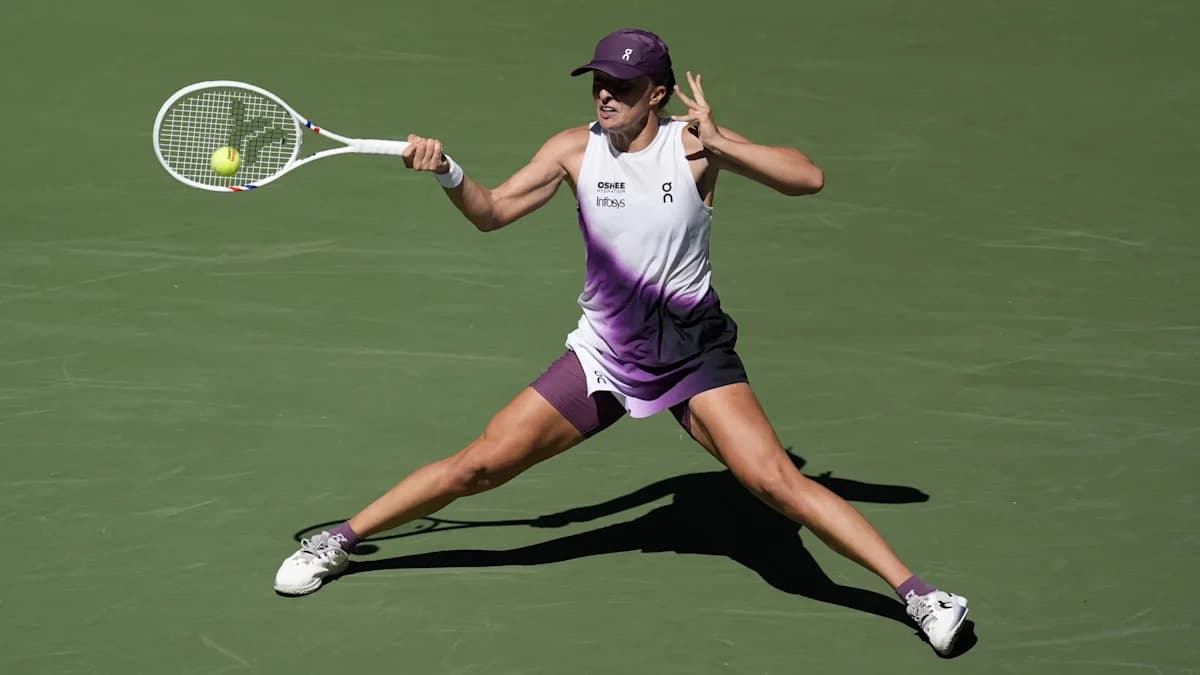
Iga Swiatek ran into the same problem on grass. After losing to Eala at Wimbledon, the world No. 1 noted that the Filipino began serving “slower and slower,” dragging the match into a tempo that bore little resemblance to the heavy, aggressive deliveries Swiatek usually sees.
Andy Roddick, one of the great servers of the modern era, later broke down why Eala can “get away” with that kind of pace. Her serve doesn’t need to finish the point. It only needs to start the exchange on her terms.
If the return comes back off-balance or off-center, Eala’s first groundstroke takes over. She steps in, takes the ball early, and redirects it with enough speed and precision to flip the rally in her favor. The serve becomes a set-up shot, not the main act.
Rick Macci, the renowned coach who helped shape Serena and Venus Williams, took a harsher view ahead of Eala’s US Open opener. He applauded her movement and clean early ball-striking, but wrote that her serve “biomechanically has to be rewired” if she wants to climb another tier.
He also warned of something less technical and more emotional: nerves. With her fan base swelling and expectations rising, Macci predicted an “Eala Earthquake” of pressure around her first-round match.
Roddick and Macci are looking at the same serve from different angles. One sees why it works now. The other sees how much more it could become.
A serve under the spotlight
Eala arrives in New York at a career-high No. 18 in the world, seeded 17th in the women’s singles draw. The numbers confirm what the eye already knows: she is no longer a promising junior or a cult favorite. She is a genuine threat.
Her first assignment at Flushing Meadows is American qualifier Mary Stoiana, an opponent she has already solved once, 7-5, 6-2, at the W100 event in Landisville, Pennsylvania, in 2024. That match offered a preview: when Eala finds her range off the ground, the serve only has to be competent, not spectacular.
This time, every delivery will be dissected. Speed, placement, spin, the odd, stuttering rhythm that unsettles timing — all of it will sit under the New York microscope. The nickname will trail behind her, whispered in the stands, splashed across social media, maybe even printed on a few more shirts.
Eala isn’t asking her fans to stop enjoying the ride. She knows what their support has done for her, how loud the Filipino presence can be in any stadium she walks into.
She just wants something different for the shot she’s spent years trying to fix — and now, finally, to trust. The little brother of her game has earned her patience, her protection, and, in her eyes, a name that reflects that care.
The question now is simple: as her ranking climbs and the stakes rise, will the world keep laughing at the nickname, or start paying closer attention to the serve that keeps turning big matches on their head?