.svg&w=384&q=75 "logo")
Alex Eala: Rising Star of Tennis and Future Superstar
On the outside courts at the U.S. Open, practice is usually background noise — balls thudding, players grinding, fans drifting past.
Not when Alex Eala walks on.
The 21-year-old from the Philippines now turns warm-ups into events. Bleachers fill with flags and camera phones, Tagalog chatter rises over the hum, and what should be a quiet tune‑up suddenly feels like a match day. Sponsors have noticed. So have tournament directors. And one of the sport’s most powerful dealmakers thinks this is only the beginning.
Max Eisenbud, the veteran architect behind the commercial empires of Maria Sharapova, Coco Gauff and Emma Raducanu, believes Eala is on the brink of joining an elite financial tier.
“I feel very confident that by 2027, she will be the second-highest-paid female athlete in the world, behind Coco [Gauff],” Eisenbud told Forbes.
That is not a casual prediction. It’s a line in the sand.
A $5 Million Signal
Eala’s competitive breakthrough is still taking shape, but her off‑court numbers already belong to a different conversation.
Forbes estimates she has earned more than $5 million from endorsements over the past 12 months, before taxes and management fees, on top of $1.7 million in prize money in 2026. Those figures place her in the sport’s serious commercial class, years before she has fully settled into the top of the rankings.
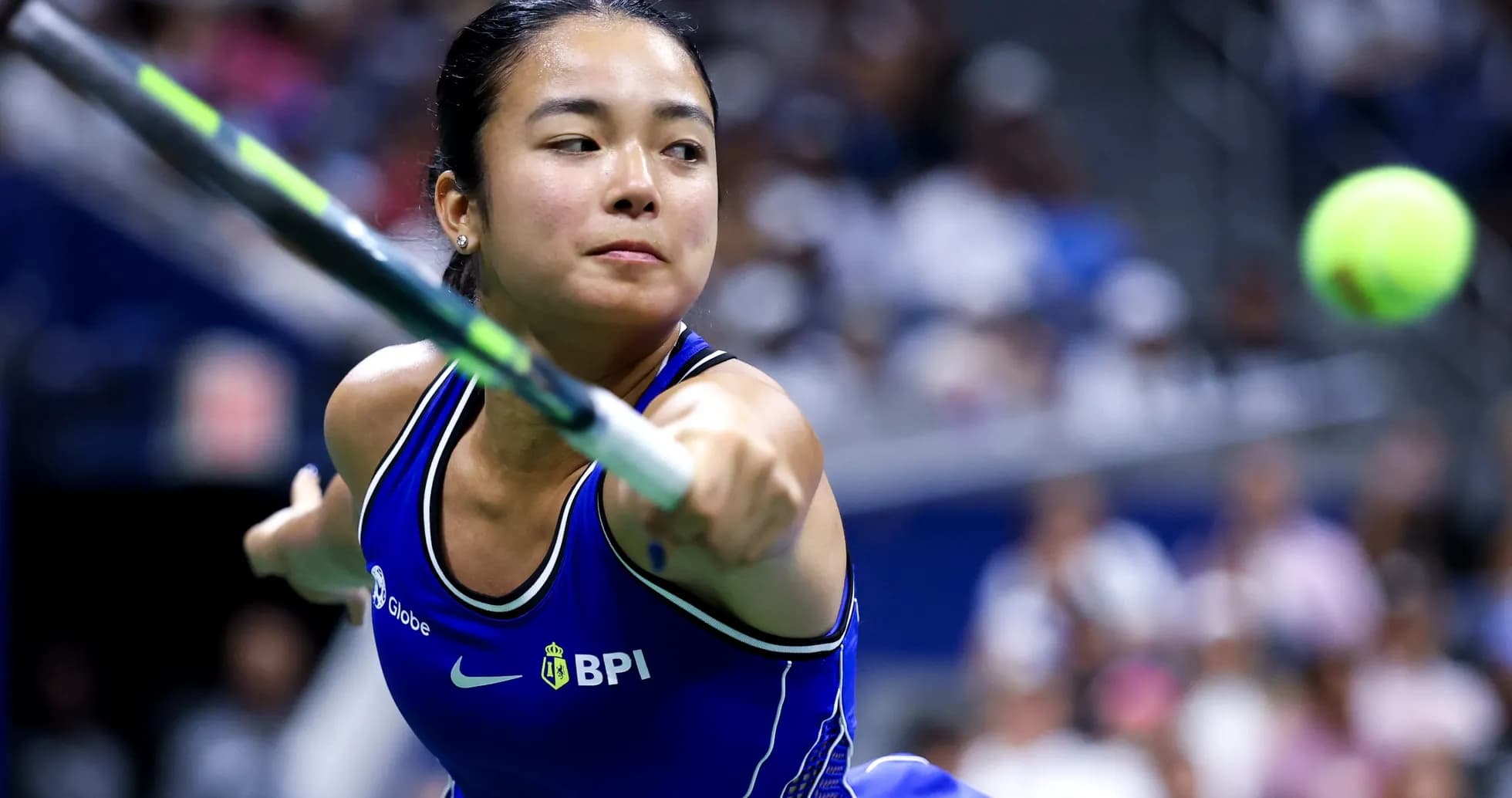
The sponsor list reads like a corporate roll call across sport and business: Nike, Babolat, Globe Telecom, Bank of the Philippine Islands, Locally and Milo. Several of those relationships stretch back to childhood.
Globe signed her at 8 years old. Babolat backed her through her junior days. Nike came aboard in 2019, BPI in 2022. Locally joined in 2025. Milo made her a brand ambassador in February 2026.
This is not a late scramble to jump on a bandwagon. It is the maturation of a long-term bet.
Nike, in particular, has leaned into her heritage. The brand has woven Eala’s Filipino identity into its campaigns, rolling out sampaguita-inspired merchandise and apparel that speak directly to the fanbase fueling her rise. The message is clear: she is not just another name on the roster; she is a flag bearer.
The clearest indicator of her changing status, though, sits in a much smaller space — a few inches of fabric on her kit.
According to Forbes, Globe and BPI renewed on four-year deals at the start of 2026, each guaranteeing more than $1 million annually just for patches on Eala’s Nike outfit. Eisenbud says seven figures is now essentially the entry fee for any brand hoping to join her portfolio.
That is Coco Gauff, Naomi Osaka, Iga Swiatek territory. Eala is stepping into that room.
New York Takes Notice
The U.S. Open has provided a live, noisy proof of concept.
During Fan Week, her practice sessions drew some of the largest crowds on site. Filipinos poured into the stands, many draped in flags, chanting between points, treating a Tuesday workout like a Sunday final. On a grounds packed with stars, Eala’s court became a destination.
The Stars of the Open exhibition at Arthur Ashe Stadium underlined the point. Eala faced American prospect Iva Jovic inside tennis’ biggest arena, and the atmosphere felt anything but exhibition-lite. The crowd roared for the Filipina, a surge of sound that cut through the usual pre‑tournament looseness.
Tournament organizers were listening.
Her opening-round match against American qualifier Mary Stoiana has been placed on Louis Armstrong Stadium, the second-largest court at the USTA Billie Jean King National Tennis Center. That is prime real estate, usually reserved for champions, home favorites or global names with proven drawing power.
Tournament director Eric Butorac has already acknowledged that Eala’s placement is no accident. The response during Fan Week forced their hand. Ticket prices have followed, climbing as demand from Filipino fans and curious New Yorkers spikes.
For a player trying to convert national hero status into global superstardom, this kind of stage is priceless. It is also a test. Armstrong is where hype meets expectation.
Chasing Coco
The financial summit Eala is targeting is steep.
Forbes estimated that Gauff earned $25 million off the court in 2025. Freestyle skier Eileen Gu followed at $23 million, with Chinese tennis star Qinwen Zheng at $21 million. Aryna Sabalenka and Iga Swiatek each sat around $15 million.
Eala is not there yet. But the trajectory is unmistakable.
On court, she has climbed to No. 18 in the world, powered by a season that delivered her first WTA singles title in Washington. That victory carried extra weight: she became the first Filipino to win a WTA Tour-level singles crown, a milestone that reverberated far beyond the trophy ceremony.
Rankings, though, only tell part of the story. Plenty of top‑20 players move through the tour anonymously. Eala does not.
What sets her apart is the size and intensity of the audience already forming around her. Filipino fans have tracked her from Washington to New York, turning outer courts into pockets of Manila, filling practice stands, lifting exhibitions and, now, nudging schedulers into giving her one of the Open’s grandest stages.
Brands can spend millions trying to manufacture that kind of connection. Eala walks into it every time she steps on court.
Former world No. 1 Andy Roddick told Forbes that she is bringing a massive new audience to tennis, a demographic swell that stretches far beyond traditional markets. Eisenbud, who has watched similar waves build around Sharapova, Gauff and Raducanu, now sees many of the same ingredients coalescing around Eala — youth, results, charisma, and a country’s hopes riding on her shoulders.
The Missing Piece
All that remains is the hardest part: doing it at the Grand Slams, over and over again.
The attention is already there. The corporate money is following. The stadiums are getting bigger, the ticket prices higher, the buzz louder. To climb into that rarefied financial air just behind Gauff, Eala will need to turn these scenes into routine — second weeks at majors, deep runs under lights, her name in the final weekend conversation.
If she can manage that, the images from this U.S. Open — packed practice courts, a roaring Armstrong, a sea of Filipino flags in New York — may be remembered as the moment the rest of the sports business finally caught up to something her fans have believed for years: Alex Eala is no longer just a tennis prospect. She is an industry.