2026 US Open: Chaos and Resilience at Arthur Ashe Stadium
By the time the last stragglers drifted out of Flushing Meadows, the tennis was over but the chaos was not. Under the harsh fluorescent lights of a tournament shop, a small crew of workers huddled beneath a jagged hole in the ceiling, wrestling with a burst pipe as water poured down towards racks of merchandise. Buckets, towels, frantic hands. One of the sport’s grandest stages, reduced to a late-night mop-up operation.
It fit the mood. From day one, Arthur Ashe Stadium had been issuing a warning. “Pardon our appearance while we write the next chapter of Arthur Ashe Stadium,” read the signs at the entrance. The reality inside felt less like a new chapter and more like a building on its last legs. Corridors stripped bare, ceilings scarred, rooms held together by tape and hope.
In the media centre, leaks became part of the daily routine. Sheets of plastic snaked down from the rafters into buckets that filled with a constant, mocking drip. In the staff restaurant nearby, a spectacular ceiling burst shut the place down for a day. Photographers in the pit spoke of foul-smelling fumes rising from the drains, leaving some of them feeling ill as they tried to work. One colleague joked that no sensible person would keep reporting to a workplace where the ceiling looked ready to come down on their head. No one laughed that hard.
The 2026 US Open will be remembered for a lot of the wrong reasons. The crumbling infrastructure was one. The influencers were another.
This was their year, and they treated Ashe like a content studio. Ring lights glowed in the stands. Phones were held aloft mid-rally. TikToks were filmed at full volume while points were played below. Spectators stood for selfies as serves were tossed. The idea that everyone must “grow the game” at any cost reached its most absurd extreme. Sometimes, tennis doesn’t need growth. It needs a door, and someone willing to close it.
The noise inside Ashe reached such a constant roar that even Aryna Sabalenka’s trademark screams were swallowed by the background chatter. At times, it felt less like a grand slam night session and more like a restless convention.
All of this framed a tournament that, operationally, lurched from problem to problem. The most glaring issue, though, came from the schedule. Between 11.30am on Tuesday and 3.33am on Wednesday, the event produced 16 hours of tennis and four quarter-finals that all went the distance in their final set. It was a glorious, punishing marathon. It was also a clear indictment of a sport that still refuses to tackle the absurdity of matches ending closer to dawn than midnight.
Yet in the middle of the mess, the tennis itself often soared.
Women’s Tennis
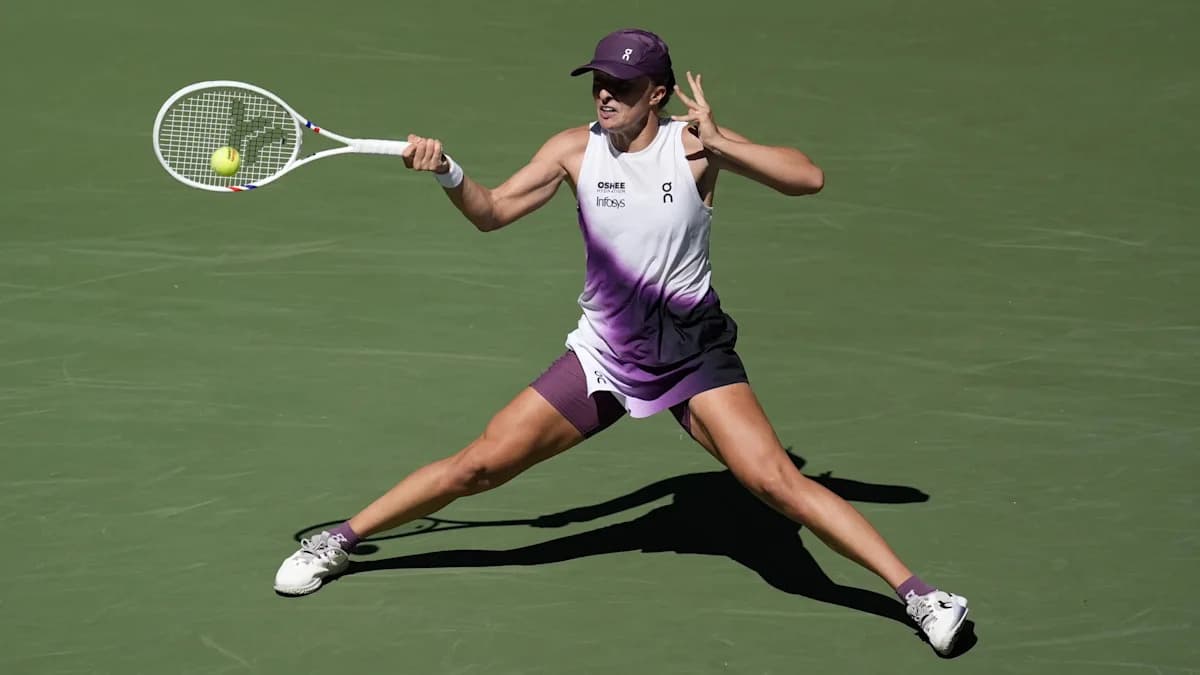
Women’s tennis, in particular, owned this US Open. The entire top six reached the quarter-finals. For the first time in 51 years, the top four players in the world locked down all four semi-final spots, shutting out the rest of the tour. In an era that has often been accused of volatility, the elite drew a hard line and refused to budge.
Sabalenka produced one of the matches of the year in her comeback win over Linda Noskova, the 21-year-old Wimbledon champion. It was raw, heavy-hitting, nerve-shredding tennis, the kind that leaves both players staggering by the end. For Sabalenka, who has endured a nightmare summer, just reaching the final after that effort will stand as a measure of resilience when she looks back on this season.
Elena Rybakina walked through the fire and came out with the title. She carried the weight of the No 1 ranking, nursed an achilles problem and survived one of the nastiest draws imaginable. Her level on hard courts over the last year has been relentless, her game as clean and piercing as ever. She remains a quiet presence, almost understated, which only sharpens the contrast with Sabalenka’s blazing intensity. The rivalry works because they are so different, yet meet in the same ruthless space between the lines.
Zheng Qinwen carved out her own corner of the tournament with two comebacks that defied belief. Down 0-5 in the third set against Madison Keys in the third round, she turned it into 7-5. Then she did it again in the first set against Iga Swiatek in the fourth round, another charge from 0-5 to 7-5. Those are not scorelines that usually flip. She forced them to. Her reward was a dramatic return to the sport’s biggest stages, earned the hard way.
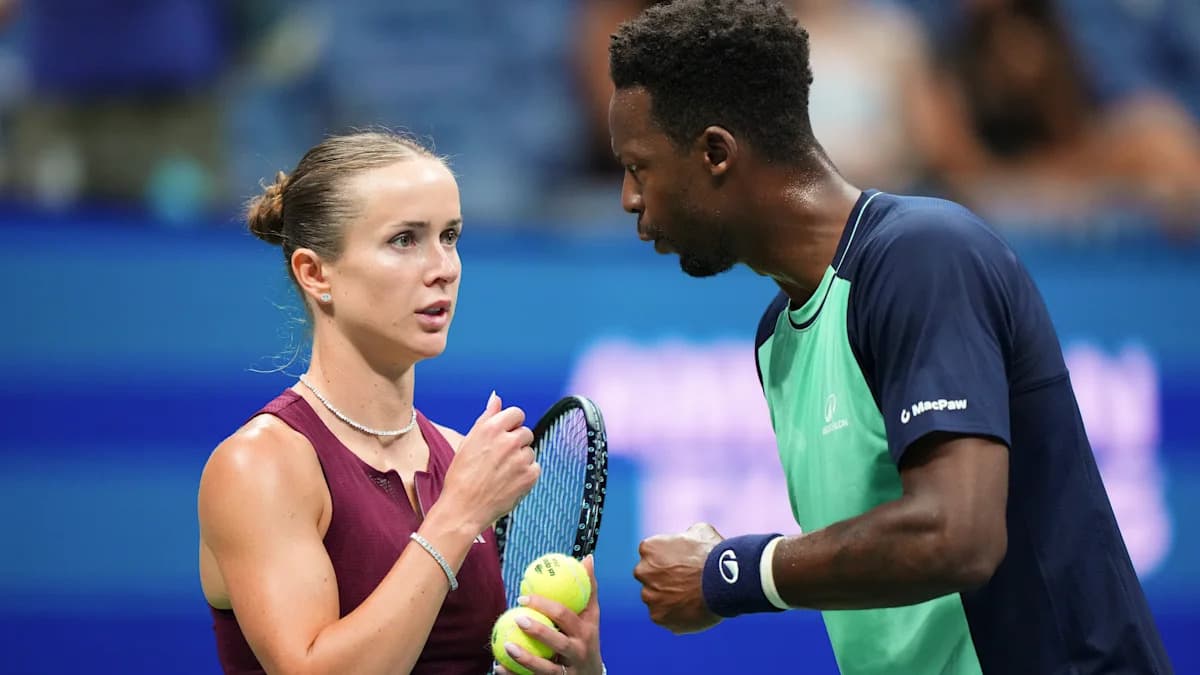
On the outer courts, Iva Jovic and Alexandra Eala gave the night session its soul. They fought deep into the evening with a ferocity that never spilled into hostility, proving that a ruthless desire to win can sit comfortably alongside genuine friendship. It was the kind of match that reminds you why juniors and early-round duels matter: they are the first drafts of future main-stage stories.
Coco Gauff’s week carried its own emotional weight. A year ago, the state of her serve reduced her to tears on court. Double faults, broken rhythm, public doubt. This time, she played her way into the semi-finals, a run that spoke less to any single tactical tweak and more to her broader growth. The serve still isn’t perfect, but the player around it has hardened.
Men’s Season
If the women’s game found clarity, the men’s season has been defined by fragility. Injuries have ripped through the younger generation. The problems of Carlos Alcaraz and Jannik Sinner only hint at the scale of it. Jack Draper, Holger Rune, Lorenzo Musetti, Arthur Fils and João Fonseca have all spent long stretches on the sidelines over the past year. Even those who made it to New York did so while still wrestling with the rust and uncertainty that come from so much missed time.
Yet the men’s draw still delivered one of the sporting images of the year.
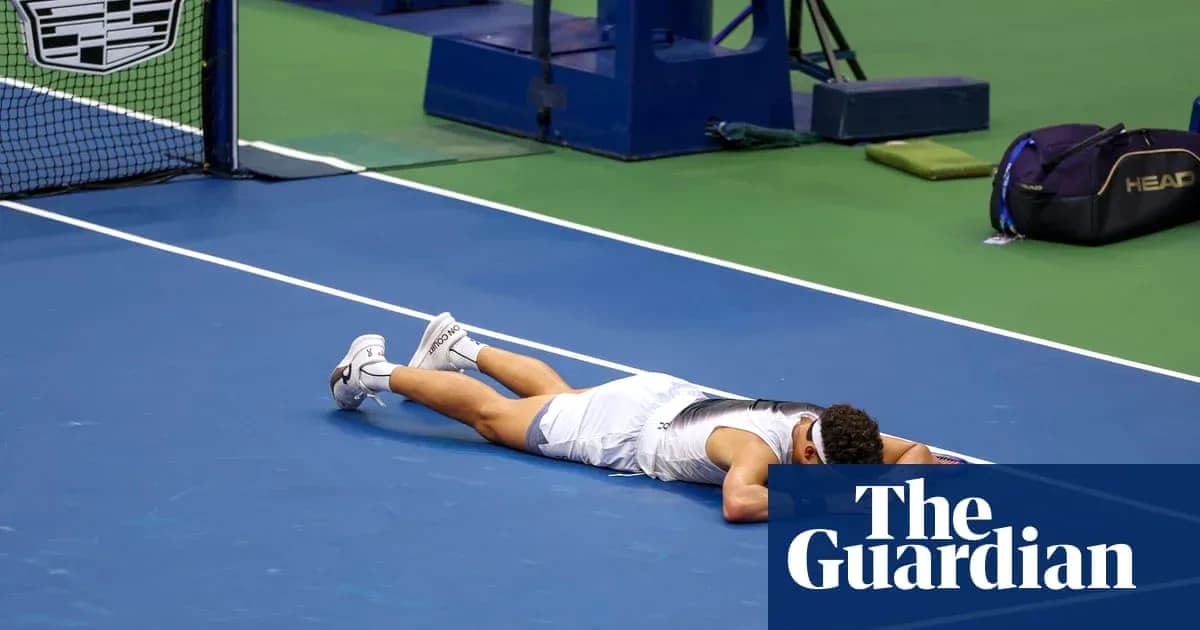
At 3.40am on Wednesday, Ben Shelton walked off Arthur Ashe as the man who had just beaten Alcaraz in a match that stretched to 4hr 28min. The American had survived a fifth-set tie-break against a two-time major champion who had pushed his body to the edge and beyond, vomiting repeatedly during the contest but refusing to yield.
Alcaraz lost by the narrowest of margins. The scoreline will show only defeat. The context matters more. He had been gone for four and a half months with a wrist injury, uncertain how his body would respond when the real strain returned. New York gave him the answer. He could still go to the well, still suffer, still play the kind of tennis that demands everything.
When he finally stepped off the court and into the tunnel leading to the locker room — a tunnel that has seen so many players walk through it in tears — his face told its own story. No anguish. No visible regret. Just a wide, unguarded smile from a player who, in that moment, felt like himself again.
In a US Open disfigured by leaks, late nights and ring lights, that smile may prove to be the most enduring image of all.