.svg&w=384&q=75 "logo")
Who Will Replace Manuel Neuer as Germany's Goalkeeper?
The Manuel Neuer era is over. The debate has only just begun.
When Jürgen Klopp steps in front of the cameras on 17 September to announce his first Germany squad, the usual questions about tactics and leadership will linger in the background. The real flashpoint sits between the posts. For the first time in more than a decade, the national team walks into a new cycle without Neuer as its fixed point in goal.
Who takes the gloves now?
Nübel’s case grows in Istanbul
For Thomas Helmer, the answer starts in Istanbul. The former Bayern defender and Euro 1996 winner doesn’t hesitate when asked who should be at the front of the queue.
“Looking at it right now: Nübel, who is playing sensationally in Istanbul and simply has match practice, is certainly a candidate,” he told Sport1.
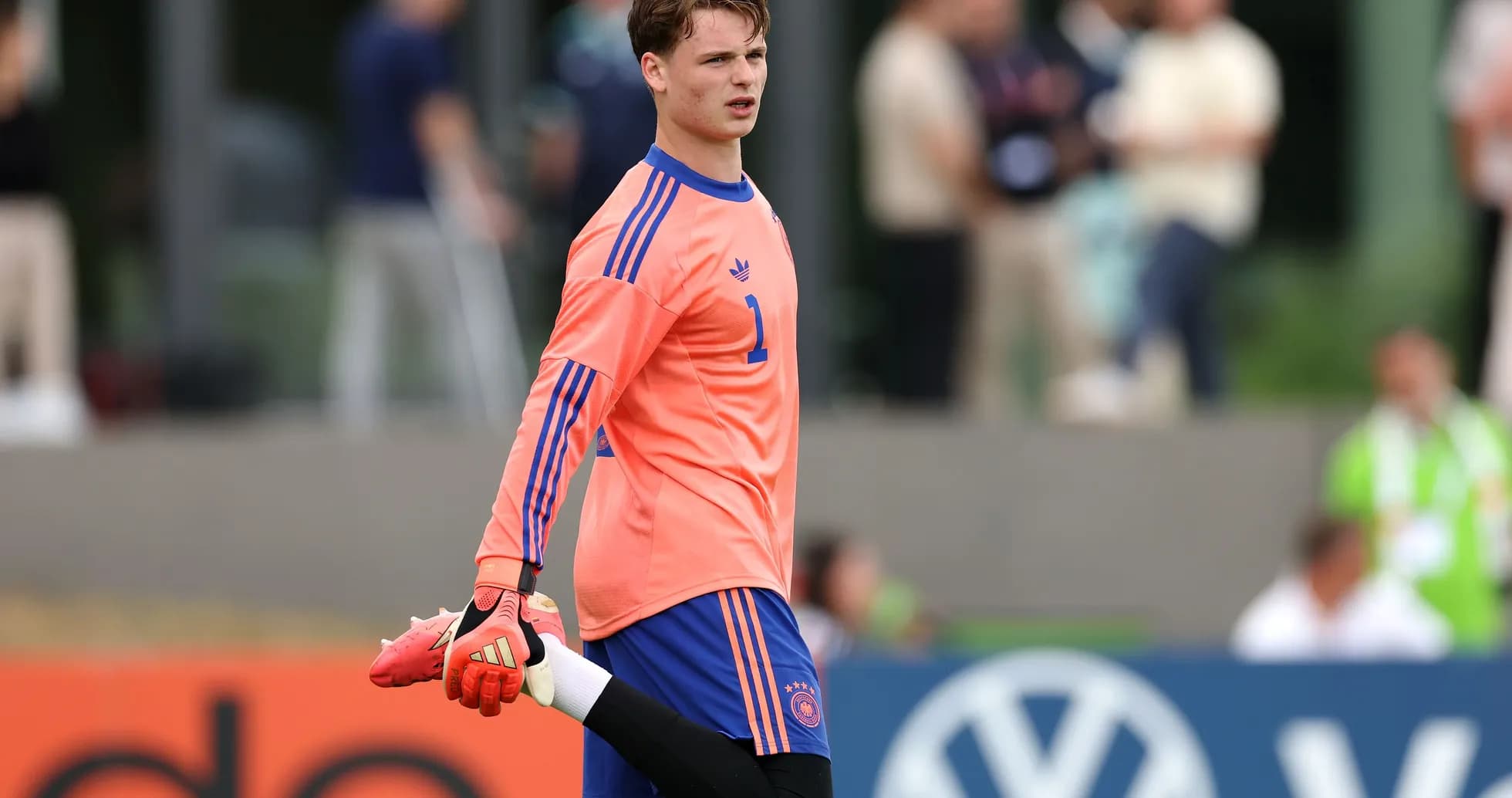
Alexander Nübel has turned his loan move from Bayern Munich to Besiktas into a statement. Six clean sheets in his first nine competitive games: those are numbers that travel quickly back to Germany. He is no longer the talented understudy waiting for a chance; he is a first-choice goalkeeper carrying the weight of a big club in a demanding football city.
That matters. Helmer keeps coming back to one point: rhythm. A keeper who plays every three days, feels pressure, makes mistakes, responds to them, and still walks out again as No. 1. Nübel has that right now.
Yet even Helmer stops short of declaring the debate over. For all his praise, he still calls it a “big question” who will actually succeed Neuer as Germany’s new first-choice goalkeeper. The throne is empty, but not yet claimed.
Neuer gone, the hierarchy shattered
Neuer’s short-term return for the 2026 World Cup had briefly restored the old order. He pushed aside Oliver Baumann, reclaimed his position, and once again became the man in the biggest moments. Then came the final break: Neuer has retired from the national team for good.
With that, the familiar pecking order collapsed. Baumann slips back into the chasing pack. Nübel surges forward with his Besiktas form. And another name keeps cropping up in expert circles: Jonas Urbig.
Bayern view Urbig as Neuer’s designated successor at club level. He travelled to the World Cup as a training goalkeeper, working alongside Neuer, Baumann and Nübel, but he never made the official squad list. Still, that experience put him on the radar. A possible future No. 1 for Bayern, a possible future No. 1 for Germany. On paper, the pathway looks promising.
On the pitch, it looks less clear.
Urbig’s talent versus Kompany’s reality
Helmer doesn’t buy into the hype just yet. His concern is blunt and simple: minutes.
“The question is how much playing time he will really get under Vincent Kompany,” Helmer said. So far, the answer is harsh. One cup game against Osnabrück. Nothing more.
Helmer underlines that he means no disrespect to Osnabrück, but he doesn’t dress it up either. One domestic cup appearance is not the foundation for a national-team No. 1. Not at Bayern. Not for Germany. Not in a position where confidence and timing are built over months, not in a single midweek outing.
At Bayern, the official line remains consistent: Urbig will get his minutes behind first-choice goalkeeper Neuer. That is the development plan. Learn from the master, pick up games where possible, grow in training.
Helmer doesn’t see that as enough for a country looking to reset in goal after a legendary era. “In the goalkeeping position, you need someone who plays all the time,” he insists. Not someone who waits. Someone who lives the role every weekend.
A decision that will define Klopp’s start
So Klopp walks into his first squad announcement with a classic German question that suddenly has no automatic answer. Nübel brings form and responsibility from Istanbul. Urbig brings potential and Bayern’s backing, but almost no match practice. Baumann brings experience, yet no clear claim to the throne.
And somewhere in the background, one familiar name hovers: Marc-André ter Stegen, the long-time understudy, the man who spent years in Neuer’s shadow. A comeback into the DFB setup would add another twist to an already crowded battle.
Germany once moved from Sepp Maier to Toni Schumacher to Bodo Illgner to Oliver Kahn to Manuel Neuer with almost seamless authority. This time, the handover feels different. Unscripted. Open.
Klopp’s first big call is not about a system or a captain’s armband. It is about trust in a goalkeeper who plays every week, under real fire. Whoever he chooses on 17 September won’t just wear the No. 1 shirt.
He’ll signal what kind of Germany Klopp wants to build.