Max Verstappen Reflects on Robert Kubica's Legacy in F1
Max Verstappen has seen just about everything in modern Formula 1, but even he pauses when the name Robert Kubica comes up.
The triple world champion spoke with clear admiration for the Polish driver who, 14 years after the rally accident that nearly ended his career and changed his life, climbed back to the top step at one of motorsport’s greatest stages. Kubica, once tipped as a future F1 world champion before that horrifying 2011 crash, won the 2025 Le Mans 24 Hours in the #83 AF Corse Ferrari Hypercar alongside Yifei Ye and Phil Hanson.
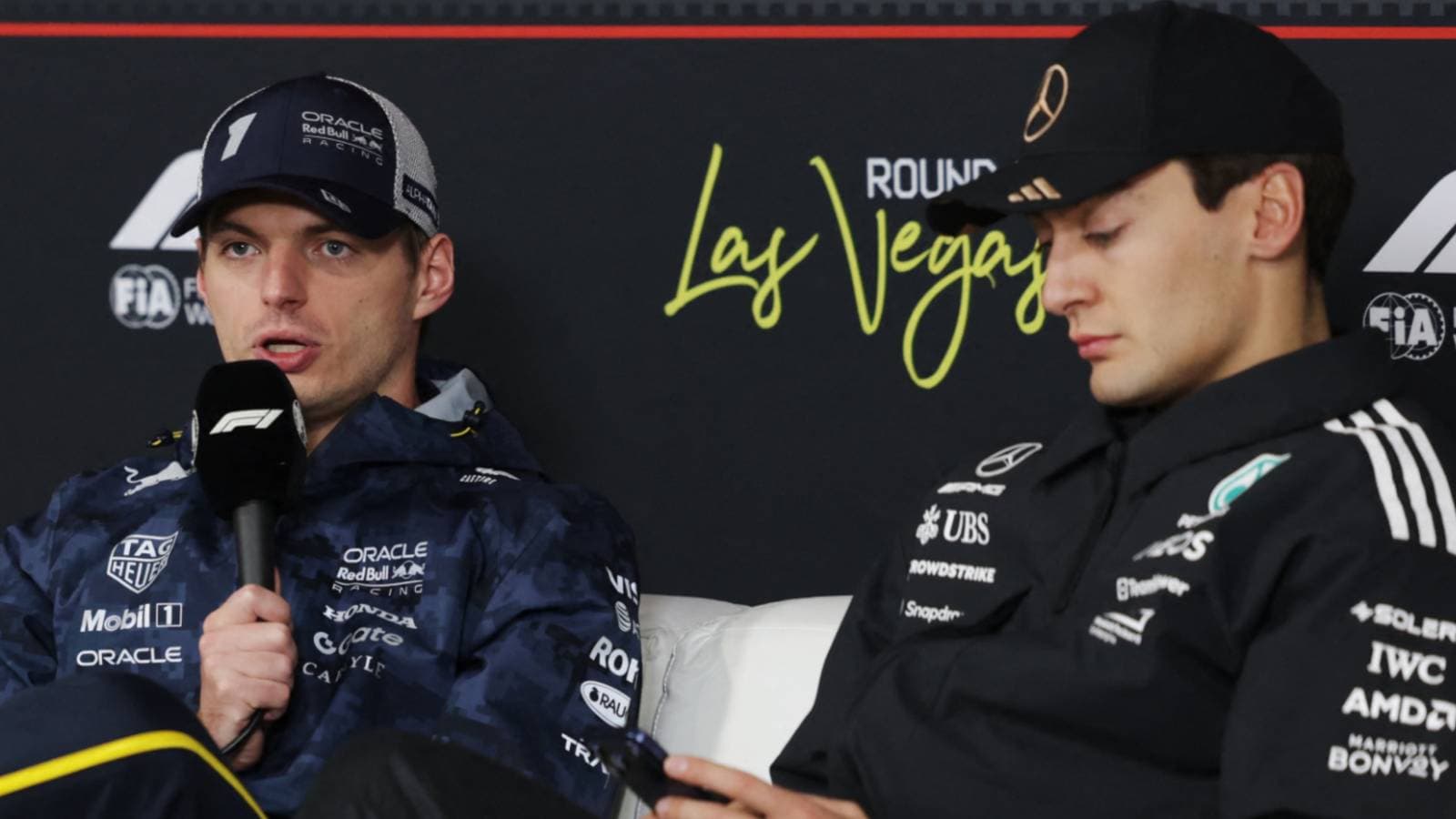
“It’s special,” Verstappen said. “Robert was a fantastic driver, and of course he still is. He had an enormous amount of talent.”
In the paddock, that view is almost universal. Ask those who raced him wheel-to-wheel in his BMW Sauber and Renault days, and they will tell you the same story: Kubica was meant for more in Formula 1. The accident stopped that path cold. Le Mans has given him a different kind of legacy.
While Verstappen reflects on what might have been, one of his fiercest current rivals is wrestling with what is.
Norris learning a new McLaren all over again
Lando Norris has spent most of his F1 career explaining that McLaren’s cars are “different.” This year, he insists, they are something else entirely.
“I certainly think this year’s car is different to last year by quite a long way,” the defending champion admitted. “You have to adapt to that.”
The Englishman has long argued that McLaren machines behave unlike anything else on the grid, and the 2025 challenger continues that theme. “Everyone who’s driven a McLaren has said how odd and unique a McLaren is to drive,” he said, pointing to a list of former team-mates and test drivers who have sampled rival machinery and come back with the same verdict.
He is honest enough to say he cannot tell how much of the strangeness is pure McLaren DNA and how much is down to this specific ruleset. “You have to drive it in a very different way,” Norris explained. The early races forced him into a steep adaptation curve just to unlock the car’s potential. He is still not sure whether the quirks are “a McLaren thing or so,” but the process of bending his driving to the car rather than the other way round has defined his title defence so far.
McLaren, though, are not sitting still.
McLaren’s “Macarena” returns for Baku
The team will arrive in Baku with what they describe as their most significant upgrade of the season. On paper, it is a big one: a new floor, revised aero pieces and, most eye-catching of all, the return of the rotating “Macarena” H-wing.
The car has struggled in fast, flowing corners, an area where Red Bull and others have held the upper hand. The new floor is designed to attack that weakness directly, generating more stable downforce when the car is loaded up at high speed. Alongside it, McLaren will bolt back on a fresh iteration of the Macarena-style H-wing, a clever piece of rear-end trickery that had to be shelved in Madrid because it did not suit the required downforce level at that circuit.
If the package works, Norris may find that the strange car he has been fighting becomes a little more predictable – and a lot more dangerous to his rivals – on the streets of Azerbaijan.
Red Bull play the long game with Hadjar
While McLaren chase performance, Red Bull have spent the early part of the season protecting one of their most valuable assets.
Team principal Laurent Mekies has been adamant for weeks: Isack Hadjar would not be rushed back from his wrist injury. Not this time. Not with so much at stake.
Formula 1 has recent, painful evidence of what happens when a driver returns too soon. Lance Stroll famously dragged his broken wrist to sixth place just two weeks after his 2023 pre-season crash, but the heroic drive came at a price. He suffered chronic pain for months, needed corrective surgery and still ended up missing a race.
Red Bull wanted no repeat of that scenario for Hadjar. The Frenchman’s career is on a sharp upward curve after a strong rookie season and an impressive start to life alongside Verstappen. He already has a podium to his name and, crucially, has not folded under the brutal pressure that has broken so many of Verstappen’s team-mates before him.
So they waited. They shuffled drivers between their two teams. They accepted the disruption. And now the payoff comes.
Hadjar has been cleared to withstand the violent loads that travel through a driver’s wrists at 200mph, and he will be back in his Red Bull for this weekend’s Azerbaijan Grand Prix. The team announced his return in a statement, confirming he will be back on track at the Baku City Circuit on Thursday.
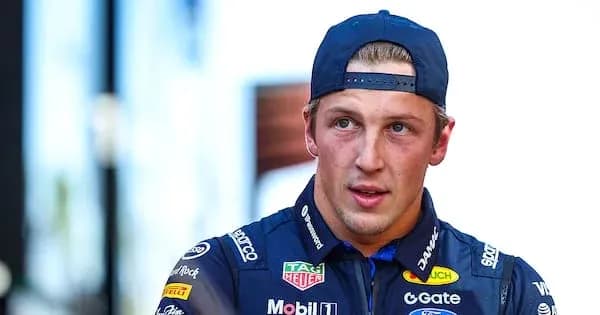
The same message carried a sincere nod to Liam Lawson, the man who filled the seat during Hadjar’s absence. Red Bull thanked him for his “professionalism, dedication and hard work” and highlighted his contribution over the past three races, stressing that he delivered “impressive performances” under difficult circumstances. Lawson now returns to Visa Cash App Racing Bulls with more experience and more credit in the bank.
Hadjar and Red Bull, though, may benefit most from the patience shown. In a sport that often demands instant comebacks, they chose the slower, smarter route.
Mekies hits back at Rosberg’s Lawson verdict
That patience has not shielded Red Bull’s driver choices from criticism. Nico Rosberg, never shy with an opinion in his Sky F1 role, recently argued that Red Bull’s current and potential team-mates for Verstappen are “not good enough.”
The 2016 world champion framed Red Bull’s dilemma starkly: they are searching for the next Verstappen or the next Sebastian Vettel. Anything less, he said, falls short of the standard the team has set for itself. Lawson, in Rosberg’s view, has not yet shown he belongs in that bracket.
Mekies pushed back.
“I think he’s done a very good job,” the Red Bull boss insisted. He pointed out the obvious but often overlooked reality: stepping into a different team and car at short notice is brutally difficult. Lawson, he argued, handled that challenge as well as anyone could reasonably expect.
The numbers support him. Lawson scored a vital sixth place in Spain, collecting “very important points” for the team. He had done something similar at Zandvoort in the past, and Mekies believes Monza would have produced another strong result but for contact with Nico Hülkenberg and the resulting front wing damage.
From Red Bull’s side of the garage, this is a very different picture to the one painted by Rosberg. Mekies says they are “thankful and happy” with Lawson’s contribution, especially compared with his first two races of 2025, when he was still feeling his way into the environment.
The wider question Rosberg raises remains, though: who is truly good enough to sit alongside Verstappen?
He name-checked Arvid Lindblad and Hadjar as still being in the frame as potential long-term partners for the Dutchman. For now, Red Bull’s junior system continues to churn out candidates. None, in Rosberg’s eyes, have yet screamed “next Max” or “next Seb.”
New rules, new rhythm for 2026
While teams juggle drivers and upgrades, the sport itself is bracing for a change of tempo.
Following the latest F1 Commission meeting, the FIA confirmed a series of significant tweaks for next year. The familiar rule that a race must be completed within a maximum two-hour window, inside a three-hour total period, will go. That change gives race control more room to manage interruptions without staring down a hard stop.
Race distances will also shrink. The standard length drops from 305km to 290km, with Monaco remaining the outlier at 260km. The shift links directly to the revised power unit structure already agreed for next season, after the 2026 regulations drew heavy criticism from teams and fans.
The idea is simple: with shorter races and a different energy profile, drivers should be able to run at full throttle more often each lap, rather than nursing power units and fuel for long stretches. Less management, more flat-out racing – at least, that is the intention.
Gearbox homologation will also disappear for next year. The Sporting Advisory Committee argued that removing the freeze will “preserve supplier development freedom,” opening the door for manufacturers to chase performance and reliability gains through the season.
Between Kubica’s long road back to glory, Norris wrestling a wayward McLaren into title contention, Hadjar’s carefully managed return and a sport reshaping its own rules, Formula 1 finds itself at a familiar crossroads: speed, risk, reinvention.
The next question is brutal and simple. Who adapts fastest?