Red Bull's Driver Shuffle: Hadjar Returns and Lawson Shines
Red Bull resets its front line in Baku. Isack Hadjar is back where he always felt he belonged, Max Verstappen finally has his preferred wingman again, and the three‑race experiment that shuffled the entire Red Bull driver pool has been filed, studied and quietly judged.
Those three grands prix after the summer break didn’t just plug gaps. They redrew reputations.
Hadjar steps back into a faster world
Hadjar returns to the senior Red Bull seat knowing two things.
First, he did enough in the first half of the season to justify the faith. Across the opening 11 races he averaged 6.5 points per grand prix to Verstappen’s 9.9 – usually one or two places behind the triple world champion. That’s serious support in a field where Mercedes, Ferrari and McLaren often have both cars in the mix.
Second, the bar has risen while he’s been away.
In the three races Hadjar missed, Verstappen’s average jumped to 12 points per race despite a crash at Zandvoort, helped by podiums at Monza and the Madring. The car is clearly more competitive now. Red Bull’s peak has moved upwards. Lawson, parachuted in yet again with no mileage in this machine, managed 4.7 points per event and did what he was asked: keep the scoreboard ticking.
That context sharpens the pressure.
Hadjar isn’t just returning to reclaim his seat. He’s walking back into a triple‑header that will pound his body, test his healed injury, stretch his concentration and expose any rust in race combat. Red Bull isn’t bringing him back to be “adequate”. If he can’t operate at, or very close to, the level he showed before the break – and then build on it – the team will have made the wrong competitive call.
Verstappen has already shown what this car can do. Hadjar now has to prove he can rise with that tide, not get washed along behind it.
Lawson showed he really belongs
For Lawson, the story is different but no less significant.
His standing inside the Red Bull system was already strong before the break. A steady, points‑rich campaign with Racing Bulls had made him the leading scorer outside the top four teams. Those around him talked about a clear step over the winter: more mature, more methodical, more ruthless in how he worked with his engineers.
He doesn’t like the 2026 regulations, but he learned to bend them to his will. His engineering group in Faenza loved the way he dug into energy management, pulling out tricks that nudged the car forward and helped Racing Bulls stay ahead of Alpine in the constructors’ fight.
The surprise promotion to Red Bull offered something more personal: a chance to exorcise the ghosts of that rough 2025 start at the senior team.
This time, he delivered.
Twice in the points. Always in the fight. The toughest weekend, Monza, was stacked against him before he’d even turned a wheel thanks to an engine penalty that dumped him at the back. He still handled a tricky car, minimal prep and the glare of the Verstappen comparison with calm competence. He never finished within a minute of the race winner, which underlined the gap to the very front and left Verstappen effectively fighting alone at times, but the job brief was clear: don’t sink, don’t crash, don’t bleed points.
He did more than that. He proved that what Racing Bulls sees every week is real.
Did he do enough to force Red Bull to tear up its plan and pair him with Verstappen full‑time? No. The hierarchy remains. But he absolutely confirmed he is the right man to anchor Racing Bulls as it tries to top the midfield alongside Arvid Lindblad.
In a cut‑throat system, that’s no small victory.
Tsunoda reminds everyone what he is
Yuki Tsunoda’s cameo could easily have felt like a farewell tour. Instead, it read like a reminder.
Drop him into the 2026 Racing Bulls at Zandvoort and he’s immediately on the pace, just a tenth off Lindblad in qualifying. That’s not a driver lost in the modern cars. That’s a driver who still knows how to lean on them.
At Monza, he turned a scruffy Saturday – Q1 exit, messy grid positioning that Audi is still trying to turn into a lost point – into a Sunday salvage job, grabbing a point at the flag. In Madrid, damage ended any hope of repeating that, but by then the picture was clear.
Tsunoda remains exactly what his four full seasons at Red Bull’s second team had always suggested: give him a decent car and he will bring it home in the points more often than not. Quick to adapt. Capable of scoring. A safe pair of hands when a seat suddenly opens.
What he didn’t do was detonate the status quo.
He wasn’t so electrifying that Red Bull’s hierarchy had to rip up their plans and ask why this guy was on the sidelines in the first place. His own verdict captured it neatly: “I gave it my all and there’s nothing to regret.”
If this really is the end of a 114‑race F1 career, it’s a far more fitting final act than being pummelled alongside Verstappen, miles off the lead and out of answers.
Lindblad grows into a team leader
While the veterans and nearly‑men shuffled around him, Arvid Lindblad quietly ticked off another milestone.
The only rookie on the 2026 grid has looked at home from the start, but this three‑race stretch asked a different question: could he lead?
The Lawson‑Lindblad partnership has been one of the most effective in the midfield, a big reason Racing Bulls still has Alpine behind it in the standings. When Tsunoda stepped in and adapted smoothly, the team still needed someone to be its constant, its reference, its spearhead.
Lindblad took that responsibility.
At Monza, his pace was strong enough to finish ahead of an Alpine he had little business beating on paper, even allowing for Franco Colapinto’s self‑inflicted chaos. At the Madring, his weekend was far from perfect, yet he still banked two points – the kind of unspectacular return that keeps a constructors’ campaign on track.
Zandvoort stung. A harsh in‑race penalty knocked him out of the points. But even there he played a role, disrupting Pierre Gasly’s afternoon and helping limit Alpine’s haul while giving Tsunoda the best possible shot at opening his own account.
Seven consecutive Q3 appearances now frame that story. This is not a rookie hanging on; it’s a 19‑year‑old shaping races and protecting a championship position.
Red Bull’s senior figures will have noticed. The only real unknown is how quickly the internal balance of power at Racing Bulls tilts in his favour.
A fit Hadjar is Verstappen’s best ally
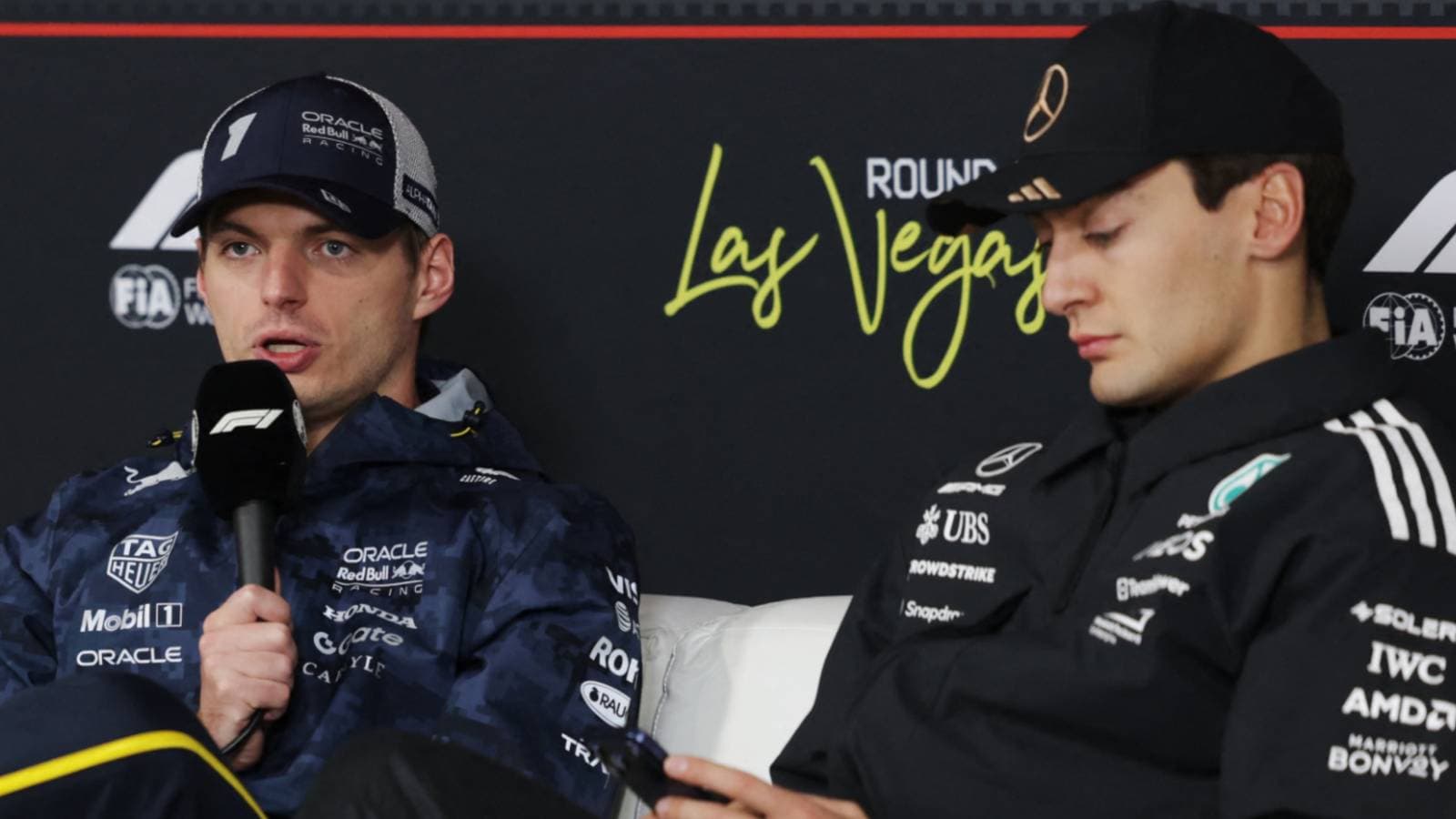
Verstappen has never hidden it: who sits in the other Red Bull matters to him.
The performance of that second car shapes strategy options, influences how rival teams play their hands, and decides whether Verstappen goes into Sundays with a partner or as a lone ranger against the combined forces of Mercedes, Ferrari and McLaren, who can usually rely on both of their drivers.
With Lawson never finishing within a minute of the race winner in his Red Bull starts – mitigating factors or not – Verstappen often found himself effectively fighting one‑handed. The exception, of course, was Zandvoort, where he took himself out of the equation with that spectacular crash.
Hadjar’s return, if seamless, changes the equation.
If he can instantly rediscover his pre‑injury level and then tap into the extra pace Red Bull has found, he becomes a real factor at the sharp end: covering off rival strategies, stealing points, and helping drag the team higher than its current fourth place in the constructors’ standings.
There’s another wrinkle. Hadjar has missed three races, spent two months on the sidelines, and now steps straight into a demanding triple‑header. If he shrugs that off and performs at full tilt, it will echo something Verstappen has been saying for a while – that F1 2026 simply isn’t as physically punishing as it should be.
Red Bull, though, won’t care about the politics of fitness debates in Baku. It just needs its number two car to start behaving like a frontrunner again.
Hadjar, Lawson, Tsunoda and Lindblad have all made their cases over these three races. Now comes the part Red Bull cares about most: who can turn that evidence into points, podiums and leverage in a driver market that never really sleeps.